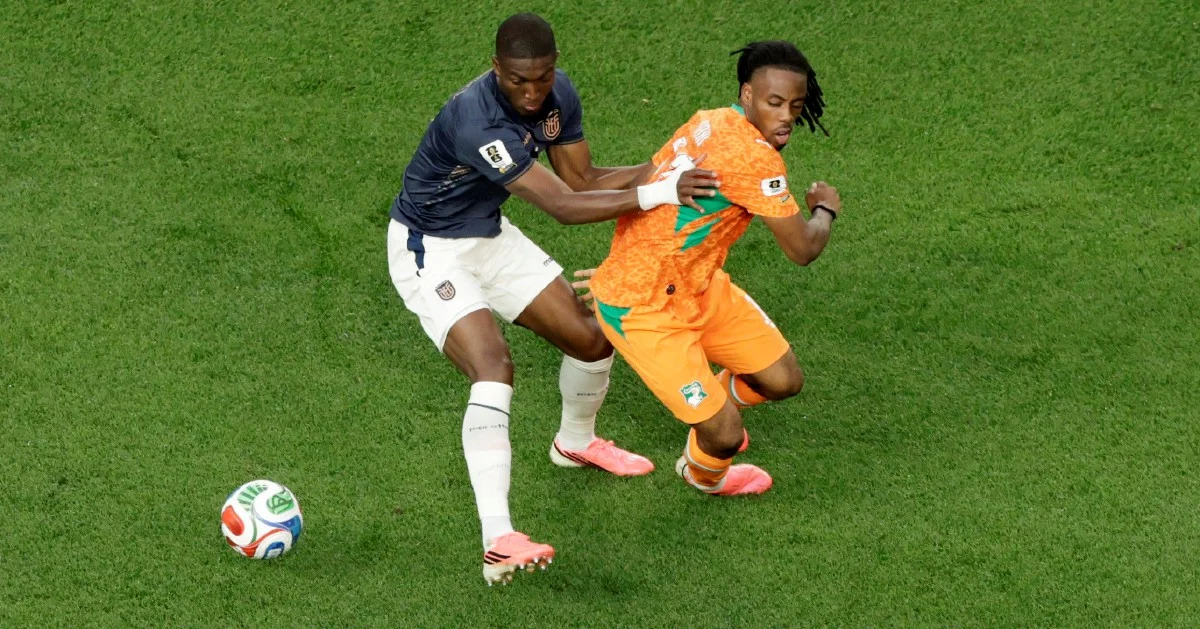
Ivory Coast's football federation announced Thursday that striker Elye Wahi will be withheld from the national squad's forthcoming World Cup encounter with Germany in Canada, marking an extraordinary suspension that underscores growing concerns about corruption in professional football. The decision emerged just a day after Wahi became entangled in an ongoing investigation into suspected manipulation of a Ligue 1 match, prompting swift action by the Ivorian Football Federation to distance itself from the allegations.
The timing of the announcement reflects the serious nature of match-fixing allegations in European club football, where even the hint of impropriety can trigger immediate disciplinary measures at international level. Sports corruption investigations have become increasingly common across major leagues, with regulatory bodies and national football associations taking a hardened stance against any player suspected of involvement. For the Ivory Coast federation, preventing Wahi's participation appears to be a precautionary measure aimed at protecting the integrity of their World Cup qualification campaign while the investigation runs its course.
Match-fixing scandals carry particular weight in professional football because they fundamentally undermine the competitive principle that defines the sport. When individual players or matches become the subject of corruption probes, the ripple effects extend far beyond the immediate match or club involved. National teams increasingly find themselves navigating reputational risks when their players become embroiled in such controversies, forcing football authorities to make rapid, high-stakes decisions about squad selection and player eligibility.
The investigation into the Ligue 1 fixture represents part of a broader pattern of scrutiny affecting French professional football, which has faced multiple corruption-related challenges in recent seasons. These investigations typically involve law enforcement agencies working alongside football's regulatory bodies to establish whether matches or specific player actions were influenced by external betting syndicates or other illicit financial interests. The presence of such probes has become an uncomfortable feature of modern professional sports, reflecting the scale of illegal betting markets operating globally and their attempts to infiltrate elite competitions.
For Wahi personally, the implications extend beyond missing a single international fixture. Players caught in match-fixing investigations face potential bans from competition, financial penalties, and lasting damage to their professional reputation and career prospects. Even if ultimately cleared of wrongdoing, the mere association with such scandals can create long-term obstacles to endorsement deals, transfer opportunities, and team selection decisions. The uncertainty surrounding his status creates a precarious position for the young forward as he navigates both the investigation itself and its consequences for his footballing future.
From the perspective of Ivory Coast's World Cup campaign, Wahi's absence represents a significant tactical adjustment ahead of the Germany match. Losing access to an attacking player at such a critical juncture in qualification proceedings forces the coaching staff to recalibrate their approach and potentially rely on alternative personnel who may lack the same tactical familiarity or match fitness. These squad-level disruptions, though sometimes unavoidable, can influence match outcomes and overall campaign trajectories in ways that extend beyond the immediate game being played.
The broader context suggests that Southeast Asian football observers should take note of how governing bodies are increasingly willing to take preventive action in response to corruption allegations. Malaysia and other regional football associations maintain their own anti-corruption frameworks and compliance procedures, often taking cues from developments in larger global competitions. The Ivory Coast federation's decisive action demonstrates that international football bodies expect swift, transparent responses when players become implicated in serious allegations, setting precedents for how other federations should handle similar situations.
Betting-related corruption presents a particular challenge for football administrators because the sophistication of illegal betting operations has evolved significantly alongside digital technologies and online platforms. Syndicates operating across multiple jurisdictions can now coordinate complex match-fixing schemes with unprecedented efficiency, targeting players, referees, or specific match circumstances rather than entire games. This evolution has prompted football authorities worldwide to strengthen their investigative capabilities and establish clearer protocols for handling suspects during ongoing proceedings.
The decision to exclude Wahi from international football serves multiple institutional purposes beyond the immediate investigation. It signals to other players that match-fixing allegations are treated with utmost seriousness, potentially serving a deterrent function across the professional game. Simultaneously, it protects the Ivorian Football Federation from accusations of complicity or negligence should Wahi ultimately be found culpable of wrongdoing. By taking swift preventive action, the federation demonstrates institutional responsibility and cooperation with investigative processes, factors that international football bodies increasingly value when assessing federation credibility and governance standards.