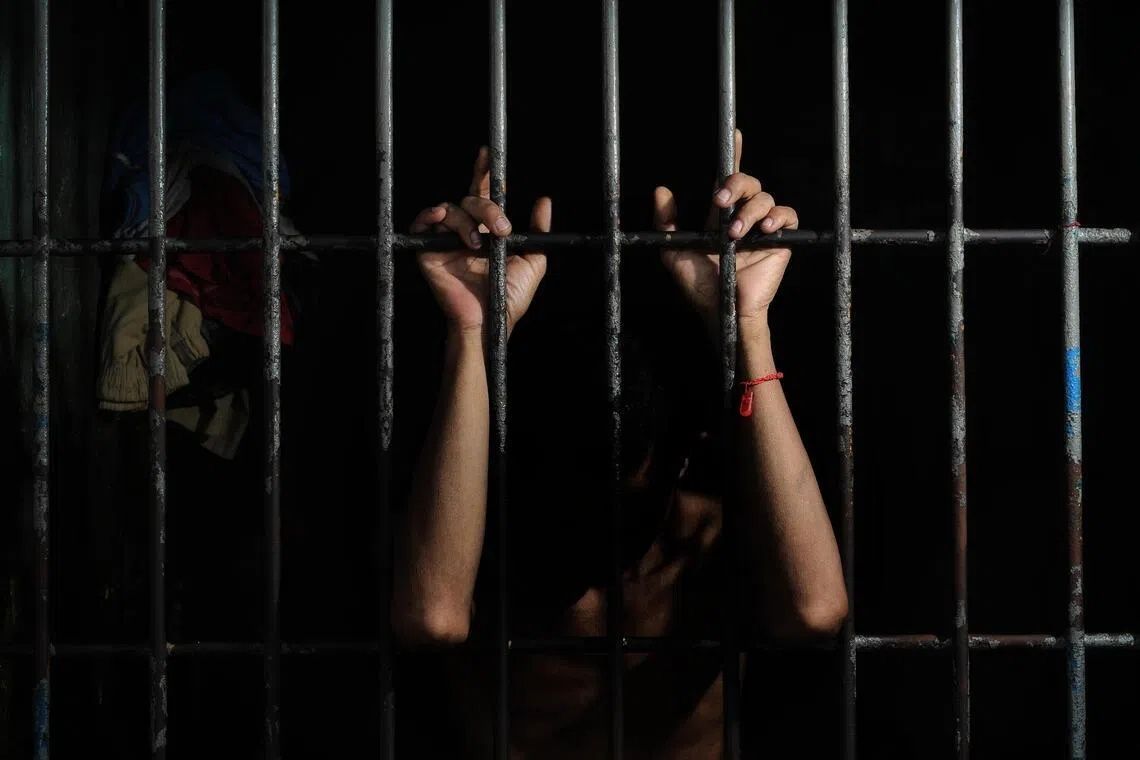
A grieving mother in Japan is pursuing legal action against the state following the death of her 16-year-old daughter, whose body wasted away to just 20 kilograms in the months after her release from detention. The lawsuit, filed at Kobe District Court in western Japan on Wednesday, represents one of the most stark illustrations yet of the corrosive impact of the nation's controversial criminal justice system, where authorities prioritise extracting confessions over establishing guilt through evidence.
The girl, identified only as Runa in court documents, was arrested in June last year on suspicion of assaulting a patient at a disability care facility during a Valentine's Day celebration. Runa consistently maintained her innocence, asserting that she had merely placed her hand gently against the patient's chin to prevent her from biting another resident. Yet despite this straightforward account and the absence of any prior criminal history, authorities kept her in custody for 18 days before ultimately deciding to drop all charges entirely. By December, just five months after her traumatic release, Runa was dead.
During her ordeal in detention, Runa experienced conditions that critics argue are systematic within Japan's criminal justice apparatus. She was denied contact with her family except through her lawyers, subjected to repetitive interrogations, and faced explicit threats designed to coerce confession. According to her lawyer, Masahiro Sasaki, investigators repeatedly told her "You did it, didn't you? Just tell the truth," despite having no credible evidence linking her to any genuine wrongdoing. She was also threatened with placement in a reformatory and told she would be separated from her mother if she persisted in denying the allegations. These tactics ultimately triggered acute stress disorder, eating disorders, and post-traumatic stress symptoms that would plague her until her death.
The case exemplifies what Japanese civil rights advocates and international observers describe as "hostage justice"—a systemic practice whereby suspects' exercise of their right to remain silent or contest charges becomes grounds for extended pre-trial detention, effectively holding their freedom hostage until they confess. In Japan's legal framework, confessions carry disproportionate evidentiary weight, creating perverse incentives for authorities to manufacture rather than investigate guilt. Prosecutors in Runa's case requested detention extensions on two separate occasions, simultaneously blocking her lawyer's appeals to a judge to terminate the confinement. Only after Runa vomited violently, collapsed, and received emergency medical treatment at an outside hospital did prosecutors finally agree to her release on grounds of non-prosecution—an admission, in essence, that no case existed in the first instance.
The severity of Runa's decline in the five months following her release suggests the psychological and physiological damage inflicted during her detention was catastrophic and irreversible. Her mother, speaking at a press conference following the lawsuit's filing, described the shock of seeing her daughter in her final state: "My daughter was unrecognisable when she died." The complaint seeks 100 million yen—approximately US$623,000—in compensation and represents a broader indictment of institutional practices that have long troubled Japan's international reputation regarding human rights.
Sasaki, Runa's legal representative, raised fundamental questions about the lawfulness of her initial arrest itself. He pointed to the "extremely trifling" nature of the alleged assault, the complete absence of delinquency in her background, her status as a young person who should only face detention when absolutely necessary, and the lack of any credible evidence suggesting she posed flight risk or would destroy evidence. The decision to detain her at all appears, in retrospect, to have been a catastrophic error in judgment by authorities who apparently prioritised accusation over investigation.
Japan's confession-centric criminal justice system has long drawn criticism from international human rights organisations, who argue that it fundamentally undermines the presumption of innocence and creates conditions ripe for wrongful conviction. The contrast between Japan's modern democratic institutions and its interrogation practices is stark. Suspects' voluntary waiver of the right to legal counsel during questioning remains permissible, and the physical conditions of detention, coupled with psychological pressure, can break even the innocent into false admissions. This system has produced numerous documented cases of wrongful conviction later overturned, some only after decades of incarceration.
The case of Iwao Hakamada provides perhaps the most harrowing cautionary tale. Once recognised as the world's longest-serving death-row inmate, Hakamada's convictions were quashed in 2024, decades after his trial. Japan's Supreme Court determined that his confessions, upon which the convictions largely rested, had been extracted during interrogations the Court itself characterised as "inhumane." If a confession could be deemed inhumane enough to invalidate a death sentence after half a century, the question naturally arises: how many other confessions in the Japanese system are similarly tainted by illegitimate coercion, yet never subjected to such scrutiny?
For readers in Southeast Asia, the Runa case offers a sobering reminder that developed democracies can harbour deeply problematic criminal justice practices that persist despite international criticism. Japan's emphasis on harmony, deference to authority, and group consensus—cultural values often cited as sources of strength—may conversely create environments where challenging official narratives during interrogation becomes culturally and psychologically difficult. The power imbalance between a frightened teenager and experienced interrogators, combined with isolation from family and the psychological apparatus of the state, is difficult to overstate.
The Kobe District Public Prosecutors Office declined to comment substantively on the lawsuit, stating they had not yet formally received a complaint. This evasion is itself telling: accountability mechanisms for prosecutorial misconduct in Japan remain weak, and the systemic nature of hostage justice suggests that individual cases rarely trigger genuine reform. Unless and until Japan's criminal justice framework undergoes substantial revision—including genuine protections for the right to silence, restrictions on pre-trial detention absent concrete evidence, and reduced evidentiary reliance on confessions—cases like Runa's will likely recur, each one representing a human being sacrificed to institutional inertia.
Runa's mother's question—"I want to know what happened to her, and why she was arrested, detained and had to die"—is simultaneously devastatingly simple and profoundly indicting. It cuts to the heart of what justice means when the state possesses such power over the vulnerable. Whether the courts will grant her the answers and compensation she seeks remains uncertain, but the case has already exposed, once again, the human cost of a system that places confession extraction above the discovery of truth.