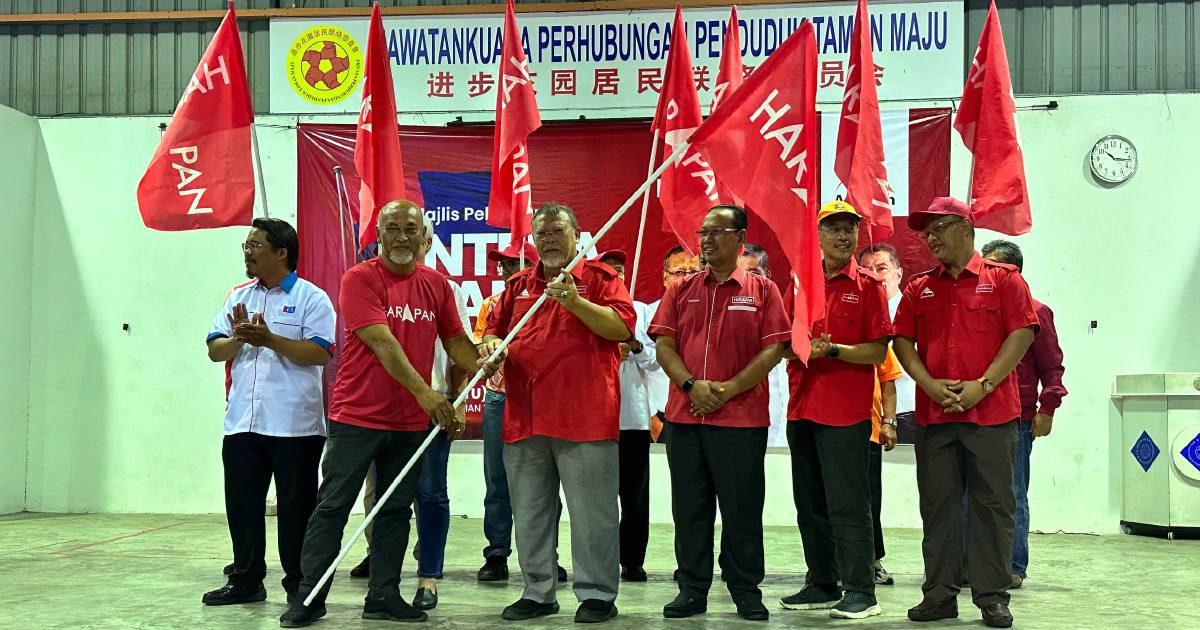
Amanah's leadership has signalled ambitious expectations ahead of Johor's July 11 state election, targeting a minimum of six seats from the ten northern zone constituencies where the party is fielding candidates. The party's confidence reflects a broader positioning strategy within the PKR-led coalition as it seeks to expand its foothold in one of Malaysia's traditionally competitive political battlegrounds.
The northern zone presents a critical testing ground for Amanah's electoral machinery and ground-level support networks. These constituencies, which span key areas in Batu Pahat and surrounding localities, represent demographic and geographical diversity that mirrors broader patterns across the state. Success in this corridor would signal meaningful voter shift towards the coalition, particularly among urban and semi-urban voters who have proven responsive to reform messaging in recent electoral cycles.
Amanah's strategy reflects calculated confidence rather than unbounded optimism. The party's performance in previous state and federal elections suggests realistic assessment of its competitive position. The six-seat target represents approximately 60 per cent success rate across its contested seats—an achievable threshold that avoids overextension while demonstrating substantive progress compared to past electoral showings in this region.
The timing of Johor's state polls carries national significance beyond the state's borders. As one of Malaysia's most populous and economically significant states, voting patterns in Johor historically influence broader political calculations at the federal level. Coalition performance here feeds into narratives about support trajectory and coalition viability heading toward future general elections. Amanah's vocal confidence aims to sustain momentum and energise its volunteer networks across the contest period.
Northern Johor presents distinct challenges and opportunities compared to the state's southern constituencies. This zone encompasses both established constituencies with entrenched political histories and emerging areas experiencing demographic transformation through migration and economic development. Amanah's candidate selection and campaign focus must address localised concerns while articulating broader policy positions on economic opportunity, governance standards, and social services provision that resonate across the region.
The party's campaign messaging appears calibrated towards specific voter constituencies within the northern zone. Youth voters, emerging middle-class professionals, and communities concerned with education quality and healthcare access represent potential Amanah support bases. The party's historical positioning on these issues, combined with PKR coalition branding around democratic renewal and institutional accountability, creates foundational appeal—though converting stated preferences into actual votes requires sustained on-ground organisation.
Competitive dynamics within the northern zone feature multiple contenders spanning Umno-led coalitions, DAP, and PAS-aligned movements. Amanah's performance therefore depends not simply on absolute support levels but on vote distribution patterns and opponent fragmentation. In seats where opposition votes split across competing parties, even minority support levels can prove decisive. Conversely, consolidated opposition votes in specific constituencies could prove insurmountable for coalition efforts.
The party's six-seat projection, if achieved, would represent meaningful gains compared to its existing Johor state assembly presence. Such performance would validate Amanah's expanded candidate deployment and investment in organisational infrastructure. Conversely, falling short of this target could trigger internal reassessment regarding strategic focus, resource allocation, and coordination mechanics with broader coalition partners operating in overlapping constituencies.
For Malaysian voters and political observers monitoring the election, Amanah's performance in the northern zone offers diagnostic insights into coalition strength and coalition fatigue patterns. The July 11 contest provides early indicators regarding voter appetite for reform agendas, attitudes toward coalition governance records, and responsiveness to economic and service-delivery messaging that will likely feature prominently in federal political contests throughout 2024 and beyond.
The contest also reflects evolving PKR coalition dynamics as component parties jockey for profile elevation and leadership positioning within the broader movement. Amanah's vocal confidence and specific seat targeting represents assertion of party relevance and electoral viability within the coalition structure. The party's campaign approach balances supporting PKR's broader state-level objectives while establishing distinctive party brand and value proposition to potential supporters.
Ground-level realities in the northern zone will ultimately determine whether Amanah's projections materialise. Voter engagement quality, campaign volunteer coordination, incumbent performance evaluation, and last-minute campaign developments typically prove decisive in closely contested Malaysian elections. Amanah's confidence must now translate into canvassing effectiveness, persuasion messaging, and ultimately voter mobilisation on polling day.