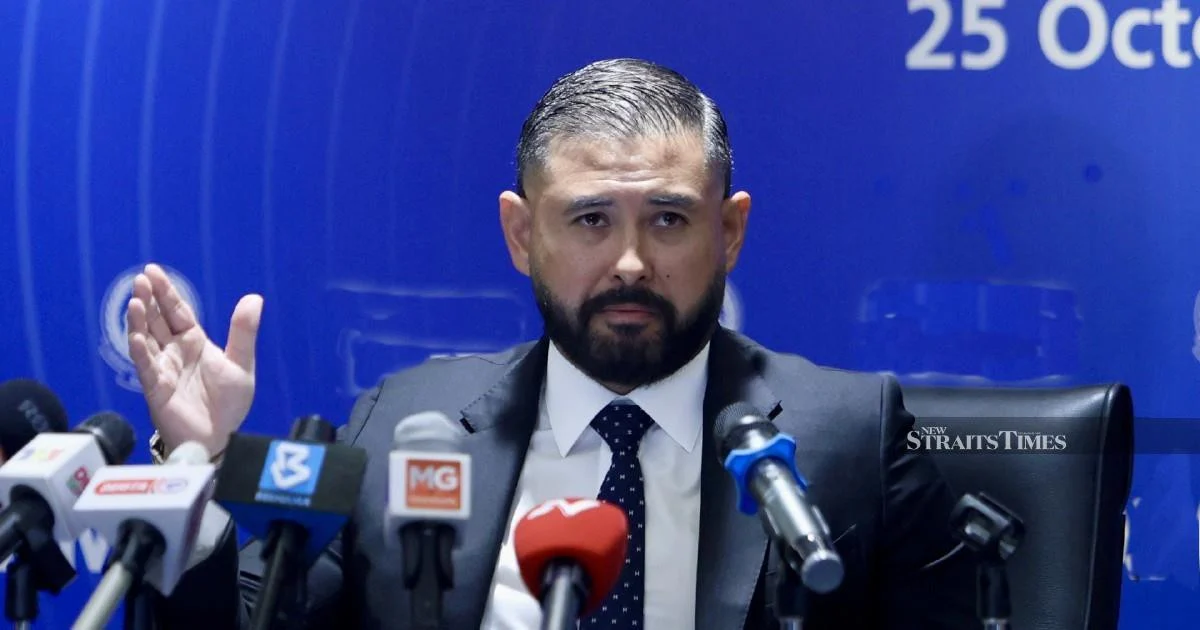
The longstanding tension between Johor and the federal government over revenue distribution has flared anew, with Tunku Ismail Sultan Ibrahim, the Regent of Johor, publicly challenging the Prime Minister's recent assessment of the state's financial health. Rather than accepting Anwar Ibrahim's diagnosis that Johor suffers from substantial internal revenue leakages—a characterisation that typically implies mismanagement or corruption at the state level—the Regent has reframed the debate entirely, positioning the federal government as the primary obstacle to Johor's economic prosperity and financial autonomy.
This disagreement touches on a perennial friction point in Malaysian federalism: the distribution of revenue between Kuala Lumpur and the states, and the extent to which the federal government genuinely devolves resources in line with constitutional allocations. For Johor, which generates considerable economic output as one of Malaysia's most industrialised and strategically positioned states, the issue carries particular weight. The state's geographic proximity to Singapore, its robust manufacturing sector, and its role as a logistics hub mean that substantial wealth creation occurs within its borders, even if that wealth may subsequently flow to federal coffers or be diverted through federal mechanisms.
The Regent's intervention signals frustration at what Johor sees as a mischaracterisation of its fiscal challenges. By framing the problem as federal retention rather than state leakage, Tunku Ismail Sultan Ibrahim is essentially arguing that Johor's difficulties stem not from internal malfeasance but from structural imbalances in how Malaysia's federal system allocates revenues. This distinction matters significantly because it shifts responsibility from state-level governance onto the central government, challenging the implicit assumption in the Prime Minister's statement that Johor's revenue problems are primarily a management issue within the state administration.
For Malaysian governance, this dispute highlights an ongoing challenge in the federation's architecture. States regularly contend with the reality that although they generate economic activity and tax bases, a substantial portion of revenue collection remains under federal jurisdiction. Sales and service taxes, corporate income tax, and other major revenue streams flow to Kuala Lumpur, while states receive allocations through federal transfers and grants. When states describe themselves as inadequately funded relative to their economic contribution, they are often pointing to this structural reality rather than merely complaining about internal inefficiency.
Johor's position is particularly notable because the state has been vocal about wanting greater fiscal autonomy and more equitable revenue sharing. Previous state administrations have raised similar concerns, and the current Regent's public statement suggests that frustration persists regardless of which political coalition holds state power. This indicates the issue transcends partisan politics and reflects a genuine structural grievance about how the federation's finances operate.
The timing of this disagreement is significant given Malaysia's broader fiscal challenges. The federal government faces substantial budget deficits and debt servicing obligations, which creates pressure to maintain centralized revenue collection. However, states simultaneously struggle with their own development needs, infrastructure maintenance, and service delivery. This zero-sum dynamic means that when the Prime Minister characterises Johor's situation as one of leakage, he may be implicitly defending federal retention of revenues, while the Regent's counter-argument advocates for a rebalancing of the federal-state fiscal relationship.
From a regional perspective, Johor's grievances have implications beyond the state itself. As Malaysia's second-most economically significant state after Selangor, how Johor's relationship with the federal government develops could set precedents for other states. If the federal government becomes more responsive to state demands for equitable revenue sharing, this could reshape Malaysia's fiscal federalism. Conversely, if the central government maintains tight control over revenue distribution, expect similar tensions to emerge elsewhere, particularly in states with substantial economic output.
The disagreement also reflects broader questions about governance transparency and accountability. The Regent's statement implicitly raises questions about exactly how much revenue Johor generates, where it flows, and what portion is returned to the state through federal allocations. These are legitimate governance questions that deserve clarity, as Malaysian citizens and state governments have a right to understand the mechanics of how their taxes are collected and distributed.
Looking forward, this exchange between the Regent and the Prime Minister may catalyse more detailed public discussion about Malaysia's federal finances. Rather than accepting the Prime Minister's diagnosis at face value, the Regent has forced a more rigorous examination of whether Johor's fiscal challenges truly stem from internal leakage or from federal structural factors. For observers of Malaysian governance, this distinction is crucial—it determines whether the solution lies in improving state-level financial administration or in reforming how the federation distributes revenues. The answer will likely require both, but the Regent's intervention ensures that the federal government's role in the equation cannot be overlooked.