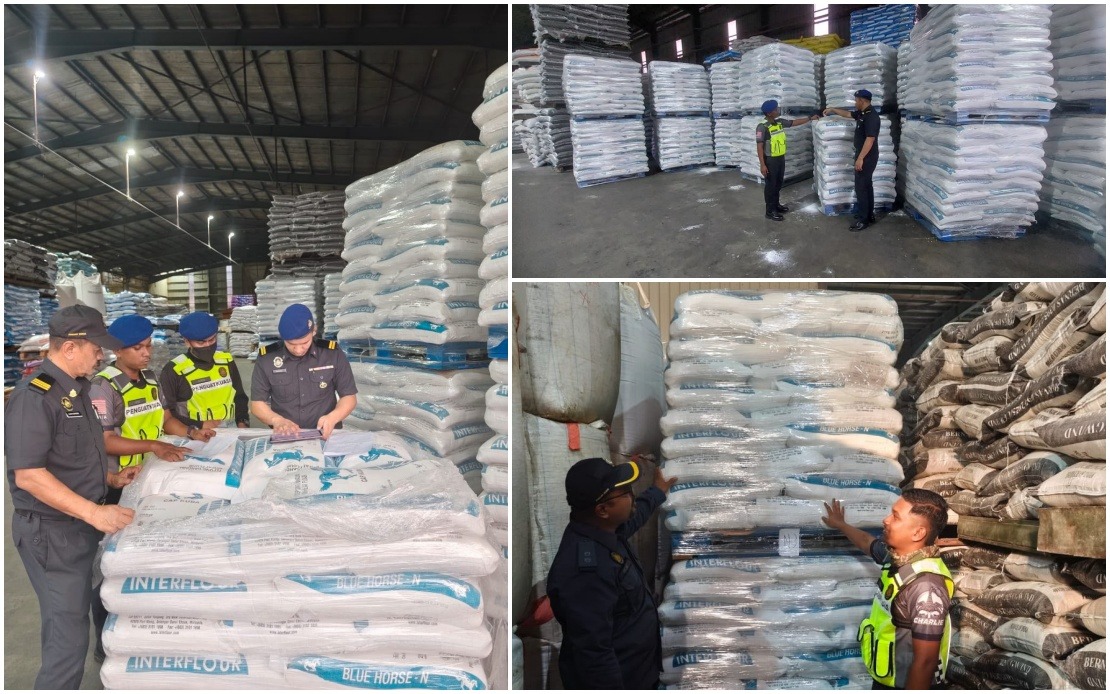
The Ministry of Domestic Trade and Cost of Living (KPDN) Kedah branch has confiscated a substantial quantity of wheat flour from an animal feed production facility in the Kuala Ketil Industrial Area, marking another regulatory crackdown on potential supply chain violations in the region. The operation, executed on June 15 by four enforcement officers from the Baling branch at approximately 4.30 pm, targeted what authorities suspected to be illicit stockpiling of flour without requisite government authorisation.
According to Kedah KPDN director Muhammad Nizam Jamaludin, the inspection revealed wheat flour that the factory appeared to be incorporating into its animal feed manufacturing process. The discovery of 53,325 kilogrammes of flour—valued at an estimated RM100,251—raised immediate concerns about compliance with regulatory frameworks governing controlled commodity distribution. Such enforcement activities reflect the ministry's intensified vigilance over the movement and storage of subsidised or regulated goods within industrial sectors.
The facility manager, a 25-year-old Malaysian, could not present valid documentation authorising the storage of flour at the premises. Specifically, he failed to furnish a permit or written approval from the Supply Controller, a critical requirement under existing legislation. This absence of proper authorisation forms the foundation of the suspected violation, suggesting the factory may have been operating outside approved parameters for handling regulated commodities.
The case has been registered under Section 21 of the Control of Supplies Act 1961 (Act 122), a legal provision that governs the distribution, pricing, and authorised storage of essential goods deemed vital to national supply chain stability. This particular statute empowers authorities to regulate activities involving controlled items and impose penalties on entities that circumvent established protocols. Investigations into the matter remain ongoing, with officers gathering evidence to determine whether the flour originated from subsidised sources or was destined for unauthorised commercial purposes.
The ministry has signalled a firm stance against any misuse or diversion of subsidised commodities, warning that enforcement action will target parties found violating these provisions. The seizure underscores broader concerns about the integrity of Malaysia's subsidy system, which depends significantly on proper monitoring at manufacturing and storage points. When subsidised goods are diverted or stored without approval, they can distort market pricing, disadvantage legitimate businesses, and undermine government efforts to maintain affordable staple prices for consumers.
For the animal feed sector specifically, this raid reflects heightened scrutiny of supply chain documentation and licensing compliance. Manufacturers relying on wheat flour as a production input must maintain transparent records of procurement sources and maintain proper storage permits. The incident serves as a cautionary reminder that industrial operators cannot assume that using essential ingredients for legitimate manufacturing purposes exempts them from obtaining necessary approvals, particularly when subsidised materials are involved.
The ramifications of such enforcement actions extend beyond the immediate facility and factory manager involved. They signal to other industrial operators in Kedah and across Malaysia that regulatory bodies possess the capacity and resolve to conduct unannounced inspections and impose significant financial consequences for non-compliance. The seizure of goods valued at over RM100,000 represents a substantial loss for the operator and may deter similar practices elsewhere.
From a supply chain perspective, this case highlights the complexity of flour distribution in Malaysia, where multiple pathways exist for the commodity to move from importers and millers to end-users. The presence of substantial quantities in an animal feed factory without proper authorisation suggests either inadequate documentation systems or deliberate circumvention of regulatory channels. Either scenario warrants investigation to prevent recurrence.
The broader context of such enforcement actions relates to Malaysia's ongoing efforts to safeguard the effectiveness of its subsidy regime amid fiscal pressures and the need to target assistance to genuine consumers. When controlled goods leak into unauthorised storage or usage, they create artificial scarcities in regulated channels and increase pressure on government budgets. The KPDN's proactive approach to detecting and confiscating illicit stocks directly supports this objective.
As investigations proceed, the case will likely establish important precedents regarding enforcement standards within the industrial food processing sector. Operators importing or storing flour in bulk quantities should expect heightened verification of documentation and authorisation credentials. The incident underscores that Malaysia's regulatory framework treats the movement of essential commodities with considerable seriousness, and compliance is not optional even for manufacturing enterprises with legitimate end-use requirements.