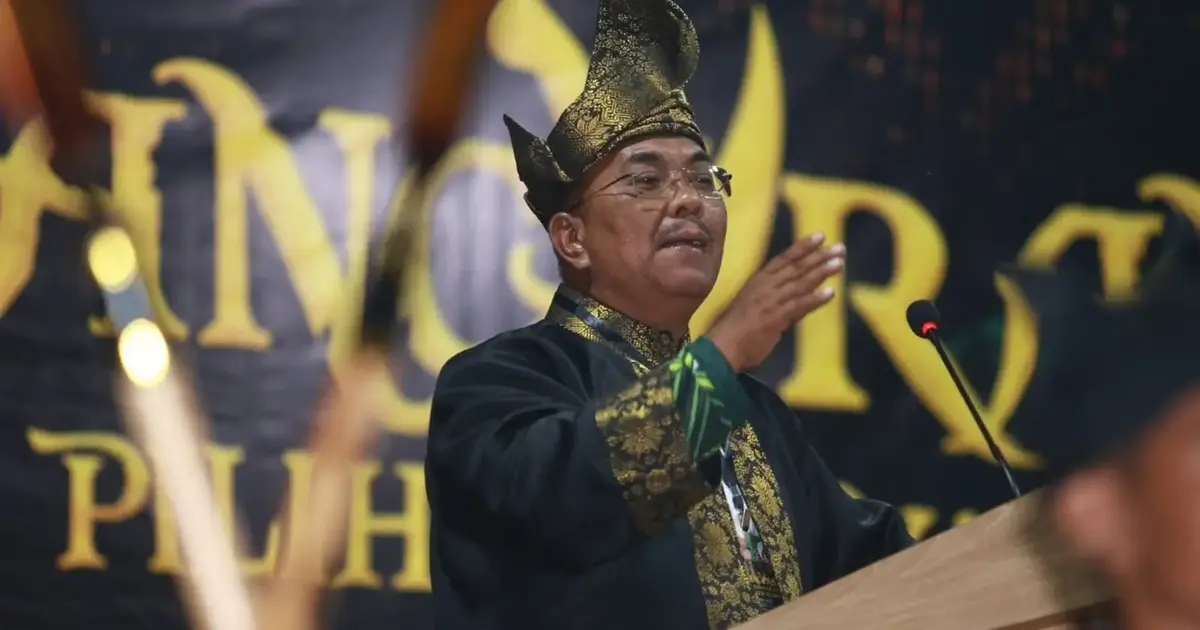
Menteri Besar Muhammad Sanusi Md Nor's ambitions for a dominant electoral showing in Kedah may face steeper obstacles than his party's current momentum suggests, according to opposition lawmakers who argue that voter expectations and government accountability will ultimately determine electoral outcomes in the northern state.
Bau Wong Bau Ek, the PKR representative, emphasised that voters in Kedah will ultimately assess the state government on measurable results and service delivery rather than blanket political endorsements. His argument reflects a broader conviction among Pakatan Harapan strategists that the electorate remains fundamentally pragmatic, evaluating state administrations through the lens of tangible improvements in infrastructure, healthcare, education, and economic opportunities that directly affect their daily lives. This perspective challenges the notion that a single political wave or sentiment can automatically translate into overwhelming electoral dominance across an entire state.
DAP's Teh Swee Leong offered a complementary critique, contending that the much-publicised political momentum credited to PAS and Perikatan Nasional in Kedah lacks the substantive strength suggested by some analyses. His assertion implies that media coverage and political commentary may overstate the depth of grassroots support for the governing coalition, particularly among younger voters and urbanised constituencies that demand nuanced policy platforms rather than mere party affiliation. The distinction between perceived and actual political momentum has become increasingly important in Malaysian electoral calculations, where demographic shifts and rising voter sophistication complicate traditional assumptions about bloc voting and regional dominance.
The disagreement reflects broader tensions in Kedah's political trajectory. Since Muhammad Sanusi Md Nor's administration took office, the state has witnessed significant political repositioning, with PAS and Perikatan Nasional consolidating control after the 2022 federal elections fundamentally altered the country's political configuration. However, the path forward remains uncertain, with opposition parties maintaining that developmental deficits and governance challenges provide openings for revival despite current setbacks.
Kedah's economic performance has become a focal point of this political discourse. The state's agricultural sector, traditionally its economic backbone, faces persistent challenges from climate variability, declining commodity prices, and the outmigration of younger workers seeking opportunities in more urbanised centres. Opposition representatives argue that these structural economic issues cannot be addressed through political rhetoric alone, and that voters will increasingly demand substantive policy responses from whatever administration holds power.
The opposition's confidence in remaining competitive despite current unfavourable circumstances also reflects calculations about voter behaviour in specific parliamentary constituencies and state assembly districts. Malaysia's electoral system creates important local variations, where pocket constituencies with particular demographic characteristics or economic interests may vote differently from broader state trends. The Pakatan Harapan strategy appears to focus on consolidating strength in urban areas and Chinese-majority constituencies, where policy concerns around education, religious pluralism, and economic equity typically resonate more strongly than in rural, Malay-Muslim-majority regions where PAS and Perikatan Nasional historically enjoy deeper support.
The timing of these statements also carries significance within Malaysia's broader political calendar. With speculation about when the Kedah state election might be called—the state assembly's term extends until mid-2026—political parties are positioning themselves for the contest ahead. The opposition's readiness to openly challenge the notion of an invincible governing coalition suggests that Pakatan Harapan believes it retains realistic pathways to political recovery, even if immediate prospects appear difficult.
Internally, Kedah's PAS leadership faces its own complexities. The party must balance its coalition obligations to Perikatan Nasional at the federal level with regional political dynamics and intraparty aspirations. Earlier tensions within PAS between different factions—some advocating for more accommodative Islamic policies while others push for stricter interpretations—occasionally surface in state administration, creating openings for opposition criticism about inconsistent governance.
The opposition's counter-narrative also addresses the concern that voter disengagement and low turnout could further consolidate the position of parties with stronger organisational machinery. Both PKR and DAP have emphasised grassroots mobilisation and community engagement as antidotes to declining political participation, though their success in Kedah remains uncertain given the state's specific demographic and electoral composition.
Looking forward, the credibility of these opposition assertions will ultimately depend on whether Kedah's government can demonstrate measurable improvements in service delivery, economic opportunity, and governance quality. If the state government fails to address voter concerns about employment prospects, educational standards, or infrastructure development, the political opening that Pakatan Harapan anticipates could indeed materialise. Conversely, should the Muhammad Sanusi Md Nor administration succeed in translating its current political mandate into visible developmental achievements, the opposition's recovery prospects may narrow considerably regardless of their current confidence.