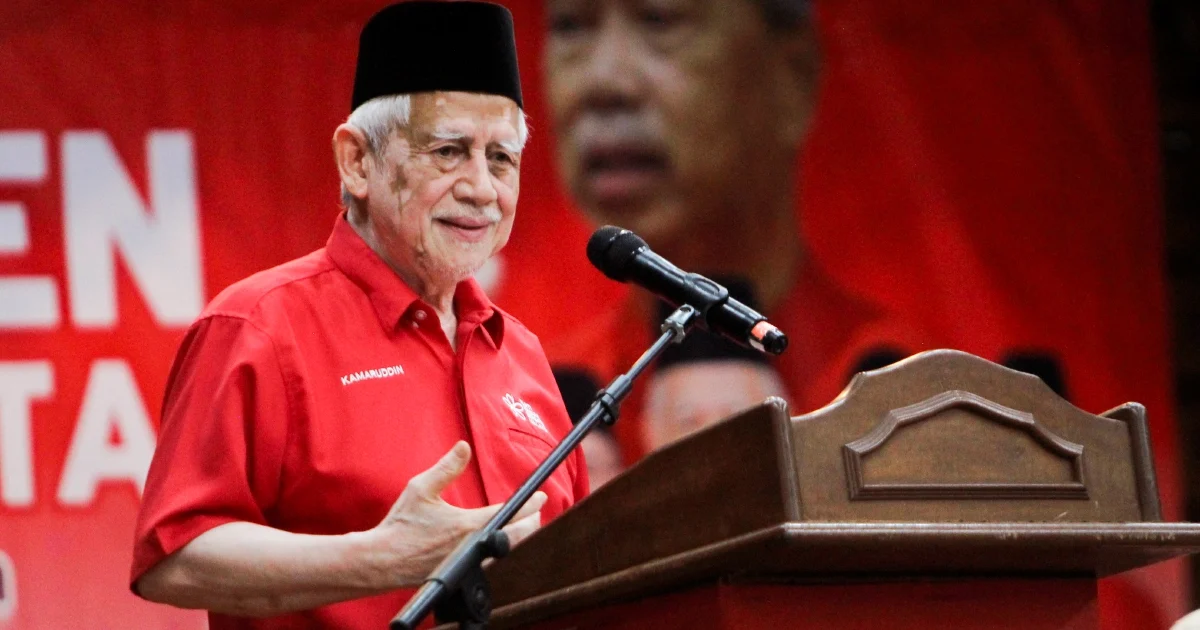
Perikatan Nasional's recent decision to exclude Datuk Seri Mohamed Azmin Ali and Datuk Dr Mohd Radzi Md Jidin from its leadership hierarchy drew a measured response from the Kelantan chapter of Bersatu, signalling little disruption within the coalition's local structures despite the significant national changes announced at the highest level.
The reshuffling of PN's top positions represents another phase of internal reorganisation within the coalition, which has experienced considerable flux since its formation ahead of the 2023 general election. The removal of two senior figures marks a notable adjustment to the party's strategic direction and power dynamics, particularly as Malaysia's political landscape continues to evolve with shifting alliances and factional pressures within the broader Malay-Muslim political establishment.
Kelantan Bersatu's apparent equanimity regarding the leadership changes underscores the growing compartmentalisation of decision-making within the PN coalition structure. State-level party chapters have increasingly operated with a degree of autonomy, particularly when national-level adjustments do not directly impinge upon their immediate operational interests or regional political calculations. This separation of concerns between national leadership realignments and ground-level political machinery has become increasingly pronounced as the coalition matures beyond its initial formation phase.
The non-reaction from Kelantan's Bersatu leadership suggests that neither Azmin nor Radzi held critical functional roles within the state party's operational framework. This indicates a stratification within PN's structure where national leadership positions, while symbolically important, may not necessarily wield decisive influence over how state-level machinery functions. The Kelantan delegation's calmness also hints at pre-coordination between national and state party structures, suggesting that the reshuffle was executed with awareness across multiple layers of the coalition.
Datuk Seri Mohamed Azmin Ali, who had previously held various significant positions within both PKR and later PN, has been a persistent fixture in peninsular Malaysian politics despite periodic controversies. His removal from the PN leadership line-up reflects broader calculations about coalition architecture and representation. Datuk Dr Mohd Radzi Md Jidin, meanwhile, has held ministerial responsibilities and wielded considerable influence through institutional channels, making his exclusion from the formal leadership structure potentially more symbolic than substantive in terms of actual power retention.
The timing of this reshuffle carries implications for PN's positioning ahead of any future electoral contests. By streamlining its leadership structure and removing individuals who may have been perceived as divisive or whose political trajectories had become complicated, the coalition signals an attempt to present a more cohesive and forward-looking image. This recalibration often occurs when political entities seek to refocus messaging or prepare for electoral cycles, though PN has offered no explicit rationale tied to specific electoral timelines.
For Malaysian observers tracking coalition dynamics, the Kelantan response illustrates how federal-level political decisions filter through regional structures with varying degrees of consequence. In state-level politics, particularly in Kelantan where PN commands significant electoral influence, the functional importance of national leadership positions diminishes relative to state-specific factional balances and relationships with local administrative apparatus. This reality often escapes the attention of political analysts who focus predominantly on federal-level drama.
The stability demonstrated by Kelantan Bersatu in the wake of these changes also reflects the maturation of the state party's own institutional structures. Early coalition formations often experience destabilisation when national-level changes occur, as subordinate structures remain uncertain about implications for resource allocation, patronage networks, and operational autonomy. Kelantan's calm reaction suggests the state chapter has achieved sufficient institutional robustness to weather adjustments in national leadership without experiencing cascading internal disruptions.
Within the broader context of Malaysia's political trajectory, PN's internal reorganisations represent attempts to optimise coalition effectiveness while managing internal contradictions. The coalition brings together parties with distinct historical identities and sometimes competing organisational interests, necessitating periodic adjustments to leadership configurations to maintain equilibrium. These recalibrations often reflect the outcomes of internal negotiations where factions within the coalition jostle for influence and positions reflecting their perceived strength and utility to overall coalition objectives.
Kelantan's political significance within PN cannot be understated, as the state represents a core electoral stronghold for the coalition during national contests. The Kelantan Bersatu chapter's unflustered response to the national reshuffle suggests confidence in maintaining this position regardless of changes at the federal leadership level. This confidence may stem from deep roots within the state's political machinery and assured support among local constituencies that remain relatively stable across electoral cycles.
The distinction between symbolic leadership positions and actual operational control has become increasingly apparent in Malaysian coalition politics. Individuals removed from formal leadership arrangements may retain considerable influence through institutional roles, ministerial responsibilities, or control over patronage networks. The Kelantan chapter's reaction implicitly acknowledges this reality, recognising that national leadership titles, while important for protocol and representation purposes, do not necessarily determine the practical dynamics of political power and resource distribution.
Moving forward, how PN manages these periodic internal adjustments will continue shaping perceptions of coalition stability among voters and observers. State-level chapters like Kelantan Bersatu serve as bellwethers for broader coalition health, as their capacity to absorb national-level changes without visible strain suggests institutional resilience. Conversely, dramatic local reactions to federal decisions often signal deeper fissures within coalition structures that may eventually surface during electoral contests or policy disputes requiring broad coalition agreement.