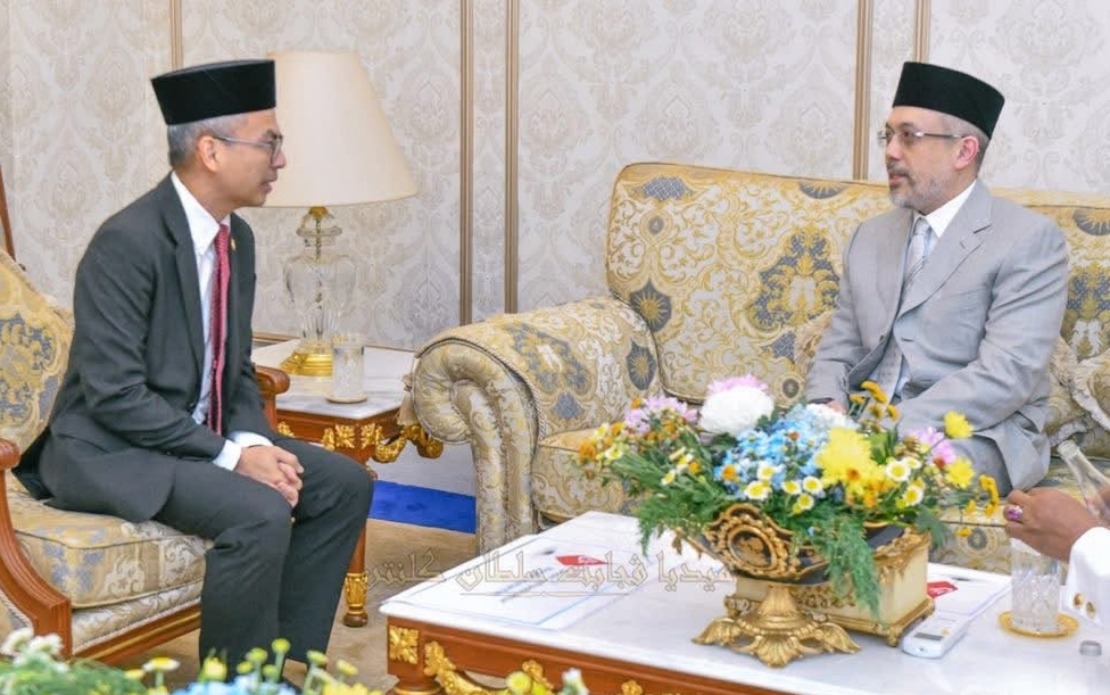
The Regent of Kelantan, Tengku Muhammad Fakhry Petra, granted an audience to Communications Minister Datuk Fahmi Fadzil at Kota Lama Palace in Kota Bharu on June 16, marking a formal engagement between the state's royal household and the federal ministry responsible for overseeing Malaysia's digital communications landscape. The meeting, which commenced at 5 pm and extended for approximately one hour, reflected the growing significance of coordinating responses to digital threats that transcend institutional and geographical boundaries. Such palace audiences typically signal the gravity with which particular policy matters are being treated across Malaysia's constitutional hierarchy.
The primary purpose of Fahmi's visit centred on providing the Regent with a comprehensive briefing concerning recent developments and official reports emanating from the Ministry of Communications' portfolio. This included detailed discussions on operational matters, strategic initiatives, and emerging challenges that fall within the ministry's remit. By presenting updates directly to the Regent, the Minister sought to ensure that Kelantan's royal institution remained fully apprised of federal government efforts addressing issues affecting the state and the nation more broadly. The choice to conduct this briefing at the palace underscored the collaborative relationship between state rulers and federal authorities on matters of national consequence.
Central to the discussions were escalating concerns regarding the proliferation of counterfeit social media accounts and the attendant surge in misinformation campaigns. The Malaysian digital ecosystem has experienced a documented increase in coordinated inauthentic activity, with malicious actors deploying fake profiles to amplify divisive narratives and undermine public trust in institutions. These phenomena disproportionately affect sensitive domains, including constitutional matters and the standing of Malaysia's royal institutions, which occupy a constitutionally protected and culturally significant place in Malaysian society. The sophistication of such operations has evolved considerably, making traditional detection methods increasingly inadequate.
The false news and negative content targeting the Malaysian Royal Institution represent a particular concern because such attacks simultaneously threaten constitutional stability and social cohesion. Malaysia's Federal Constitution accords special protections to the institution of the monarchy, reflecting its role as a unifying symbol across diverse communities. When coordinated disinformation campaigns exploit social media algorithms to weaponise criticism or spread fabricated narratives about royal figures, they potentially undermine public confidence in foundational state institutions. This dynamic has prompted heightened vigilance among government agencies tasked with protecting Malaysia's information environment from malicious foreign and domestic actors.
The inclusion of the Senior Private Secretary to the Minister of Communications, MohamadAsif Afifi Mohd Yusof, alongside accompanying ministerial staff demonstrated the official and substantive nature of the engagement. Such delegations typically indicate that technical experts, policy advisers, and administrative personnel were present to address detailed questions and provide specialised briefings on specific challenges. The composition of the ministerial delegation reflected both the complexity of digital policy issues requiring interdisciplinary expertise and the importance of demonstrating institutional capacity to address royal concerns with appropriate personnel and resources.
Kelantan's participation in these discussions holds particular significance given the state's unique constitutional position and historical prominence within Malaysia's federal structure. As one of the oldest sultanates in the Malay peninsula, Kelantan maintains substantial autonomy over certain matters and commands considerable influence within Malay-Muslim political discourse. The Regent's willingness to receive formal briefings on digital misinformation signals recognition that fake accounts and false narratives represent threats extending beyond administrative technicalities to encompass fundamental questions of institutional integrity and public discourse quality. This positions digital literacy and information security as governance priorities at the state level.
The presentation of a commemorative gift from Fahmi to Tengku Muhammad Fakhry Petra followed customary diplomatic protocol observed in formal palace audiences. Such tokens of respect serve symbolic functions within Malaysia's ceremonial traditions, acknowledging the dignity of the royal recipient and formalising the respectful nature of the government's approach to state-level engagement. The gesture conveyed that the Ministry of Communications regarded its consultation with the Regent not merely as a courtesy but as an important dimension of building coordinated responses to digital threats.
Following the formal discussions, the audience concluded with informal social interaction and photographic documentation. These concluding elements served multiple purposes: they reinforced the collegial relationship between federal and state institutions, provided visual evidence of harmonious cooperation for stakeholder communications, and created opportunities for relaxed conversation that might yield additional insights or clarifications beyond formal briefing parameters. The attendance of senior officers from the Kelantan Sultan's Office ensured that the state administration's broader leadership remained informed of the ministry's initiatives and policy directions.
The timing of this audience reflects Malaysia's evolving approach to information governance. As social media platforms have become dominant channels for political discourse and information dissemination, both state and federal authorities have recognised that protecting institutional reputation requires proactive engagement with digital challenges. The collaborative framework demonstrated in Kota Bharu exemplifies how Malaysia's constitutional structures enable federal agencies to coordinate with state rulers on matters affecting national interest while respecting the constitutional prerogatives and dignity of the sultanates. This mode of governance has become increasingly essential as disinformation campaigns become more sophisticated and geographically distributed.
Looking forward, the engagement between the Communications Minister and Kelantan's Regent establishes a precedent for deepened institutional dialogue on digital policy matters. As fake accounts continue proliferating across major platforms, the Malaysian government faces mounting pressure to develop comprehensive strategies that address both the technical dimensions of account authentication and the content-moderation challenges associated with false narratives. By maintaining regular consultation with state authorities, the ministry can calibrate its approaches to account for regional variations in vulnerability and develop responses that enjoy legitimacy across Malaysia's federal system. The Kota Bharu meeting thus represents not merely an isolated diplomatic courtesy but a substantive engagement reflecting Malaysia's commitment to protecting its information environment and institutional frameworks against coordinated disinformation threats.