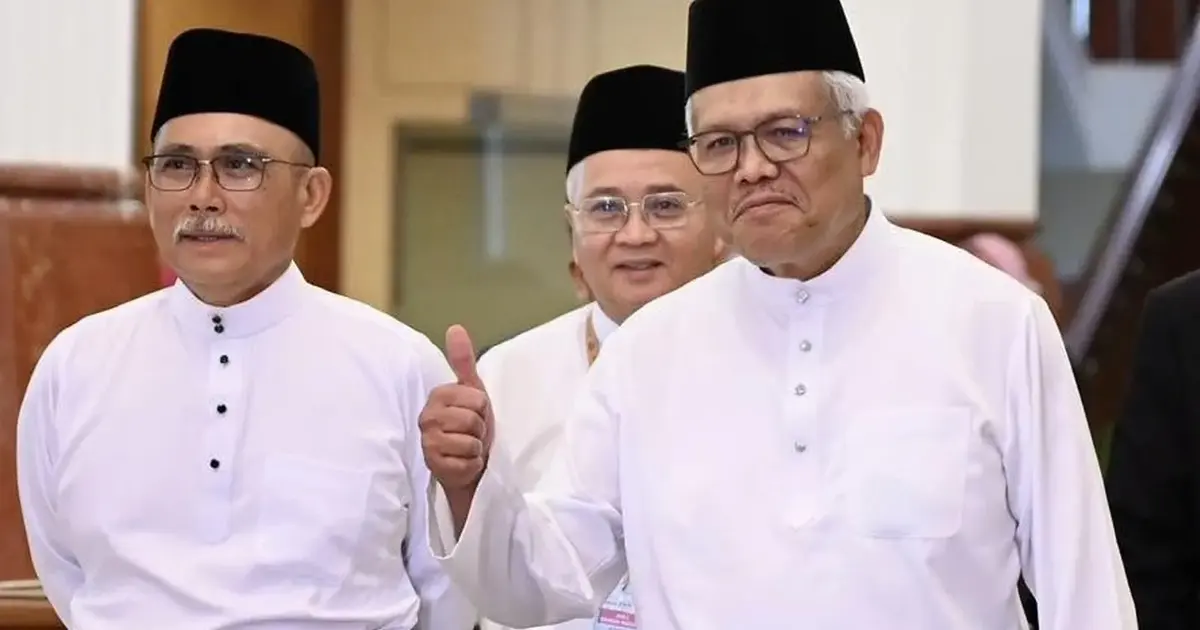
Hamzah Zainudin's appointment as opposition leader has drawn clarification from within the Bersatu party hierarchy, with a suspended vice-president explaining the reasoning behind the controversial decision. According to Kiandee, the choice of the Larut MP to lead the parliamentary opposition reflected genuine support from significant political blocs rather than an arbitrary or contested decision. The explanation comes amid broader questions about the consolidation of opposition strength following recent political realignments in Malaysia's parliament.
Kiandee's intervention underscores the factional complexities within Bersatu even as the party navigates its role in the wider opposition coalition. As a suspended member of the party's senior leadership, Kiandee's public statements carry weight within internal party discussions, suggesting that the Hamzah appointment enjoyed backing from multiple quarters. The emphasis on this multi-party support appears designed to legitimise the choice and demonstrate that it reflected genuine political consensus rather than narrow factional interest.
The backing cited by Kiandee extended specifically to PAS, which according to the account threw its support wholesale behind Hamzah for the opposition leadership post. This bloc endorsement from an Islamic party signals the degree to which opposition coalition partners have coordinated their positioning in parliament. For Malaysian voters observing opposition dynamics, PAS's unified backing carries particular significance given the party's traditional influence and its ability to mobilise support among specific constituencies across the country.
Within Bersatu itself, Kiandee stressed that Hamzah commanded majority backing from party MPs. This is a critical detail because Bersatu, despite its reduced parliamentary footprint compared to previous years, still maintains meaningful representation in the Dewan Rakyat. A majority position among Bersatu MPs translates to genuine party-level endorsement, distinguishing the decision from a scenario where the opposition leader might have been imposed by external partners or senior leaders without broad party consensus.
The articulation of these support bases reflects how Malaysia's opposition has had to rebuild its coherence following the 2023 general election and subsequent parliamentary developments. Opposition leadership carries symbolic importance beyond mere parliamentary mechanics—it signals which figures command respect across multiple political entities and which coalitions are functional enough to agree on their highest-ranking spokesperson in parliament. Hamzah's selection thus represents a statement about the current state of opposition unity and his standing within that ecosystem.
Understanding the weight of this appointment requires grasping the fluid nature of Malaysian opposition politics over the past decade. The opposition has cycled through various configurations, from Pakatan Harapan's historic 2018 triumph to subsequent fragmentations and realignments. Against this backdrop, securing agreement across PAS and Bersatu on a single opposition leader represents a consolidation achievement, even if opposition parties remain far from unified on many policy matters.
For Southeast Asian observers watching Malaysia's democratic processes, the emphasis on documented support for Hamzah also reflects broader regional patterns. Parliamentary opposition leadership often becomes contested terrain in democracies across Southeast Asia where coalition-building requires negotiation among parties with divergent ideologies and organisational structures. That Kiandee felt compelled to publicly detail the support base for this appointment suggests awareness that legitimacy in such matters cannot be assumed but must be demonstrated and articulated.
The suspended status of Kiandee himself adds an additional layer to these explanations. His willingness to defend the Hamzah appointment despite facing party discipline indicates the robustness of party sentiment on the matter. Internal Bersatu disagreements have been substantial enough to warrant suspensions and disciplinary actions, yet on the opposition leadership question, Kiandee saw fit to speak publicly in support of the choice, suggesting this was not a contentious decision within the party.
Looking forward, the architecture of opposition leadership that Kiandee describes—with PAS providing en-bloc support and Bersatu contributing majority backing from its parliamentary contingent—establishes the institutional foundation upon which Hamzah must now operate. Opposition leaders in Malaysia depend heavily on day-to-day parliamentary coordination with their supporting MPs and parties. The clarity about support levels matters because it indicates the resources and political capital available to Hamzah as he performs his opposition duties.
The broader implications of this appointment extend to Malaysia's governance trajectory. A functioning opposition serves essential parliamentary functions including scrutiny of government business, articulation of alternative policy positions, and representation of constituencies where government parties lack support. Hamzah's appointment with documented backing across multiple opposition entities thus carries significance beyond internal party optics, touching on the health of the overall legislative system and the strength of democratic accountability mechanisms that depend on robust opposition participation.