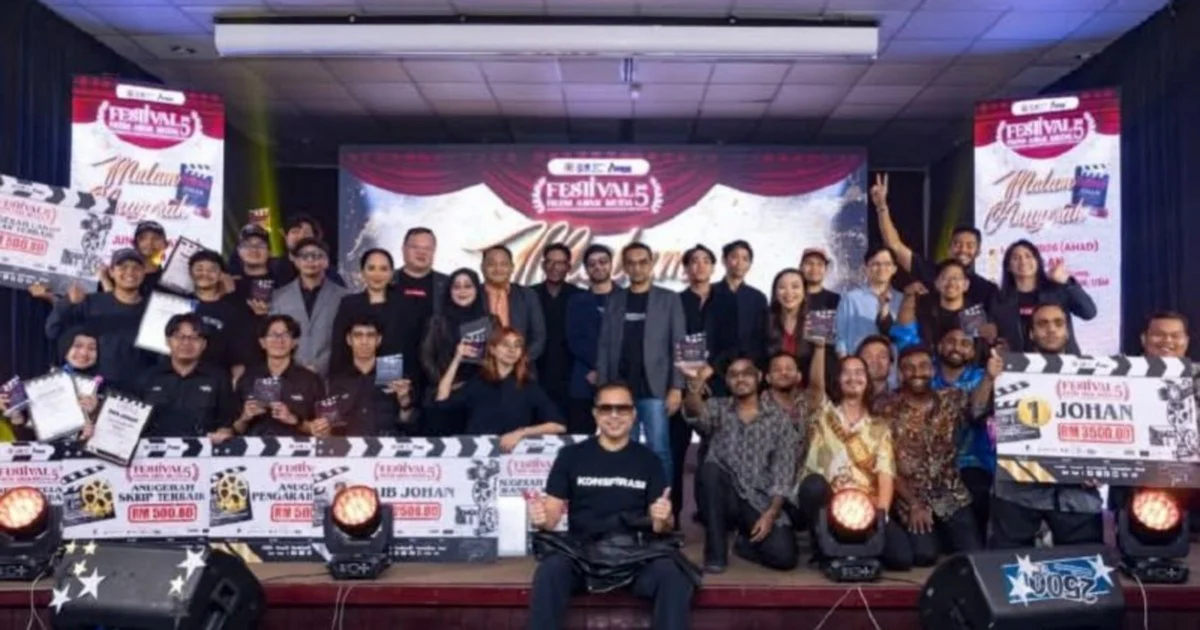
The Malaysian Anti-Corruption Commission has identified film festivals as a powerful vehicle for embedding anti-corruption principles into the consciousness of young Malaysians. By partnering with Universiti Sains Malaysia to present the 5th Youth Film Festival in Penang, the MACC is pursuing a creative strategy that moves beyond traditional enforcement and penalties to address corruption at its source: the values and attitudes of the nation's emerging leaders.
This collaborative initiative represents a significant shift in how Malaysia's anti-corruption body engages with youth populations. Rather than relying solely on legal enforcement mechanisms and criminal investigations, the MACC recognises that cinematic storytelling possesses a unique capacity to communicate ethical principles in ways that resonate emotionally with younger audiences. Film has proven globally to be an effective medium for changing social attitudes and building consensus around complex policy issues, and Malaysia's commission is now tapping into this potential.
The Youth Film Festival serves as an ideal platform for this messaging. By hosting the event at Universiti Sains Malaysia, the MACC gains direct access to thousands of tertiary-level students at a formative stage in their personal and professional development. These young filmmakers, film scholars, and cinema enthusiasts represent the intellectual and creative backbone of Malaysia's future workforce, spanning industries from government service to private enterprise, media, and entertainment. Instilling integrity principles during these university years can influence how these individuals approach ethical challenges throughout their careers.
The timing of this partnership reflects broader regional and global trends. Southeast Asian nations face persistent challenges with corruption that hamper economic development, erode public trust, and distort market competition. Malaysia's ongoing efforts to strengthen its anti-corruption framework have made citizen engagement and values-building a central component of the country's integrity architecture. By involving youth in this conversation through a medium they actively consume and create, the MACC multiplies the reach and impact of its messaging beyond what traditional campaigns might achieve.
Film festivals organised around anti-corruption themes have gained traction internationally as tools for public education. Documentary filmmaking, in particular, allows creators to explore real cases, systemic vulnerabilities, and the human costs of corruption in ways that inform and mobilise audiences. By opening space for young Malaysian filmmakers to contribute their own perspectives and creative interpretations of integrity issues, the MACC also empowers youth as agents of change rather than passive recipients of anti-corruption instruction.
The festival's location in Penang carries additional significance. As Malaysia's economic and tourism hub on the northern coast, Penang faces its own governance challenges and public sector integrity concerns. Engaging the state's young talent pool in conversations about corruption prevention builds local capacity and demonstrates the MACC's commitment to nationwide presence beyond the federal capital. Young filmmakers in Penang who produce work within this festival framework become ambassadors for integrity principles within their own communities.
This approach also acknowledges a crucial insight about generational attitudes toward corruption. Younger Malaysians, particularly those in tertiary education, tend to express higher expectations for transparency and ethical conduct from public officials and institutions. They have grown up in an era of digital transparency and global connectivity, making them both more aware of corruption scandals and more sceptical of institutions that fail to enforce accountability. By engaging youth through culturally relevant channels like film, the MACC signals responsiveness to how younger generations prefer to engage with civic issues.
The creative arts collaboration further distinguishes this initiative from traditional anti-corruption campaigns. Rather than propagandistic messaging or heavy-handed instruction, film allows for nuance, complexity, and human storytelling that invites audiences to think critically about ethical dilemmas. This educational approach is more likely to foster genuine commitment to integrity principles than fear-based messaging or legal warnings alone.
For Malaysia's broader anti-corruption ecosystem, this partnership exemplifies institutional evolution. The MACC, traditionally known as an investigative and prosecutorial body, is expanding its identity to include prevention and education. This diversification strengthens the overall effectiveness of Malaysia's anti-corruption framework by addressing demand-side factors—the values, attitudes, and consciousness of potential violators—rather than relying solely on supply-side enforcement measures that catch wrongdoing after the fact.
The Youth Film Festival initiative also creates measurable benefits for strategic communications. Winning films and festival productions become digital content that can be distributed far beyond the Penang venue, reaching Malaysian youth across the peninsula through social media, universities, and streaming platforms. In this way, a single festival event generates multiplicative impacts across the nation's youth population.
The partnership between MACC and USM at the 5th Youth Film Festival ultimately reflects a maturing approach to anti-corruption work in Malaysia. Rather than viewing integrity solely as a compliance obligation enforced through punishment, this initiative positions anti-corruption as a values question best addressed through creative engagement with rising generations. For Malaysian youth seeking to understand their role in building a more transparent and accountable society, this festival offers both a creative platform and a civic calling.