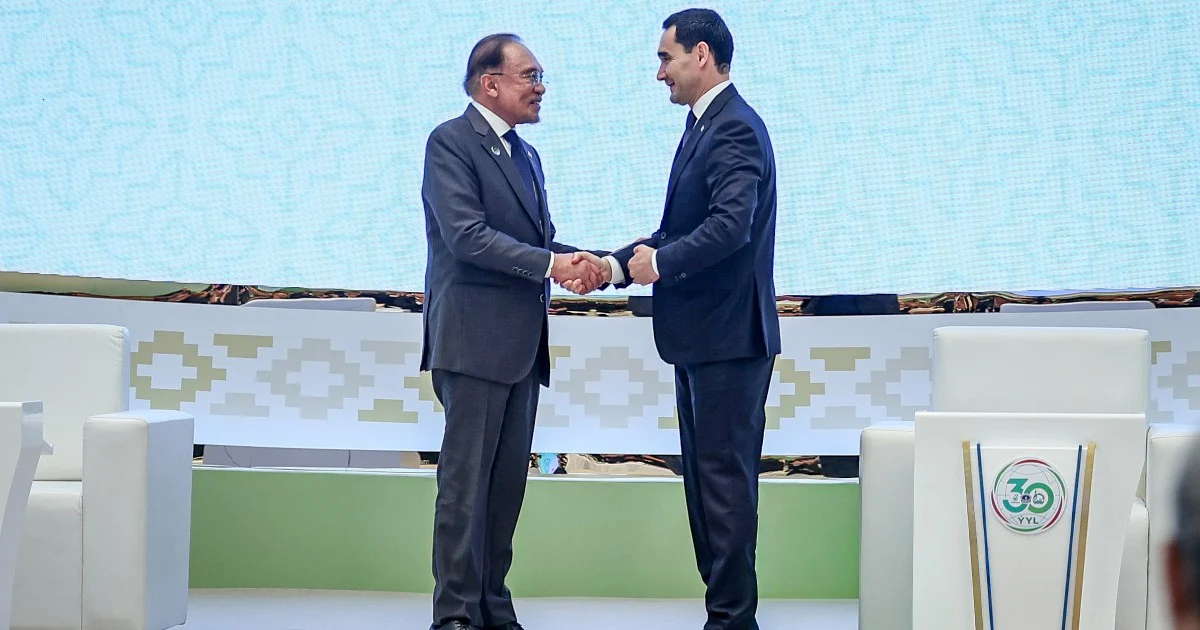
Malaysia and Turkmenistan have established an expanded framework for bilateral cooperation spanning energy, trade, and investment sectors, marking a significant diplomatic development in Southeast Asia's relationships with Central Asian economies. The commitment emerged following Prime Minister Datuk Seri Anwar Ibrahim's official visit to Turkmenistan, where both nations identified strategic areas for mutual benefit and long-term economic growth.
The energy sector represents the cornerstone of this renewed partnership, reflecting Malaysia's persistent need to diversify its hydrocarbon sources and strengthen its position as a regional energy hub. Turkmenistan, sitting atop some of the world's most substantial natural gas reserves, views deeper engagement with Southeast Asian economies as essential to expanding its market reach beyond traditional purchasers in Europe and China. This convergence of interests creates a foundation for sustained commercial relationships that could reshape regional energy dynamics.
Beyond energy security, both governments have committed to broadening their economic footprint through increased bilateral trade and investment flows. Malaysian companies operating in sectors ranging from manufacturing to technology services stand to gain from access to Turkmenistan's growing middle class and developing infrastructure projects. Conversely, Turkmenistan's state enterprises may find opportunities in Malaysia's advanced financial services sector and established regional distribution networks.
Transportation links constitute another critical pillar of the expanded partnership. Improved connectivity between the two nations through enhanced shipping routes, air services, and logistics infrastructure would facilitate smoother commerce and reduce transaction costs for businesses operating across both economies. For Malaysia, better transport connections to Central Asia could position the country as a crucial intermediary for goods flowing between Europe and Asia, thereby strengthening Kuala Lumpur's role as a global trading centre.
Educational exchanges represent an underutilized avenue for building lasting ties between nations, and both Malaysia and Turkmenistan have recognized this potential. Increased student mobility, academic partnerships, and knowledge-sharing programs would foster cultural understanding while developing a cadre of professionals familiar with both economies. Malaysian universities increasingly attract Central Asian students, and this partnership could accelerate that trend while creating networks that generate business opportunities for decades to come.
Technology collaboration emerges as particularly promising given Malaysia's established position in digital innovation, semiconductors, and financial technology. Turkmenistan's ongoing efforts to modernize its economy and develop smart city infrastructure align with Malaysian expertise in these domains. Joint ventures in areas such as telecommunications, cybersecurity, and renewable energy technology could establish Malaysia as a preferred technology partner for Central Asian nations seeking alternatives to traditional suppliers.
The timing of this partnership carries geopolitical significance. As regional powers recalibrate their strategies following global economic shifts, Southeast Asian nations are actively cultivating relationships across diverse regions rather than concentrating their engagement in traditional Western markets or near-neighbour relationships. Malaysia's initiative in deepening ties with Turkmenistan reflects a pragmatic, diversified approach to foreign economic policy that serves the nation's long-term stability and prosperity.
For Malaysian businesses, Turkmenistan represents a gateway to the broader Central Asian market encompassing over 70 million consumers with growing disposable incomes. The energy-rich nations in the region have invested heavily in infrastructure and are increasingly keen to attract international businesses that can bring technological expertise and management practices. Malaysian firms with experience operating in emerging markets possess distinct competitive advantages in navigating Turkmenistan's business environment.
Turkmenistan's perspective is equally strategic. The country has pursued a policy of neutrality in international affairs while gradually opening its economy to foreign investment. Partnerships with stable, technologically advanced Southeast Asian nations like Malaysia provide alternatives to historical dependencies on Russian and Chinese investors, offering Turkmenistan greater agency in shaping its economic trajectory. The relationship also signals Turkmenistan's desire to integrate more fully into regional and global economic structures.
The broader implications extend beyond bilateral relations. Malaysia's engagement with Central Asia through partnerships like this one reinforces ASEAN's growing interest in deepening connections with other regional groupings, including the Shanghai Cooperation Organisation and Central Asian institutions. Such relationships create networks for addressing transnational challenges including terrorism financing, drug trafficking, and climate change, areas where Malaysia and Turkmenistan share common concerns.
Implementing these commitments requires sustained political will and technical collaboration between relevant government ministries and state enterprises. Both nations must establish clear timelines, regulatory frameworks, and incentive structures to transform agreed principles into tangible commercial arrangements. Success will depend on creating transparent business environments, establishing dispute-resolution mechanisms, and protecting investor interests on both sides.
Looking forward, the Malaysia-Turkmenistan partnership exemplifies how Southeast Asian nations can leverage their geographic position, economic sophistication, and diplomatic credibility to forge meaningful international relationships. As global competition intensifies for energy resources, investment capital, and technology leadership, such strategic partnerships become increasingly vital to national interests. This agreement suggests Malaysia is positioning itself not merely as a participant in regional economics, but as an active architect of broader international commercial networks that extend far beyond traditional spheres of influence.