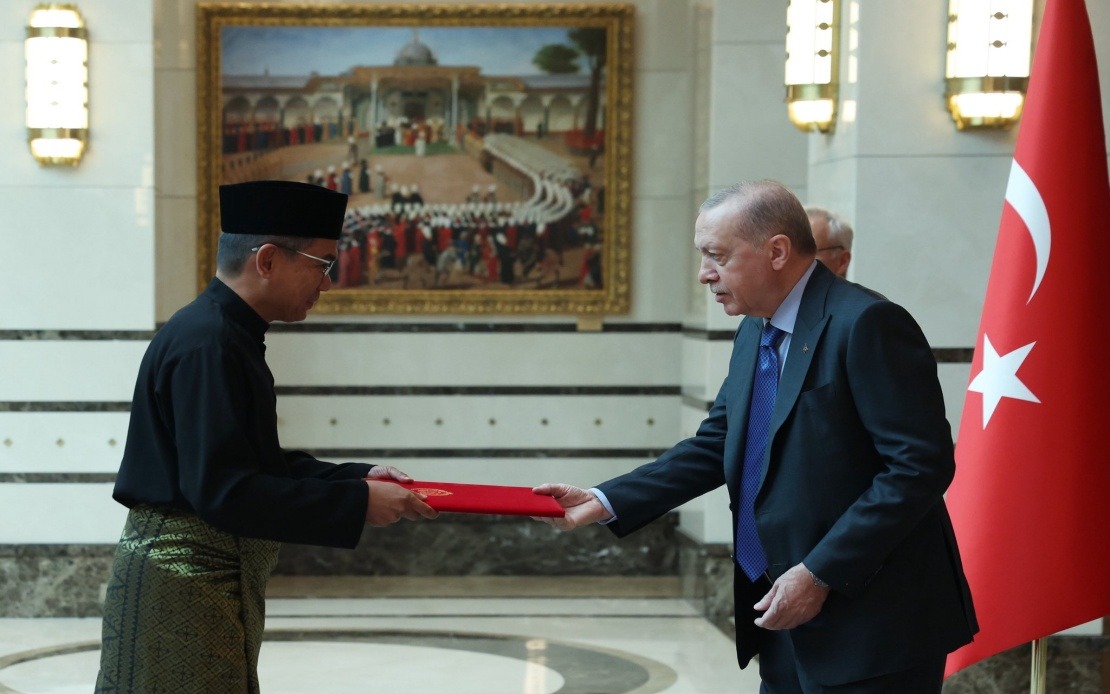
Malaysia has formally declared its backing for Türkiye's pursuit of ASEAN Dialogue Partner status, underscoring the deepening strategic relationship between Kuala Lumpur and Ankara. The endorsement came during a high-level diplomatic ceremony when Malaysian Ambassador to Türkiye, Adlan Mohd Shaffieq, presented his credentials to Turkish President Recep Tayyip Erdoğan at the Presidential Complex on June 17, signalling the importance both nations place on their bilateral ties and regional cooperation.
The ambassador's statement reflects Malaysia's confidence in Türkiye's commitment to Southeast Asian affairs and its potential to contribute meaningfully to ASEAN's broader strategic objectives. By formalising this support at such a prominent occasion, Malaysia has positioned itself as a key advocate for Ankara's regional integration, a move that carries significant weight within ASEAN's consensus-driven decision-making framework. The timing of this endorsement also demonstrates Malaysia's proactive diplomatic approach in shaping the regional architecture and expanding partnership networks with strategically important nations beyond Southeast Asia.
Türkiye has progressively strengthened its presence across Southeast Asia through multifaceted engagement that extends well beyond traditional diplomacy. The ambassador highlighted that Ankara's growing economic footprint, strategic perspective, and expanding connections with individual ASEAN states have positioned it as an increasingly consequential partner for the region. This assessment reflects Türkiye's sustained investment in building relationships with Southeast Asian economies and its demonstrated interest in participating in regional dialogue mechanisms that shape policy on critical issues.
The credentials ceremony itself carried symbolic weight, with Adlan conveying warm greetings from His Majesty Sultan Ibrahim, King of Malaysia, and Prime Minister Datuk Seri Anwar Ibrahim to President Erdoğan. This personalised diplomatic gesture underscores the significance Malaysia attaches to the Malaysia-Türkiye relationship and serves as a reminder that the two nations maintain robust high-level engagement channels. Such expressions of goodwill from Malaysia's top leadership are customary in diplomatic protocol but also reflect genuine commitment to nurturing ties with partners that share complementary interests and values.
The Malaysia-Türkiye partnership rests on foundations of mutual respect and shared aspirations that extend across multiple domains. Education, defence cooperation, and the halal industry represent three particularly fruitful areas where both countries have developed substantive collaboration frameworks. Malaysia's position as a global halal hub and Türkiye's significant standing in the Islamic world create natural synergies that benefit both economies. Defence partnerships, meanwhile, reflect broader regional security concerns and the mutual benefit of technology transfer and military cooperation in an increasingly complex geopolitical environment.
Ambassador Adlan emphasised that Malaysia and Türkiye have constructed a relationship grounded in special rapport, mutual confidence, and aligned objectives regarding peace, development, and prosperity. This characterisation goes beyond standard diplomatic language, suggesting that both governments view each other as reliable partners capable of supporting shared agendas within multilateral forums. The ambassador's explicit reference to building on the personal relationship between President Erdoğan and Prime Minister Anwar highlights how personal diplomatic ties at the highest levels often catalyse broader institutional cooperation and create momentum for expanding bilateral engagement.
The strategic collaboration between the two leaders extends beyond symbolic gestures into concrete policy domains. Ambassador Adlan articulated a clear vision for deepening cooperation across all sectors, leveraging the personal rapport and shared vision that characterise their leadership. This framing suggests ambitious plans for expanding trade, investment, and institutional partnerships that could position Türkiye as a more prominent player in Southeast Asian economic networks and policy discussions. For Malaysia, such deepening ties potentially open additional avenues for technology acquisition, defence capabilities, and participation in Türkiye's own regional initiatives and partnerships.
President Erdoğan's response to the credentials presentation reinforced Ankara's commitment to materialising the economic potential embedded in the bilateral relationship. The Turkish leader expressed confidence that commercial ties between the two nations would continue expanding, explicitly targeting a trade volume of US$10 billion. This ambitious figure represents a substantial increase from current levels and reflects both nations' determination to transform their political partnership into measurable economic benefits. Achieving such a target would require coordinated efforts to remove trade barriers, identify new sectors for bilateral commerce, and facilitate business-to-business connections that drive sustained economic interaction.
Türkiye's pursuit of ASEAN Dialogue Partner status carries implications that extend beyond bilateral Malaysia-Türkiye relations into the broader regional architecture. ASEAN's engagement framework with dialogue partners represents a carefully calibrated mechanism for managing relationships with major powers and strategically important nations while preserving ASEAN's centrality and decision-making autonomy. Türkiye's potential elevation to this status would acknowledge its growing relevance to Southeast Asian security, economics, and diplomacy while providing Ankara with a formal platform for participating in ASEAN-led discussions on regional issues ranging from maritime security to trade cooperation.
Malaysia's endorsement of Türkiye's aspirations aligns with Kuala Lumpur's broader foreign policy orientation toward building partnerships with diverse nations across multiple regions. By supporting Ankara's regional integration efforts, Malaysia reinforces its image as a constructive partner open to expanding ASEAN's external relationships with nations that can contribute meaningfully to regional development and stability. This stance reflects Malaysia's pragmatic approach to international relations, where deepening ties with Türkiye serves both immediate bilateral interests and longer-term objectives of creating a more inclusive and multipolar regional order.
The formal nature of this endorsement through official diplomatic channels signals that Malaysia's support for Türkiye's dialogue partner aspirations represents considered government policy rather than rhetorical flourish. Presenting this message during the ambassador's credentials ceremony ensured maximum visibility and underscored its significance to both governments. For ASEAN as a collective body, Malaysia's clear backing provides important momentum as Türkiye pursues formal dialogue partner designation, demonstrating that at least one major Southeast Asian economy views such an elevation as beneficial for regional interests and consistent with ASEAN's established principles of engaging globally while maintaining regional cohesion.