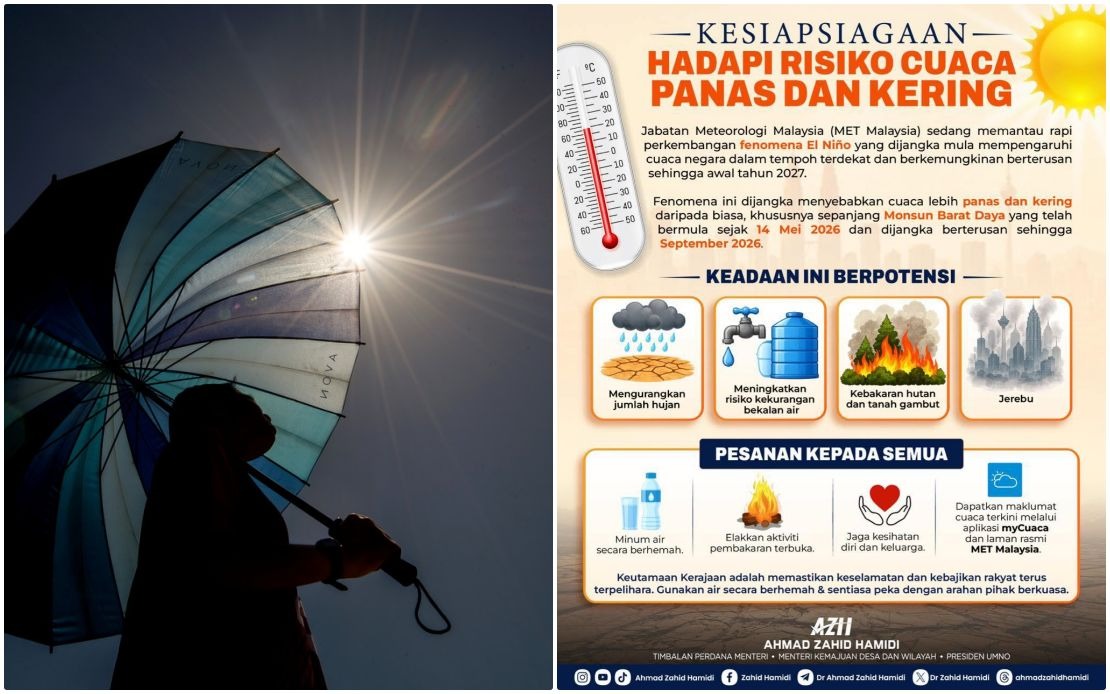
Malaysia faces an extended period of elevated temperatures and reduced rainfall as the El Niño phenomenon is poised to influence the country's weather patterns through the coming months and into early 2027. Deputy Prime Minister Datuk Seri Dr Ahmad Zahid Hamidi, speaking in his capacity as chairman of the Central Disaster Management Committee, issued the advisory to alert citizens about the atmospheric shifts that will reshape conditions during the critical Southwest Monsoon period that commenced in mid-May and will extend through September.
The El Niño pattern, a periodic climatic event driven by warming ocean temperatures in the tropical Pacific, typically creates conditions favourable for heat accumulation and precipitation suppression across Southeast Asia. For Malaysia, this translates into measurably hotter-than-average daytime temperatures and significantly drier weather patterns, particularly throughout the Southwest Monsoon season. The phenomenon's persistence through early 2027 suggests that the impact will not be confined to a single monsoon cycle but will stretch across multiple seasonal transitions, potentially creating cumulative stress on water resources and natural ecosystems.
Among the most pressing concerns flagged by the Deputy Prime Minister is the heightened potential for water shortages across various regions. Malaysia's water supply infrastructure, while extensive, operates on assumptions based on historical precipitation patterns. When rainfall drops substantially below normal expectations, reservoirs and catchment areas may fail to replenish at their typical rates, forcing authorities to implement conservation measures or rationing. Urban and agricultural sectors both depend heavily on consistent water availability, making prolonged drought conditions a matter requiring immediate attention from households, businesses, and farming communities alike.
The risk of forest and peatland fires constitutes another critical dimension of the El Niño threat. Malaysia's tropical rainforests and extensive peatland ecosystems, particularly in Borneo, are among the world's most carbon-rich environments. When moisture levels decline sharply, these landscapes become tinder-dry and susceptible to uncontrolled combustion. Even small ignition sources—whether from agricultural clearing, industrial activity, or unattended campfires—can rapidly escalate into major conflagrations that consume vast tracts of vegetation and release enormous quantities of carbon dioxide and particulate matter into the atmosphere.
The transnational dimension of fire-related air quality degradation cannot be overstated. Haze resulting from peatland and forest fires in Malaysia and neighbouring countries has historically blanketed the entire region with thick smoke, disrupting air traffic, closing schools, and triggering respiratory health emergencies. The 1997–1998 El Niño event precipitated some of Southeast Asia's worst haze episodes on record, with air quality indices in major cities reaching hazardous levels. A repeat of such conditions would impose substantial public health burdens and economic costs across Malaysia and its neighbours, affecting everything from tourism to manufacturing productivity.
Ahmad Zahid's public advisory emphasised the necessity for individual and collective preparedness, urging Malaysians to adopt prudent water consumption habits before shortages become acute. He explicitly cautioned against open burning activities, recognising that human-initiated fires pose a controllable risk factor during this climatically vulnerable period. The emphasis on personal and family health, particularly for vulnerable populations such as the elderly and those with respiratory conditions, reflects awareness that prolonged heat stress and poor air quality disproportionately harm susceptible demographic groups.
The Malaysian Meteorological Department, under the direction of Dr Mohd Hisham Mohd Anip, serves as the authoritative source for real-time weather intelligence and seasonal forecasting. MetMalaysia's assessments align with Ahmad Zahid's advisory, confirming that the Southwest Monsoon phase will experience above-normal temperatures and below-normal precipitation as El Niño's influence takes hold. The myCuaca mobile application, an official government tool, provides citizens with granular, location-specific weather information, enabling households and businesses to make informed decisions about water usage, outdoor activities, and preparedness investments.
From a government coordination perspective, the Central Disaster Management Committee's elevated attention to El Niño reflects recognition that climate-driven hazards now constitute a permanent fixture in Malaysia's risk landscape. Early warning systems, inter-agency coordination mechanisms, and pre-positioned resources become essential when facing predictable but potentially severe meteorological events. The government's commitment to continuous monitoring and adaptive response measures suggests awareness that static preparedness plans may prove insufficient given the anticipated duration and potential intensity of El Niño's effects.
Regional implications extend beyond Malaysia's borders. Neighbouring countries including Indonesia, Thailand, and the Philippines will experience similar climatic pressures, potentially straining regional water cooperation frameworks and cross-border environmental governance. Coordinated response mechanisms, knowledge sharing about successful adaptation strategies, and harmonised fire prevention protocols will become increasingly valuable as Southeast Asia navigates an extended period of climatic stress.
For Malaysian households and businesses, the advisory represents a call to action rather than mere notification. Water conservation investments—such as rainwater harvesting systems, efficient irrigation technologies, and leak repair programmes—warrant acceleration. Agricultural producers should assess irrigation scheduling and crop selection decisions in light of anticipated moisture stress. Industrial operators should review contingency plans for heat-related operational disruptions and air quality events. The window for preventive action, though still open, will narrow as El Niño's effects intensify over the coming months.