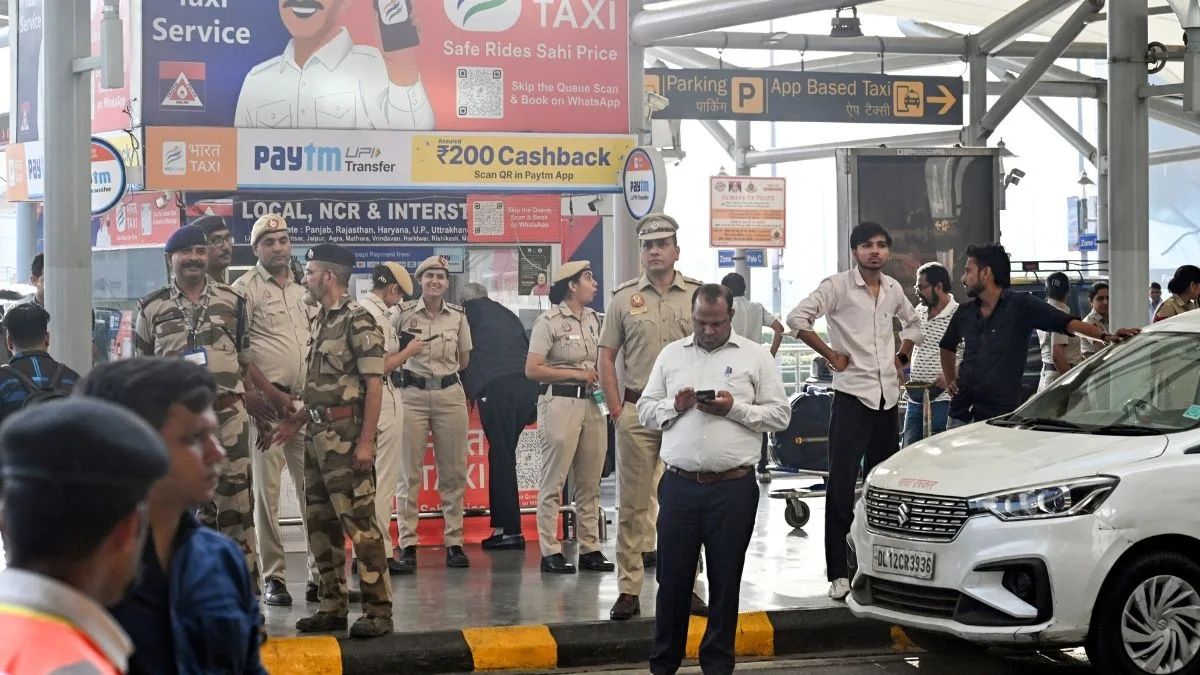
Indian security forces have successfully apprehended two individuals linked to the banned Khalistan Zindabad Force following their deportation from Malaysia, marking a significant development in efforts to dismantle overseas terror-support networks. The arrests took place at Delhi's Indira Gandhi International Airport after Punjab Police coordinated with central security agencies and Malaysia's Royal Malaysia Police to secure the deportation. The operation underscores growing cooperation between Southeast Asian nations and India in countering transnational terror activities that threaten regional stability.
The two detained men, identified as Gurvinder Singh from Ambala and Manjit Singh from Patiala, are suspected of playing critical roles in orchestrating financial support and coordination for the proscribed outfit from their base in Malaysia. According to Punjab's Director General of Police Gaurav Yadav, the intelligence-driven operation forms part of a broader crackdown on terror networks operating beyond India's borders. Such overseas operations have become increasingly important as terrorist organizations rely on international financial channels and diaspora networks to sustain their activities, making cross-border cooperation essential for South Asian and Southeast Asian security.
The investigation into the two suspects originated from Punjab Police inquiries into earlier terror incidents that targeted crucial railway infrastructure. Authorities had been examining a series of incidents including an improvised explosive device blast near Sirhind in Fatehgarh Sahib district on January 23 and a subsequent explosion attempt near Shambhu in Patiala district on April 27. These incidents prompted security agencies to establish connections between domestic terror modules and what appears to be a sophisticated international support structure. The focus on railway infrastructure suggests operatives may have been attempting to disrupt supply chains and demonstrate capability against high-value targets.
As investigators delved deeper into the domestic terror module, they uncovered a substantial cache of weaponry and explosives. The recovered arsenal included an RPG launcher, improvised explosive devices, RDX, hand grenades, sophisticated firearms, and ammunition—indicating access to advanced military-grade materials. Such quantities rarely surface without organized funding mechanisms, prompting authorities to trace the financial origins of the operation. This discovery proved pivotal in expanding the investigation beyond state borders and eventually implicating operatives in Malaysia.
Financial forensics became the crucial breakthrough in this case. Police investigators determined that funds supporting the domestic terror network were being channeled through foreign financial systems rather than domestic Indian banking channels. This pattern of cross-border money movement pointed authorities toward Malaysia as a potential hub of financial coordination. The revelation that overseas accounts and sophisticated financial channels were being employed to support Khalistan Zindabad Force-linked elements demonstrated the outfit's capacity to organize multinational funding operations—a hallmark of more mature terrorist organizations with established diaspora networks.
The connection to Malaysia is particularly significant for Southeast Asian security considerations. Malaysia has long served as a transit hub and residence point for various diaspora communities, including Punjabis with ideological ties to separatist movements in India. The discovery that terror financiers were operating from Malaysian soil highlights vulnerabilities in Southeast Asia's financial monitoring systems and the potential exploitation of regional networks for transnational terror financing. Malaysia's cooperation with Indian authorities in this case suggests growing recognition among Southeast Asian nations of the need for enhanced vigilance regarding terror-funding networks.
Investigators believe the two deported men operated as key nodes in a larger international conspiracy. Beyond merely arranging funds, they allegedly coordinated activities between overseas handlers and operatives conducting actual terror activities within Punjab. This hierarchical structure suggests a mature organization with multiple layers of insulation—field operatives execute attacks while handlers abroad manage finances and provide strategic direction. By apprehending these coordinators, Indian authorities aim to disrupt the critical communication and logistics links that enable cross-border terror operations.
Following their arrival in Delhi, the suspects were produced before a Patiala court, which remanded them to police custody for intensive questioning. Investigators are now focused on identifying the broader network—including fellow operatives, additional financiers, and facilitators operating across multiple countries. The interrogation phase will likely reveal the mechanisms through which funds were transferred, the identities of other network members, and the full scope of planned operations. Such intelligence typically produces cascading arrests as investigators map the entire organizational structure.
The case reveals troubling trends in how terror organizations exploit geographic dispersion and international banking systems to sustain operations. By positioning key personnel in countries like Malaysia with significant financial infrastructure and relatively porous monitoring of hawala and informal money transfer networks, such outfits create resilience against single-nation law enforcement efforts. The success in this instance depended on bilateral cooperation, intelligence sharing, and Malaysia's willingness to act on Indian requests—cooperation that cannot be taken for granted across all Southeast Asian jurisdictions.
Punjab Police have emphasized their commitment to dismantling terror-support structures and disrupting illegal funding networks throughout the state. Officials indicated that investigations remain ongoing and that the full scope of the conspiracy—including identification of additional operatives and financiers—has not yet been determined. The case suggests Indian authorities are shifting focus upstream toward international funding sources rather than concentrating solely on prosecuting field operatives. This approach targets the organizational infrastructure enabling repeated attacks and may prove more effective in degrading terror group capabilities over time.
The deportation and subsequent arrests also carry implications for Malaysia's counterterrorism posture. The incident demonstrates that Southeast Asian nations are potential operational bases for South Asian terror networks and that security agencies must monitor such activities more carefully. Enhanced information-sharing protocols and joint task forces between Malaysia, India, and other regional partners may become necessary to address this emerging threat pattern. As terror organizations become increasingly transnational, Southeast Asian nations like Malaysia cannot remain merely transit points but must actively participate in dismantling these networks.