Malaysia's leadership has thrown its support behind a significant diplomatic breakthrough between Washington and Tehran, signalling the country's commitment to regional stability and international peace efforts. Prime Minister Datuk Seri Anwar Ibrahim issued a statement welcoming the understanding reached between the United States and Iran toward ending their hostilities, and acknowledged the forthcoming signing of a memorandum of understanding in the days ahead. This endorsement reflects Malaysia's broader foreign policy orientation towards dialogue and conflict resolution in an increasingly fractured geopolitical landscape.
Among the key elements Anwar highlighted was the crucial role played by Pakistan in facilitating this understanding. The mediation efforts undertaken by Islamabad underscore how regional actors, particularly those with diplomatic ties spanning both Washington and Tehran, remain essential in bridging seemingly intractable divides. For Malaysia, which itself maintains balanced relationships across the Muslim world and the Western powers, this precedent carries particular resonance. It demonstrates that patient diplomatic engagement, even in the most polarised circumstances, can yield tangible results when intermediaries command the trust of all parties involved.
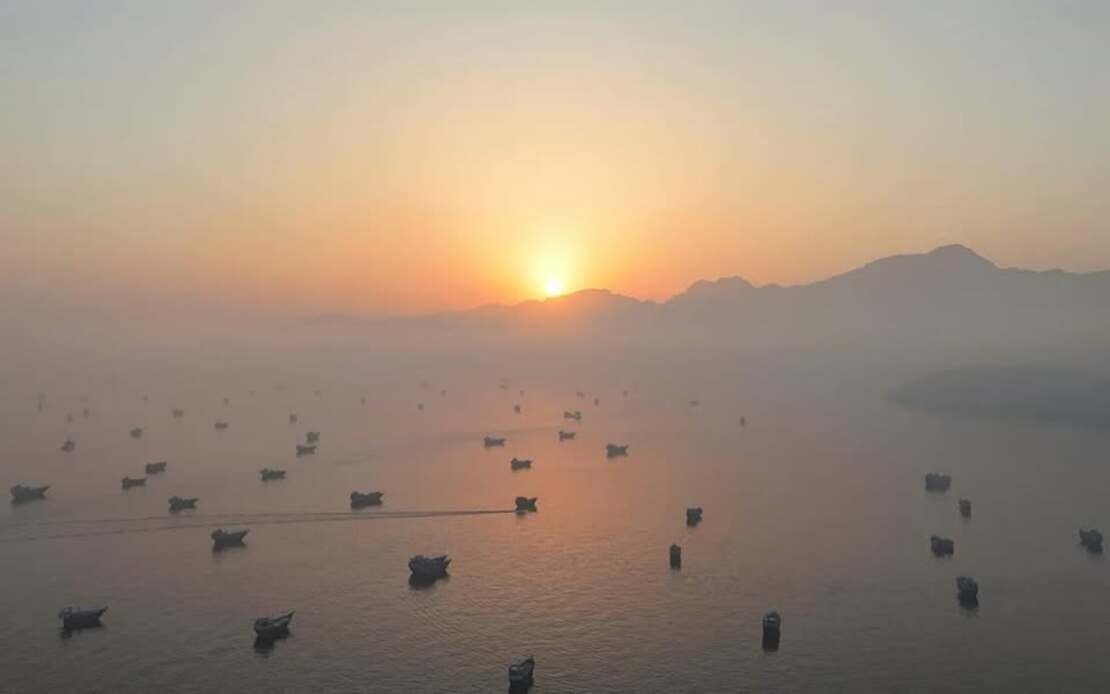
Central to Malaysia's welcome of this accord is the immediate reopening of the Strait of Hormuz to unrestricted international shipping. Anwar characterised this waterway as a critical artery for global energy security and international commerce, reflecting deep concern about the economic consequences of prolonged closure. For Malaysia as a major trading nation and energy consumer, the unimpeded flow of resources through this strategic chokepoint carries enormous material significance. Approximately one-third of the world's seaborne oil passes through the Strait, making its blockade or restriction a matter affecting fuel prices, supply chains, and economic stability across Southeast Asia.
The Prime Minister articulated a clear warning against complacency or backsliding, insisting that "prolonged disruption would serve no one." This language signals not merely abstract concern but recognition of concrete costs that instability in the Persian Gulf imposes on distant economies like Malaysia's. When global energy markets face uncertainty, developing nations typically absorb the largest shocks to their balance sheets and purchasing power. The principle that all parties must resist actions that could unwind the agreement reflects Malaysia's investment in preserving the gains achieved through negotiation.
Anwar's call for all parties to "act in good faith, proceed without delay and translate the understanding into a durable peace settlement" sets out an ambitious but necessary agenda. The gap between an agreement in principle and a lasting resolution is often where diplomatic efforts founder. Historical experience across multiple conflict zones demonstrates that momentum established through breakthrough moments can dissipate rapidly without sustained commitment and concrete implementation milestones. Malaysia's emphasis on translating understanding into enduring settlement suggests awareness of these pitfalls and determination that this opportunity not be squandered.
A particularly significant aspect of Malaysia's position concerns the admonition that "all parties and external actors must refrain from any action that could derail diplomacy and renew hostilities." This formulation acknowledges a persistent risk in great power negotiations: that third parties may act to undermine accords they view as contrary to their interests. By voicing this concern explicitly, Malaysia has positioned itself as a stakeholder in maintaining the integrity of the agreement and signalled that the international community bears collective responsibility for preventing sabotage of the peace process. For a middle-power nation without direct leverage over Washington or Tehran, such moral suasion through principled statements represents an important avenue of influence.
The announcement by US President Donald Trump authorising the reopening of the Strait of Hormuz and the lifting of the American naval blockade represents tangible implementation of the understanding. These moves carry immediate practical consequences for global maritime commerce and energy markets. Malaysia, as a country whose prosperity depends on free passage through strategic waterways and whose economy is deeply integrated into global supply chains, has vested interest in these provisions taking effect swiftly and remaining in place. The removal of impediments to shipping and commerce addresses concerns that have persisted since earlier escalations in tensions between Washington and Tehran.
Malaysia's decision to offer active support for efforts toward a "just and lasting settlement" reflects both principled commitment to international law and pragmatic recognition that regional peace serves Malaysian interests. By explicitly committing to support subsequent peace-building efforts, Malaysia has positioned itself not as a passive observer but as a potential contributor to consolidating gains achieved through this accord. This stance aligns with Malaysia's historical role as a bridge-builder between the Islamic world and Western powers, and as a voice advocating for peaceful resolution of international disputes through the United Nations and other multilateral forums.
The broader context for Malaysia's welcome concerns the unprecedented polarisation visible in contemporary international relations. Many regional and middle-power nations have found their foreign policy flexibility constrained by pressure to take sides in great power competitions. Malaysia's careful, balanced approach to the US-Iran understanding demonstrates how countries can maintain autonomy in their international orientation while still supporting moves toward de-escalation. This posture allows Malaysia to preserve relationships with both traditional partners and rising powers while advancing its core interest in international stability.
Looking forward, the success of this US-Iran understanding will depend on whether the momentum can be sustained through the detailed negotiations and arrangements required to transform a memorandum of understanding into fully implemented peace architecture. Malaysia's role in supporting this process, while limited in direct leverage, remains symbolically important. As a respected voice in international forums and as a nation with credibility among diverse constituencies, Malaysia's continued advocacy for implementation and restraint carries weight beyond what its material power might suggest.
The implications for Southeast Asia extend beyond immediate energy security concerns. A region already contending with multiple flashpoints and great power rivalry benefits when major powers find mechanisms for managing their differences peacefully. Malaysia's welcome of this accord should be understood partly as investment in precedent-setting—encouragement of diplomatic solutions over military confrontation that might spill over into adjacent regions. In a strategic environment where tensions periodically spike over the South China Sea and other contested territories, evidence that major powers can negotiate their way back from the brink of confrontation offers reassurance to smaller states whose security depends on the avoidance of great power war.