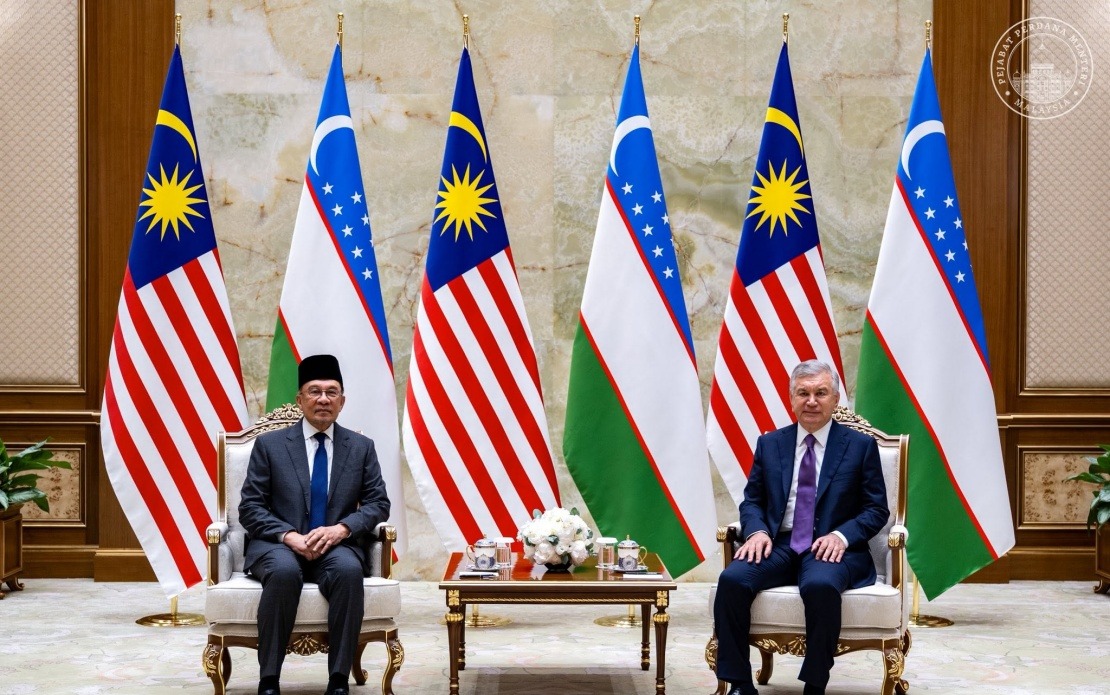
Prime Minister Datuk Seri Anwar Ibrahim has identified substantial potential for Malaysia and Uzbekistan to broaden their partnership across multiple strategic sectors, ranging from conventional economic activities to emerging knowledge-based industries. The Malaysian premier raised these prospects during a bilateral meeting with Uzbekistan President Shavkat Mirziyoyev in Tashkent, where his aircraft paused en route to Kazan for the ASEAN-Russia Commemorative Summit held on June 17-18. Although brief, the encounter provided both leaders with a platform to chart a more ambitious course for their respective nations' engagement.
The bilateral dialogue encompassed an expansive agenda that reflects contemporary priorities in the region. Beyond traditional commercial interactions, Malaysia and Uzbekistan identified the energy sector, particularly the gas and petroleum industries, as a promising avenue for deepened collaboration. For Malaysia, which remains an energy-intensive economy with significant petrochemical and manufacturing bases, enhanced access to Central Asian energy resources could strengthen supply diversification and reduce dependency risks. Conversely, Uzbekistan gains potential market access and technical partnerships with a country possessing advanced downstream energy infrastructure and regional influence through ASEAN.
The two nations also recognised mutual benefits in the education and human capital development spheres. Malaysian higher education institutions have increasingly attracted Central Asian students, while Uzbekistan's reformed university system offers opportunities for academic exchange and knowledge transfer. Such partnerships typically create long-term diplomatic dividends beyond immediate economic metrics, fostering people-to-people connections that sustain broader geopolitical relationships. Educational cooperation often produces future leaders, professionals and business networks that influence bilateral ties for decades.
The halal industry emerged as another significant pillar in the proposed cooperation framework. Malaysia's positioning as a global halal standards-setter and certification hub aligns naturally with Uzbekistan's Muslim-majority population and growing interest in meeting international halal compliance standards. This sector transcends mere commodity trade; it encompasses logistics, certification systems, consumer education and supply chain governance. For Malaysian companies operating in this space, Uzbekistan represents both a market and a potential distribution centre for halal products destined for Central Asia and beyond.
Anwar emphasised the cultural and civilisational dimensions underpinning the partnership, specifically referencing the shared Islamic heritage and scholarly traditions that have shaped both societies. This framing carries significant weight in contemporary diplomacy, particularly as Southeast Asia and Central Asia navigate their roles within broader geopolitical configurations. By anchoring cooperation in historical and civilisational bonds, both countries position themselves within a larger narrative of regional integration that extends beyond transactional economic relationships. This approach resonates with Malaysia's broader foreign policy emphasis on civilisational dialogue and South-South cooperation.
The tourism sector represents another avenue where complementary interests converge. Uzbekistan's Silk Road heritage sites and historical architecture attract increasing numbers of international visitors, while Malaysia possesses advanced hospitality infrastructure and growing outbound tourism capacity. Bilateral tourism agreements could facilitate visa facilitation, promotional campaigns and capacity-building initiatives that benefit both nations' tourism industries. Additionally, religious tourism—encompassing Islamic historical sites and educational centres—offers particular appeal to Malaysian visitors seeking cultural and spiritual enrichment.
Trade and investment were identified as foundational pillars supporting all sectoral cooperation. The magnitude of bilateral trade remains modest relative to Malaysia's global commerce, indicating significant headroom for expansion. Establishing clear investment frameworks, dispute resolution mechanisms and double taxation agreements typically accelerates capital flows and business confidence. Malaysian investors possess experience navigating emerging markets and have demonstrated capacity in sectors relevant to Central Asian development priorities, from financial services to technology and infrastructure.
Anwar's characterisation of the partnership as serving broader developmental goals—elevating human dignity, empowering knowledge and promoting equitable development—reflects a contemporary emphasis in Malaysian foreign policy. Rather than framing cooperation narrowly as zero-sum economic competition, this positioning appeals to universal values and collective advancement narratives. Such language proves particularly resonant with ASEAN's own development philosophy and international positioning, potentially creating synergies where bilateral Malaysia-Uzbekistan initiatives align with broader regional frameworks.
Uzbekistan's growing engagement with ASEAN countries received specific commendation from Anwar. Central Asia's repositioning within regional geopolitics has accelerated in recent years as powers compete for influence and connectivity projects advance across the region. Malaysia's perspective, as an ASEAN anchor state with diversified diplomatic relationships, carries weight in shaping how Central Asian nations view Southeast Asian partnership opportunities. By encouraging Uzbekistan's ASEAN engagement, Malaysia potentially benefits from expanded influence and a broader coalition supporting its regional interests.
The transit meeting's brevity underscores diplomatic efficiency in contemporary statecraft. Rather than scheduling formal summit meetings requiring elaborate ceremonial protocols and extended schedules, leaders increasingly utilise transit opportunities and multilateral forums to conduct substantive bilateral discussions. This approach demonstrates flexibility and pragmatism while respecting both parties' time constraints and broader commitments. However, such brief encounters necessitate substantial groundwork by diplomatic corps to ensure productive outcomes and clear understandings regarding follow-up mechanisms.
Moving forward, the partnership's success will depend on translating these broad expressions of intent into concrete institutional frameworks and contractual commitments. Sectoral working groups, business councils and government-to-government task forces typically serve as mechanisms for translating leadership vision into actionable programmes. For Malaysian stakeholders, particularly businesses and investors, clarity regarding investment guarantees, regulatory frameworks and market access conditions remains essential for converting diplomatic goodwill into actual capital deployment and commercial activity.
The timing of these discussions carries additional significance given broader regional dynamics. Central Asia's importance in global supply chains, energy security discussions and geopolitical competition has elevated considerably. Malaysia's proactive engagement signals awareness of these shifts and an intention to position itself advantageously within emerging patterns of regional integration. This bilateral initiative, while focused on Malaysia-Uzbekistan ties, potentially contributes to ASEAN's broader strategic positioning within Asia-Pacific geopolitics and transcontinental connectivity frameworks.