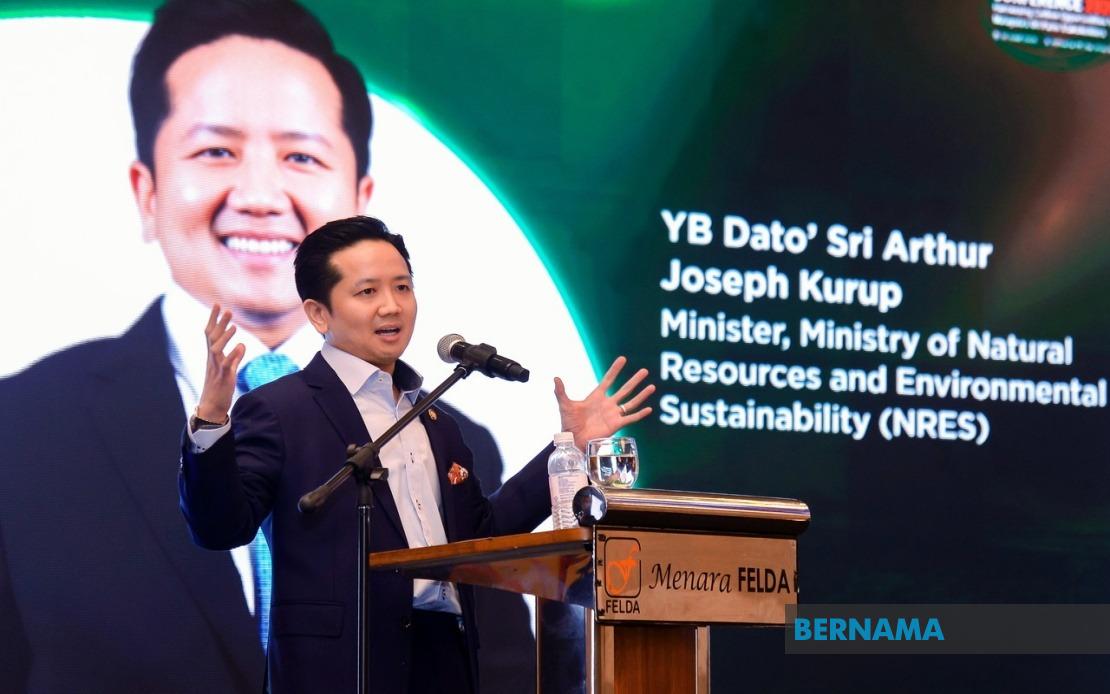
The Malaysian government continues to work through the finer details of introducing a carbon tax, with no firm timeline yet established despite earlier plans to launch the scheme this year. Datuk Seri Arthur Joseph Kurup, the Minister for Natural Resources and Environmental Sustainability, indicated on June 16 that the initiative would move forward but only after careful consideration of industrial preparedness and the broader policy environment. Speaking at the Malaysia Palm Carbon Conference 2026 in Kuala Lumpur, Arthur stressed that the government remains committed to the carbon tax principle even as implementation specifics remain in flux, suggesting that the delay reflects pragmatic policymaking rather than any abandonment of the environmental agenda.
When the carbon tax concept was first unveiled, officials indicated it would target major industrial sectors including steel production, cement manufacturing, and the construction industry beginning this year. However, in April, Arthur acknowledged that global uncertainties demanded a reconsideration of the timeline, citing energy supply challenges and geopolitical tensions as factors weighing on the decision to potentially defer the scheme. The minister's latest comments confirm that this pause continues, with the government taking additional time to ensure both industry and consumers are adequately prepared for what amounts to a significant structural policy shift affecting production costs across multiple sectors.
Crucially, the government has repositioned the carbon tax as an incentive mechanism rather than a punitive regime, a distinction that carries important messaging implications for businesses and the public. By framing the policy around encouraging adoption of green technologies and driving down carbon emissions, rather than as a penalty for high-emission activities, the administration aims to shape business behaviour through positive reinforcement rather than mere compliance burden. This approach resonates particularly well in Malaysia's context, where industries are already navigating substantial transformation pressures from global supply chains increasingly demanding environmental credentials from their suppliers.
One of the more complex questions still being resolved involves determining how carbon tax revenues will be deployed once collections begin. The ministry is evaluating proposals to direct funds toward climate adaptation initiatives, forest conservation efforts, and sustainable land management projects. This consideration reflects a growing recognition that collecting carbon revenues without demonstrating tangible environmental outcomes risks eroding public and business support for the scheme. For Malaysian companies, understanding whether collected revenues will fund initiatives that reduce their broader climate-related costs or support competitive advantages in international markets remains a critical unknown that likely influences their views on the tax's eventual implementation.
The broader context for this policy development includes Malaysia's commitment to climate governance strengthening, exemplified by the National Climate Change Bill expected to be presented to the Dewan Rakyat during the current parliamentary session. This legislation will establish the foundational framework for how the country addresses climate change at the institutional level, with the carbon tax likely operating as one tool within that larger governance architecture. The timing of both the bill's introduction and the carbon tax implementation will likely be coordinated to create a coherent policy package rather than ad-hoc measures that risk appearing disconnected or contradictory.
For Malaysia's export-oriented industries, the carbon tax's eventual implementation carries implications extending beyond domestic policy compliance. Many Malaysian manufacturers already face carbon border adjustment mechanisms and environmental procurement standards from major international buyers, particularly in Europe and increasingly in other developed markets. A well-calibrated domestic carbon tax could position Malaysian producers favourably by demonstrating genuine domestic policy commitment to emissions reduction, potentially simplifying their navigation of international environmental regulations and enhancing their marketability to sustainability-conscious global customers.
The phased approach being pursued also reflects lessons from carbon pricing experiences elsewhere in the region and globally. Countries that have rushed carbon tax implementation without adequate stakeholder consultation or industrial transition support have faced political backlash and economic disruption. By taking time now to refine implementation details and build consensus, Malaysia's government appears intent on avoiding such pitfalls, even as this deliberative approach frustrates some environmental advocates eager for faster climate action.
For investors evaluating long-term exposure to Malaysian manufacturing, the ongoing refinement process presents both clarity and uncertainty. While the lack of a confirmed implementation date reduces near-term compliance costs, the eventual introduction of carbon pricing remains virtually certain, meaning forward-looking companies should begin positioning themselves for that inevitability. This might involve upgrading energy efficiency, diversifying supply chains to lower-emissions sources, or investing in technologies that will become increasingly valuable once carbon costs are embedded in production expenses.
The involvement of Felda chairman Datuk Seri Ahmad Shabery Cheek at the conference underscores that carbon taxation discussions extend beyond industrial manufacturing into the agricultural and land-use sectors that dominate Malaysia's resource economy. The palm oil industry, in particular, faces intense international scrutiny regarding deforestation and emissions, making carbon tax design especially consequential for plantation operations, refineries, and downstream processors that depend on palm commodities.
As the government continues refining the carbon tax framework, several critical decisions remain pending beyond mere timing. The tax rate structure, whether it will apply uniformly across sectors or allow differentiated treatment for transition-vulnerable industries, and what exemptions or credits might be available all require resolution. Additionally, the relationship between a domestic carbon tax and Malaysia's international climate commitments under the Paris Agreement and other frameworks needs careful calibration to ensure the policy supports rather than undermines the country's broader climate diplomacy objectives.
The minister's comments suggest that stakeholder engagement remains ongoing, with industry groups and other affected parties still feeding into the policy development process. This consultative approach, while extending timelines, increases the likelihood that the eventual carbon tax design will command broader acceptance and prove more effective at achieving its environmental goals without creating unnecessary economic distortion. For businesses currently operating in Malaysia, the message is to prepare for carbon taxation as a coming reality while monitoring government announcements for details that will shape their competitive positioning and operational planning in the years ahead.