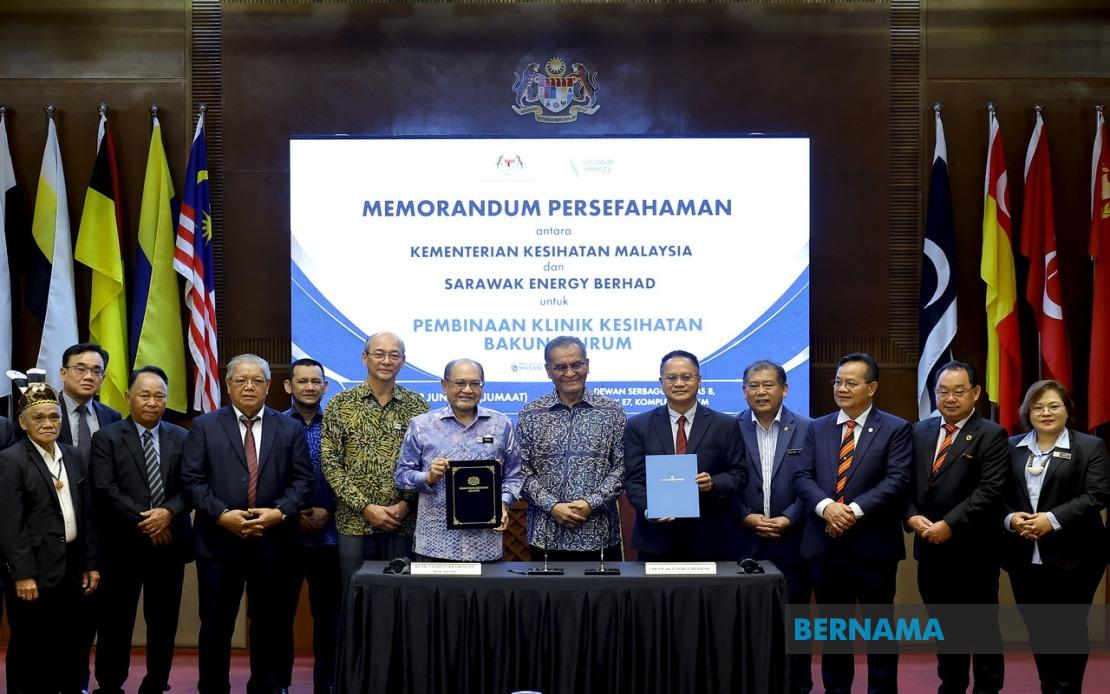
Malaysia's Health Ministry is navigating the final hurdles of a comprehensive overhaul aimed at resolving systemic bottlenecks in specialist medical training, according to Health Minister Datuk Seri Dr Dzulkefly Ahmad. The announcement comes as the nation grapples with a reported deficit of approximately 11,000 medical specialists across public and private healthcare systems, a shortage that increasingly threatens the capacity of Malaysia's healthcare infrastructure to respond to mounting patient demand. Speaking at a press conference in Putrajaya on June 19 following the signing of a memorandum of understanding between the Health Ministry and Sarawak Energy for construction of the Bakun-Murum Health Clinic, Dzulkefly acknowledged long-standing bureaucratic constraints that have impeded the development and progression of medical specialists, whilst signalling that resolution remains imminent.
The specialist shortage represents one of the most pressing challenges facing Malaysia's healthcare system, affecting service delivery across major urban centres and rural regions alike. Public hospital systems in particular have reported strain from consultant-level vacancies, forcing existing specialists to manage patient loads beyond recommended capacity whilst junior doctors struggle to secure adequate training placements. The 11,000-figure encompasses vacancies across both government healthcare institutions and private facilities, indicating that workforce deficiencies transcend sector boundaries and reflect systemic constraints in medical education and career progression pathways rather than isolated institutional issues.
Dzulkefly's characterisation of the ministry's approach as being in "final stages" of resolution suggests that detailed policy frameworks are approaching completion, though implementation timelines remain undefined. The minister emphasised that bureaucratic constraints, whilst acknowledged, represent surmountable challenges that have been systematically identified and catalogued. This transparency stands in contrast to previous official silence on the issue, reflecting growing pressure from medical professional bodies and healthcare advocacy groups demanding concrete action. The acknowledgment itself signals a shift in ministerial posture toward public candour regarding healthcare system vulnerabilities.
Crucially, the Health Ministry has framed specialist workforce expansion as fundamentally inseparable from infrastructure development, a principle that shapes both planning horizons and implementation sequencing. Rather than pursuing rapid recruitment divorced from facility capacity, the ministry is adopting a calibrated approach whereby specialist numbers increase progressively and continuously in alignment with hospital infrastructure enhancements, diagnostic equipment installation, and service expansion. This methodology reflects recognition that deploying specialists without concurrent infrastructure investment would merely redistribute existing capacity constraints rather than genuinely expanding system-wide capability. For Malaysian readers concerned about healthcare access, this principle carries both reassuring and cautionary implications: investment in specialists will proceed methodically, yet rapid solutions should not be anticipated.
The phased expansion strategy operates within explicit parameters defined by current healthcare priorities and operational requirements. The Health Ministry has developed comprehensive planning frameworks that synchronise specialist workforce growth with identified service gaps and demographic healthcare needs. This evidence-based approach contrasts with ad-hoc recruitment and prioritises strategic deployment of specialists where gaps most severely impact public health outcomes. The ministry's emphasis on planning and synchronisation suggests that decision-making regarding specialist training allocations will increasingly reflect data-driven analysis of regional and sectoral requirements rather than generic expansion targets.
Whilst long-term solutions are being finalised, the Health Ministry has implemented a cluster crisis management system as an interim operational framework. This approach leverages existing specialist capacity more efficiently through structured collaboration among hospitals within geographic clusters and affiliated primary health clinics. Personnel redeployment and reorganisation according to operational contingencies enable the system to absorb some pressures without proportional additions to permanent staffing. The cluster model represents pragmatic adaptation to resource constraints, distributing specialist expertise across facilities rather than concentrating it in select tertiary centres, thereby extending specialist consultation access to secondary and primary care settings.
The cluster crisis management framework acknowledges substantial pressures confronting the existing healthcare workforce whilst attempting to mitigate burnout and service disruption through systematic organisational restructuring. Healthcare professionals operating within this interim system bear additional responsibilities during the transition period, raising questions about workforce sustainability and burnout trajectory. The ministry's framing of this approach as preserving uninterrupted service delivery reflects institutional priority for healthcare continuity, yet the human cost of interim arrangements warrants close monitoring. Professional organisations representing doctors and allied health workers will likely scrutinise whether interim measures adequately address workforce wellbeing or merely defer comprehensive solutions whilst extracting intensified effort from existing personnel.
For Malaysia's private healthcare sector, the specialist shortage presents distinct dynamics from public system challenges. Private hospitals have recruited specialists from international markets and maintained somewhat higher specialist-to-patient ratios than public institutions, yet persistent competition for locally-trained talent creates recruitment pressures and salary escalation. The Health Ministry's specialist training expansion, delivered primarily through public medical schools and government-sponsored postgraduate programmes, will influence private sector recruitment prospects and workforce dynamics. Specialist graduates choosing between public and private employment will navigate decisions shaped by training pipeline improvements, career progression clarity in public institutions, and comparative remuneration structures.
Regional context amplifies Malaysia's specialist shortage significance, as Southeast Asian healthcare markets increasingly compete for limited medical talent. Neighbouring countries pursue parallel specialist training expansions, creating regional competition for graduates and experienced practitioners. Malaysia's capacity to retain domestically-trained specialists and attract returning expatriate practitioners depends partly on establishing clear career pathways and employment conditions within reformed public healthcare structures. The Health Ministry's bureaucratic reforms thus carry regional dimensions, influencing Malaysia's positioning within Southeast Asian healthcare professional labour markets and affecting medical education prestige relative to neighbouring institutions.
The intersection of specialist training reforms with infrastructure development planning reflects sophisticated healthcare system governance, yet implementation complexity remains substantial. Coordinating across medical schools, postgraduate training bodies, hospital administrations, and capital planning authorities requires sustained interagency collaboration and consistent policy commitment across electoral cycles. The Health Ministry's characterisation of resolution as imminent suggests institutional confidence in implementation prospects, though historical patterns of healthcare reform initiatives suggest that final bureaucratic resolution often precedes extended implementation phases. Malaysian stakeholders should anticipate that whilst policy frameworks may achieve finalisation within months, tangible specialist workforce expansion and reduced patient wait times will likely extend across multiple years.
The Bakun-Murum Health Clinic initiative signed during Dzulkefly's announcement exemplifies the infrastructure-workforce synchronisation principle. Sarawak Energy's partnership with the Health Ministry demonstrates how private sector infrastructure investments can expand public healthcare capacity in underserved regions. Such collaborative models may become increasingly relevant as the ministry pursues specialist training expansion within constrained budget environments. Public-private partnership frameworks potentially accelerate infrastructure development supporting specialist training and deployment, though governance clarity regarding specialist allocation and equity of access requires careful attention during implementation design.
Ultimately, resolving Malaysia's specialist shortage requires sustained commitment beyond immediate bureaucratic clearance. The Health Ministry's final-stage resolution language suggests policy frameworks are approaching completion, yet the substantive challenge of training additional specialists, securing recruitment funding, and creating attractive career pathways extends substantially beyond bureaucratic reorganisation. Specialist medical training in Malaysia typically requires five to ten years following medical degree completion, implying that newly-trained specialists entering the workforce will reflect investment decisions made today. The Health Ministry's current planning thus shapes healthcare specialist composition across the subsequent decade, underscoring the significance of finalising these bureaucratic resolutions and implementing coherent strategic expansion frameworks.