Religious Affairs Minister Datuk Dr Zulkifli Hasan has called on Malaysian youth to seek inspiration from Prophet Muhammad's hijrah, urging them to harness its lessons for meaningful personal and collective progress. Speaking in Putrajaya on June 16, Zulkifli emphasised that young Malaysians possess tremendous potential and should reflect deeply on the historical migration's significance as a framework for positive transformation. The minister's remarks came as the nation prepared to mark this year's Maal Hijrah celebration, which carries particular resonance for a generation navigating rapid social and economic change.
The concept of hijrah extends far beyond its historical context as a simple geographical relocation. In Islamic tradition, it represents a profound spiritual and intellectual journey—a deliberate shift away from practices and environments that hinder growth toward ones that nurture it. For contemporary Malaysian youth facing educational pressures, career uncertainties, and the complexities of modern society, Zulkifli's message carries practical implications. He invited young people to internalise the values embedded in this narrative: resilience, purposefulness, community consciousness, and the willingness to make difficult but necessary changes for the greater good.
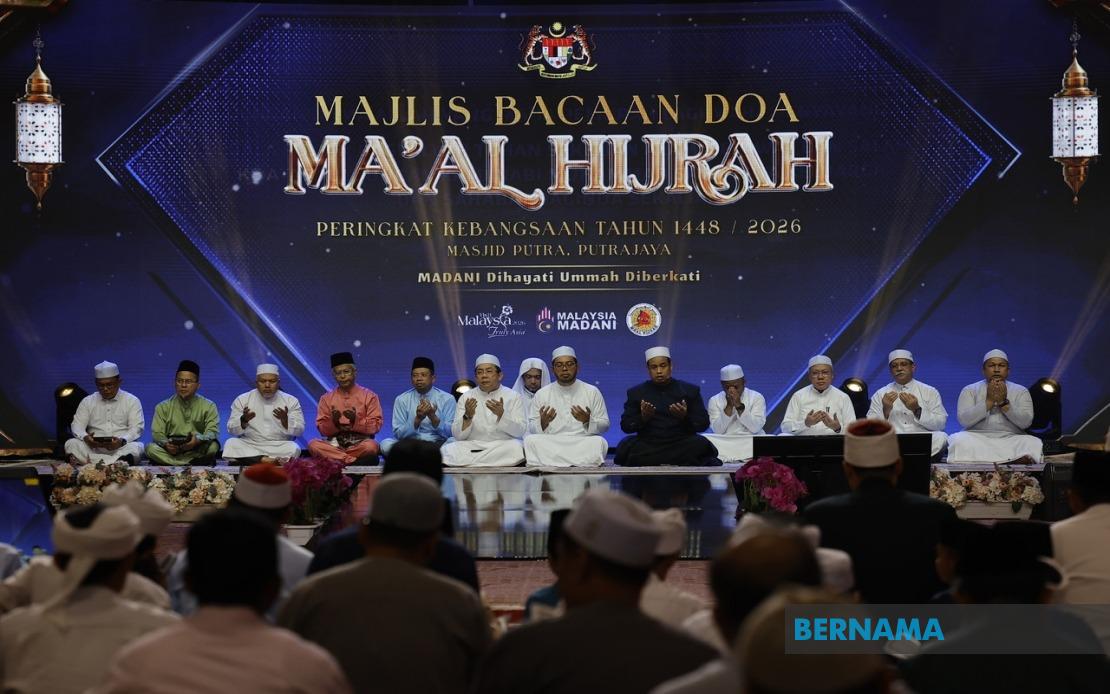
This year's Maal Hijrah observance takes on distinctive character through its structural design and thematic emphasis. The national-level celebration adopts a revised format, with the main programme anchored at Putra Mosque rather than following conventional celebration patterns. The choice of venue is deliberate and symbolically significant. By beginning at the mosque, organisers underscore that Prophet Muhammad's first institutional priority upon reaching Madinah was establishing a place of worship and communal gathering. This historical detail carries lessons about foundational values and community-building that resonate with Malaysia's multicultural context, where social cohesion and shared institutional spaces remain foundational concerns.
Zulkifli elaborated on the deliberate decision to position the mosque as the starting point for renewed remembrance and reflection. He stressed that mosques historically served not merely as religious spaces but as centres of civilisation and community development, functioning as platforms for education, governance, and social welfare. By invoking this historical role, the minister implicitly encourages contemporary institutions—whether religious, educational, or governmental—to reclaim such comprehensive social responsibilities. For Malaysian policymakers and community leaders, this framing suggests that sustainable development requires institutions operating at multiple levels simultaneously, addressing spiritual needs while simultaneously fostering intellectual and material progress.
The celebration's design also reflects practical considerations beyond symbolic messaging. Organisers have deliberately scaled back the event's magnitude to align with energy conservation imperatives and acknowledge the ongoing global supply chain disruptions affecting countries worldwide. This approach demonstrates responsible governance during periods of economic strain, signalling to observers that religious observance and national sustainability concerns need not conflict but can be harmoniously integrated. For Malaysia—a nation balancing rapid development aspirations with resource constraints—this message carries particular relevance as policymakers navigate the complexities of managing growth sustainably.
A significant component of the festivities involves bringing together prominent local and international figures who embody the hijrah spirit through their life trajectories and contributions. These individuals will participate in a keynote lecture scheduled for June 18 at the JAKIM Auditorium, where approximately 1,000 participants are anticipated. The structured dialogue between these figures and the wider public creates an educational opportunity for attendees to encounter concrete examples of how individuals from diverse backgrounds have navigated personal transformations, overcome obstacles, and contributed meaningfully to their communities. Such intergenerational and cross-cultural exchanges hold particular value in Malaysia's context, where youth often seek relatable role models and practical wisdom about navigating life's transitions.
The pinnacle of the national celebration unfolds on June 17, coinciding with 1 Muharam 1448H according to the Islamic calendar. Ceremonies commence at Putra Mosque at 7 am with the presentation of national and international Maal Hijrah Figure awards, recognising individuals whose lives exemplify the transformation and contribution that hijrah ideals inspire. The presence of Sultan of Perak Sultan Nazrin Shah as the presiding official lends constitutional weight and institutional gravitas to the proceedings, positioning the celebration as a matter of national significance rather than a purely religious observance.
For Malaysian youth specifically, the timing and messaging of this celebration addresses several contemporary concerns. Young Malaysians increasingly grapple with questions about identity, purpose, and their role within rapidly evolving social structures. The hijrah narrative offers a framework for approaching such questions—not as abstract philosophical inquiries but as practical spiritual and intellectual journeys requiring courage, deliberation, and commitment to community welfare. Zulkifli's emphasis on youth potential, coupled with the celebration's focus on institutional development and community building, sends a signal that religious tradition is not merely retrospective but forward-looking, equipped to address present challenges.
The emphasis on the mosque's historical role also carries implications for interfaith understanding in Malaysia's plural society. While specifically Islamic in theological content, the celebration's focus on institutional development, community welfare, and social cohesion touches on values that transcend religious boundaries. Malaysians of various faiths grapple with similar questions about community building, institutional integrity, and positive social change. By framing hijrah in terms of civilisational and developmental progress rather than purely doctrinal matters, religious leaders create conceptual space for broader dialogue about shared national values and collective advancement.
Looking forward, the success of this year's Maal Hijrah celebration will likely be measured not merely by attendance figures or ceremonial grandeur but by whether its messages genuinely catalyse reflection and action among participants, particularly young Malaysians. The challenge for religious and community leaders lies in translating inspirational rhetoric into concrete programmes, mentorship opportunities, and institutional reforms that translate hijrah principles into lived experience. Malaysia's youth, while facing significant pressures and uncertainties, possess the capacity to embrace transformative change when provided with clear vision, relatable examples, and supportive institutional frameworks.