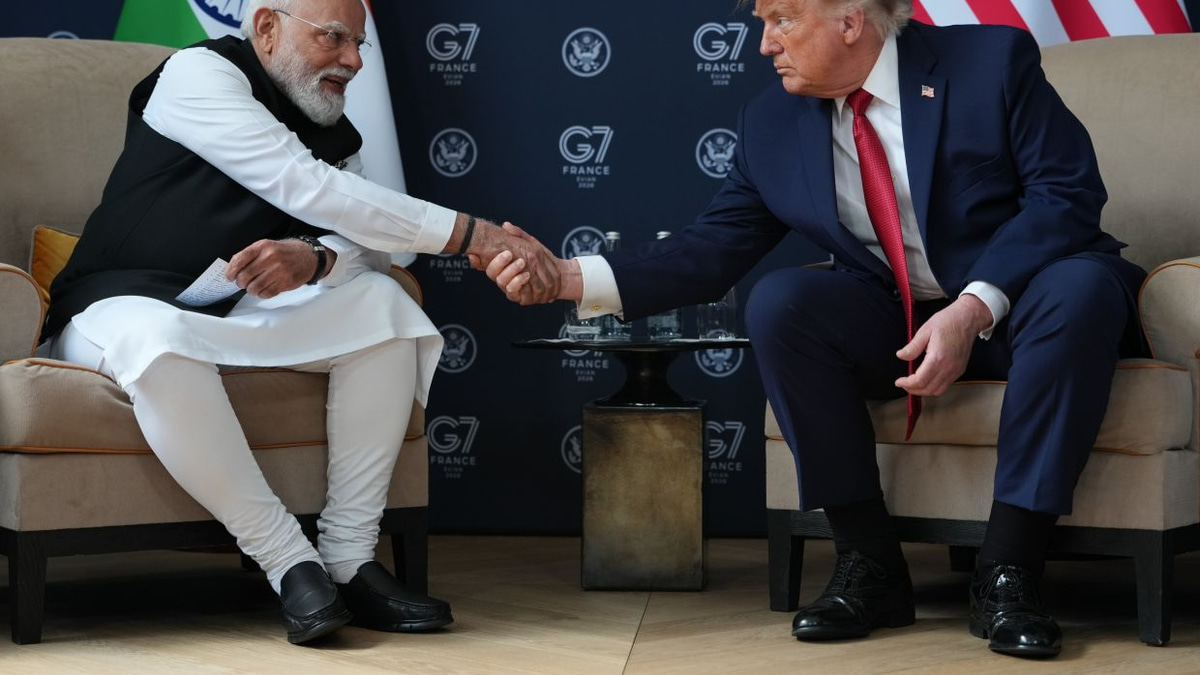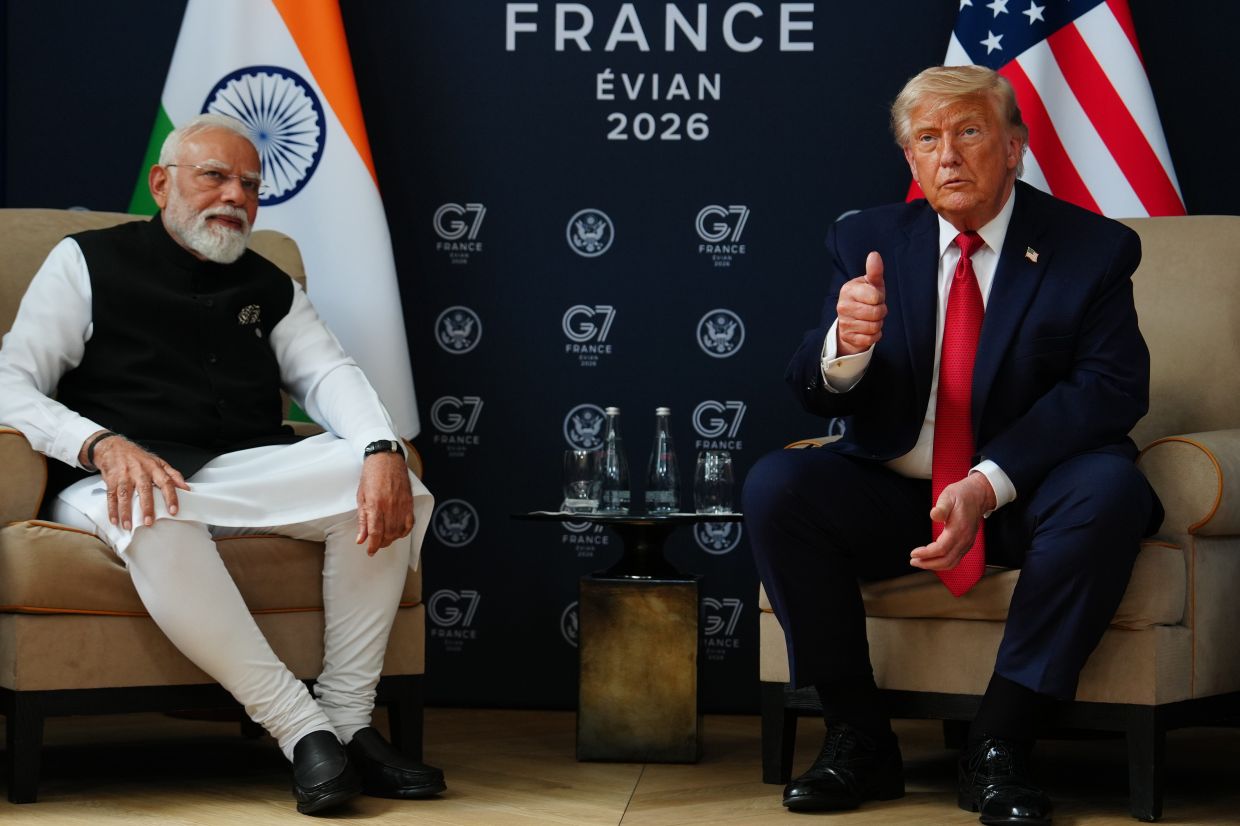
Indian Prime Minister Narendra Modi announced Thursday that negotiations with Washington for a comprehensive trade pact have achieved "significant progress" following his first face-to-face meeting with US President Donald Trump since February 2025. The two leaders conferred on the sidelines of the G7 summit in Evian, France, with Trump subsequently telling reporters that the two nations were "very close" to finalising a commercially binding agreement. India's foreign ministry characterised the discussion as notably satisfactory, underscoring the momentum both capitals have generated in their long-running bilateral trade discussions.
The trajectory of US-India trade negotiations has been marked by both substantial movement and periodic setbacks over the past eighteen months. Washington and New Delhi established an ambitious target of reaching $500 billion in bilateral commerce by 2030, reflecting the strategic importance both nations place on deepening economic ties at a time of significant geopolitical realignment in the Indo-Pacific. An initial framework understanding was reached in February, but the subsequent pace of talks decelerated considerably after the US Supreme Court struck down Trump's sweeping tariff programmes. That court decision prompted the Trump administration to pursue alternative investigative pathways, launching formal inquiries into alleged unfair trade practices by multiple nations, including India, whilst simultaneously imposing a blanket 10 percent tariff that created additional complications for negotiators.
Despite these obstacles, India's Commerce Minister Piyush Goyal signalled in early June that both sides had substantially converged on the initial component of a phased trade agreement, characterising progress as approximately 99 percent complete. The structure envisions an interim bilateral trade agreement as the first step, with officials now instructed to accelerate work towards finalising what both governments describe as a "commercially meaningful" arrangement at the earliest feasible moment. US Trade Representative Jamieson Greer will lead the next round of discussions during a scheduled visit to India in the coming week, suggesting renewed urgency in bridging any remaining gaps between the two trading partners.
The significance of this trade negotiation extends well beyond the bilateral relationship between two major economies. For Malaysia and other Southeast Asian nations, progress on a US-India trade deal carries considerable implications for the region's broader economic architecture. An expanded US-India economic partnership potentially reorients supply chains and investment flows across Asia, particularly in sectors such as manufacturing, semiconductors, pharmaceuticals, and defence-related industries. Malaysian businesses and policymakers are attentively monitoring these developments, as they will likely influence regional trade patterns, foreign direct investment decisions, and the competitive positioning of ASEAN nations within the evolving Asian economic landscape.
Trump's characterisation of Modi as "the most beautiful looking man" and "one of the toughest" negotiators, combined with his assertion that the Indian leader possesses both angelic appearance and ruthless business acumen, reflected the informal rapport between the two leaders despite their nations' substantive differences on various trade issues. This personal dynamic has historically facilitated breakthrough moments in US-India negotiations, though the core challenges remain rooted in protective measures each nation maintains for sensitive domestic industries and the divergent economic interests of their respective constituencies.
A critical complication shadowing these trade discussions has been the escalating humanitarian crisis in the Middle East and its direct impact on India. Modi raised the safety of Indian seafarers with Trump, referencing the June 10 incident off Oman in which three Indian sailors perished during a US military strike on a commercial vessel. This tragedy underscores India's vulnerability to regional instability and the potential for civilian casualties when military operations occur in international waters through which crucial supply routes pass. The Indian Prime Minister used the occasion to underscore the urgent necessity for robust protective measures for merchant mariners operating in conflict zones.
India's energy security and broader supply chain vulnerabilities have been substantially tested by the Middle East conflict. Tehran's closure of the Strait of Hormuz has severely restricted oil and gas flows to global markets, directly throttling India's energy supplies and threatening the nation's economic growth trajectory. Beyond petroleum, the disruptions have cascaded through fertiliser and food supply chains, dependencies particularly acute for an agricultural economy supporting over a billion people. Modi warned at the G7 that these supply-side shocks originating from Middle Eastern instability would reverberate through the Global South for an extended period, requiring sustained international attention and coordinated policy responses.
For Malaysia and other ASEAN economies similarly dependent on Middle Eastern energy and exposed to supply chain fragmentation, Modi's emphasis on the protracted nature of conflict-induced disruptions carries direct relevance. The region's economic recovery and sustainable growth depend significantly on stabilising these crucial shipping lanes and reducing volatility in commodity markets. India's articulation of Global South vulnerabilities at the G7 demonstrates that major developing economies are explicitly challenging wealthy nations to address the systemic inequities exposed by regional conflicts.
The interconnection between India's trade negotiations with Washington and its strategic concerns regarding Middle Eastern stability reflects the complexity of modern bilateral relationships. Modi's dual focus—advancing commercial interests whilst advocating for maritime safety and humanitarian protections—illustrates how traditional trade diplomacy increasingly intersects with security, energy, and humanitarian considerations. The US-India trade agreement, whenever finalised, will occur within this broader context of shared strategic interests balanced against economic competition and differing threat perceptions.
The February initial understanding between the two nations already represented a significant diplomatic achievement, demonstrating both sides' commitment to overcoming structural obstacles and historical trade disputes. The current round of negotiations appears positioned to convert that framework into binding commitments, with Commerce Minister Goyal's assessment that 99 percent of the first tranche has been resolved suggesting the outstanding issues are increasingly technical rather than fundamental. The planned Greer visit represents an opportunity to achieve final closure on those remaining points and transition from negotiation mode to implementation planning.
For regional observers in Malaysia and across Southeast Asia, the successful completion of a US-India interim trade agreement would signal the consolidation of the Indo-Pacific as the world's primary economic and strategic theatre. India's emergence as a counterweight to Chinese economic dominance, facilitated through deepened partnership with the United States, reshapes regional alignments and creates both opportunities and competitive pressures for ASEAN members. The trade deal's sectoral composition and implementation timeline will largely determine how this reorientation affects supply chains, investment patterns, and economic opportunities throughout the broader Asian region.