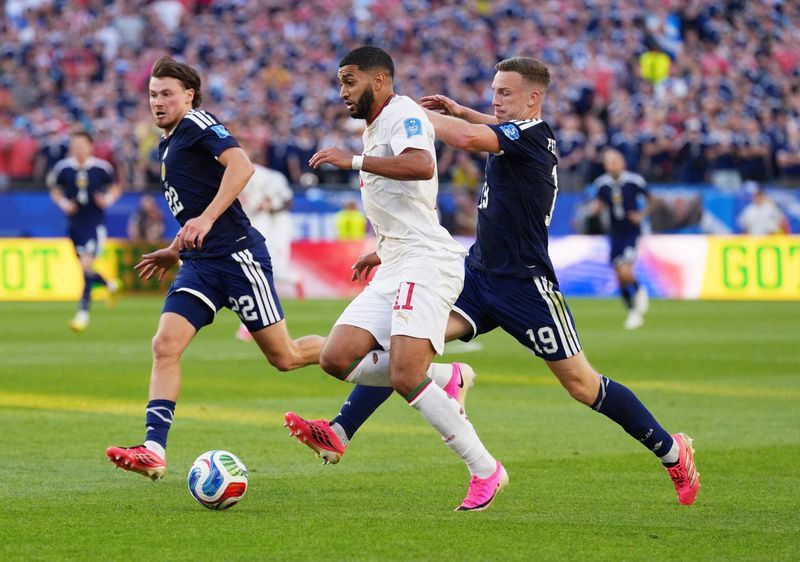
Morocco has seized the initiative in Group C by dismantling Scotland with a display of overwhelming control, securing a 1-0 victory that underscores their credentials as genuine contenders in this World Cup. The decisive moment came with breathtaking speed—Ismael Saibari converted a Brahim Diaz cross after just 71 seconds at Gillette Stadium in Foxborough, Massachusetts on Friday, marking the fastest goal in tournament history and setting the tone for an afternoon where the North Africans operated on a different level to their opponents.
With this victory, Morocco has accumulated four points from their opening two matches, positioning themselves at the summit of the group and establishing significant leverage heading into their final fixture against Haiti on Wednesday. Scotland, by contrast, remains on three points after two games, their earlier confidence dented by this comprehensive defeat and now facing the formidable challenge of Brazil on the final matchday. The Brazilian side will contest Haiti later on Friday, creating a complex permutation of outcomes that could still shuffle the final group standings.
The manner of Morocco's triumph extended far beyond the scoreline, which barely captured the scale of their superiority throughout the contest. They dictated possession, smothered Scotland's creative outlets, and fashioned numerous opportunities that could easily have resulted in a far more emphatic scoreline. The Scots, who had entered this encounter buoyed by their historic 1-0 triumph over Haiti last week—their first World Cup victory in 36 years—discovered the difference between competing and commanding at this level of international football.
Saibari's opening goal exemplified Morocco's attacking sharpness and Scotland's defensive vulnerability. Scottish centre-back Grant Hanley's decision to step out prematurely created the space for the Moroccan attacker to receive possession behind the defensive line, and he executed his finish with clinical precision. This achievement added gloss to Saibari's tournament credentials; the midfielder has already netted in Morocco's previous Group C match against Brazil, drawing a 1-1 result, and his performances have reportedly caught the attention of German champions Bayern Munich, whom he has passed a medical to join.
The significance of Saibari's brace—scoring in his first two World Cup matches—deserves recognition within the broader context of African representation at this tournament. He became only the second African player to accomplish this feat, following Egypt's Mohamed Salah. This distinction underscores Morocco's quality in the attacking third and their capacity to produce moments of individual brilliance when it matters most.
Beyond the opening goal, Morocco created a succession of opportunities that spoke to their systematic approach and superior execution. Azzedine Ounahi orchestrated incisive movements down the left flank, cutting back deliveries that invited teammates to finish, though the final touch occasionally eluded them. Midfielder Bilal El Khannouss had a clear opportunity in the 36th minute to extend the lead but fired his attempt over the crossbar following yet another flowing Moroccan move. The pattern repeated itself after the interval, with Saibari striking the post through a deflection and El Khannouss forcing a sharp save from Scottish goalkeeper Angus Gunn with a glancing header.
Scotland's struggles to mount any coherent attacking threat proved particularly revealing. The team failed to register a single shot on or off target until deep into the first-half stoppage time, a damning statistic that illustrated their complete domination by Morocco's pressing game and possession control. Even as the match progressed and Scotland desperately sought an equaliser in the closing stages, they lacked the incisiveness or opportunities to breach the Moroccan defensive organisation.
The victory reinforces Morocco's trajectory as surprise performers at this World Cup, building on their unexpected run to the semi-finals four years ago in Qatar. Captain Achraf Hakimi's presence in the squad, despite ongoing legal challenges including a rape trial, generated controversy among Scottish supporters who voiced their disapproval, yet the defender remained focused on the tactical mission. Ounahi's pre-match comments about targeting a final appearance drew raised eyebrows at the time, but Morocco's performance against Scotland suggests the ambition carries legitimate backing.
The mathematical picture for Group C remains intricate. The top two teams from each group automatically advance to the round of 32, whilst the eight best third-placed teams also secure qualification. Morocco's commanding position atop the standings provides them substantial cushioning, though Scotland retains genuine opportunities to progress if circumstances align favourably in the final round of matches. Brazil's status as five-time champions presents Scotland with an intimidating obstacle, whilst Haiti's challenge to Morocco represents a more navigable path for the North Africans to confirm their knockout-stage spot.
Looking ahead, Morocco's convincing display will have provided confidence to their coaching staff and playing squad. The North Africans have demonstrated they can implement a tactical blueprint effectively, maintain discipline across the pitch, and convert opportunities with the ruthlessness required at tournaments of this magnitude. For Scotland and their supporters, however, the encounter served as a harsh reminder of the quality differential between groups within this competition, though their tournament remains very much alive heading into Wednesday's decisive clash.