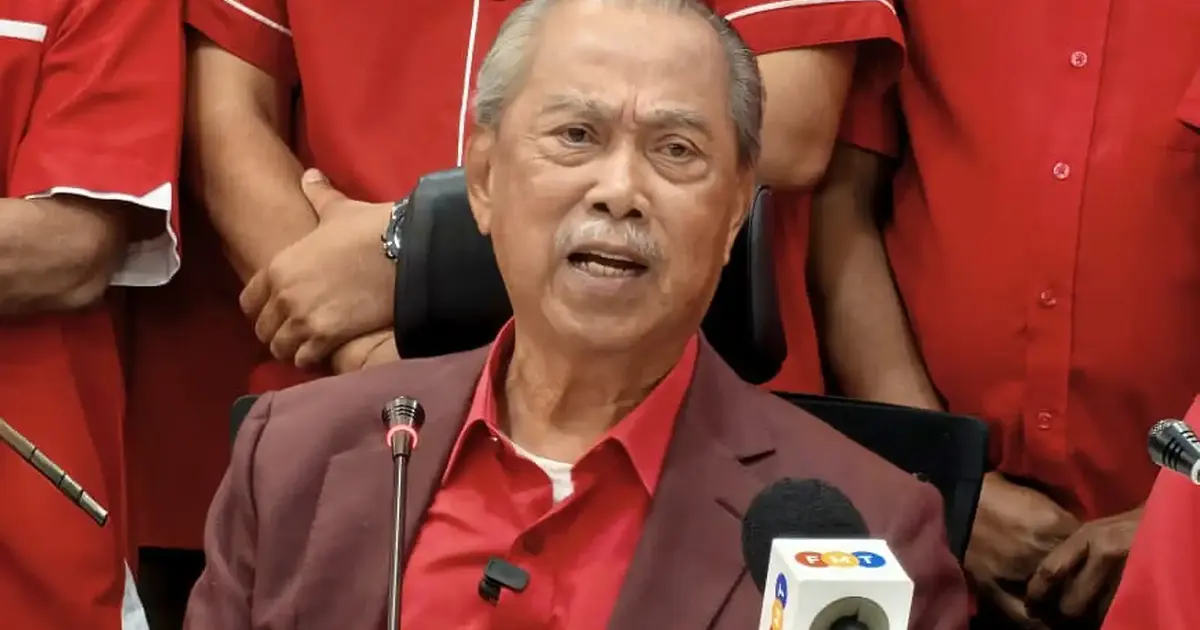
Bersatu is bracing for a comprehensive political clash with PAS across multiple fronts, according to former prime minister Muhyiddin Yassin, signalling the deepening fracture within Malaysia's Islamist and conservative political space. The assertion underscores intensifying tensions within the Perikatan Nasional coalition and reflects the strategic repositioning of major players ahead of crucial state-level contests that will reshape the political landscape in two significant Malay-majority states.
Muhyiddin's declaration represents a marked escalation in rhetoric between Bersatu and PAS, two parties that have shared coalition space but increasingly find themselves in competition rather than alignment. The former prime minister's language—invoking confrontation "on all fronts"—suggests Bersatu views the relationship as fundamentally adversarial rather than collaborative, a significant departure from the unity messaging that has historically characterised Perikatan Nasional's public positioning.
The coming elections in Johor and Negeri Sembilan will serve as critical barometers of political sentiment in heartland constituencies where Malay-Muslim voters form the demographic majority. These contests assume particular importance given that both states have traditionally swung between major coalitions, making them bellwethers for broader national electoral trends. For Bersatu, strong performances in these elections could validate its claim to represent an alternative voice within conservative Malaysian politics.
Bersatu's decision to contest under the PN banner rather than independently reflects the continued strategic value of the coalition framework, despite visible strains. The Perikatan Nasional platform provides legitimacy, organisational structure, and electoral machinery that would be difficult for Bersatu to replicate alone. However, the party's aggressive positioning against PAS within the same coalition reveals how competitive pressures are reshaping internal dynamics, with each faction seeking to maximise its own footprint and influence.
The rivalry between these two parties carries implications extending beyond electoral mathematics. Both draw support from overlapping demographic and ideological constituencies—conservative, religiously observant Malays and Muslims concerned with Islamic governance and identity issues. Every seat Bersatu captures in these contests represents territory lost to PAS, and vice versa, creating a zero-sum dynamic that overshadows any notional partnership within Perikatan Nasional.
PAS, as the larger and more established Islamic party with deeper grassroots networks, enters these contests from a position of relative strength, particularly in rural constituencies where its organisational presence remains formidable. Bersatu must therefore employ sophisticated campaign strategies targeting urban and semi-urban Malay voters, educated younger demographics, and communities where messaging around governance competence and economic management might resonate more powerfully than purely religious appeals.
Muhyiddin's explicit commitment to contest signals Bersatu's determination to avoid the appearance of ceding ground to PAS without competition. This approach serves both practical electoral purposes and internal party morale, demonstrating to Bersatu members and supporters that the leadership remains committed to growth and relevance rather than accepting a subordinate role within the coalition hierarchy.
The timing of Muhyiddin's statement arrives as both states prepare for electoral schedules, requiring parties to finalise candidate selections and campaign infrastructure. For Bersatu, this means deploying resources across Johor and Negeri Sembilan simultaneously, a substantial logistical undertaking that will test the party's organisational capacity and fundraising capabilities. The scale of this effort illustrates Bersatu's confidence in its competitive position, though victory cannot be assured in either state.
Regional observers should note how these state contests may serve as practice grounds for national-level competition, with campaign methodologies, messaging strategies, and coalition arrangements tested at reduced scale before potential application to general elections. Malaysian political parties treat state elections as laboratories for experimental approaches that could shape future federal campaigns.
The PAS-Bersatu dynamic also reflects broader patterns within Malaysian Islamist politics, where personalised leadership, organisational rivalries, and competition for limited grassroots resources create persistent tensions beneath formal coalition unity. Muhyiddin's ascendancy within Bersatu and his historical prominence at national level position him as a figurehead capable of mobilising considerable support, particularly among those nostalgic for his tenure as prime minister.
For voters in Johor and Negeri Sembilan, this competitive positioning offers increased political choice and may generate higher campaign intensity as parties invest greater effort to differentiate themselves. Whether this translates into substantive policy distinctions or remains primarily personality-driven remains an open question as campaigns develop.
The clarity of Bersatu's positioning also matters for coalition stability discussions at national level. If Perikatan Nasional intends to contest as a united front in future general elections, reconciling these competitive state-level rivalries will require careful negotiation and potentially painful compromises around candidate selection in constituencies where both parties maintain presence. Muhyiddin's combative rhetoric may complicate those negotiations, though it simultaneously demonstrates Bersatu's unwillingness to accept marginalisation within the coalition architecture.