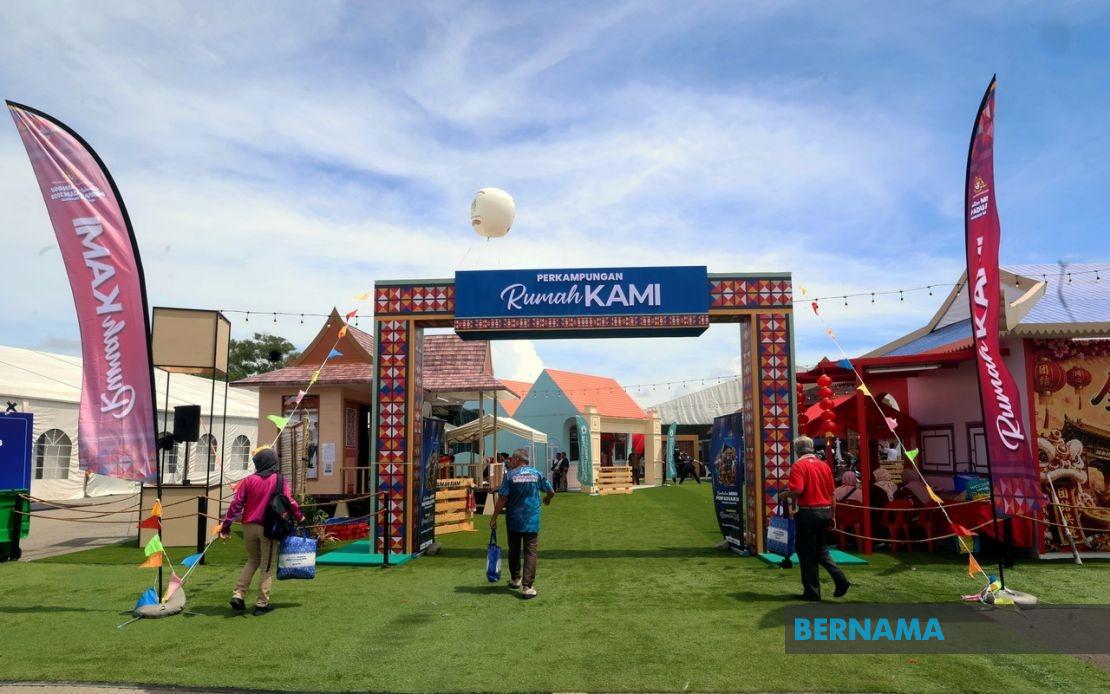
The National Unity Week 2026 celebration concluded in Kota Kinabalu on June 14 with unprecedented visitor engagement, drawing 284,448 people across the four-day event from June 11. This milestone represents the strongest public turnout since the Ministry of National Unity introduced the national programme in 2023, underscoring Malaysia's deepening commitment to celebrating the nation's multicultural fabric at the grassroots level.
National Unity Minister Datuk Aaron Ago Dagang framed the record-breaking attendance as evidence that Malaysians are increasingly valuing the country's rich cultural tapestry, historical heritage, and distinct community identities. He characterised these elements as the foundations upon which national strength and social cohesion rest, suggesting that public enthusiasm for unity celebrations reflects a maturing understanding of how diversity strengthens rather than divides the nation. The minister's remarks align with broader government messaging about building a united Malaysia that transcends traditional fault lines of ethnicity, faith, and geography.
Three specific attractions emerged as the primary draw for visitors throughout the four-day programme, according to feedback collected by the ministry. The Ethnic Village proved particularly popular, offering immersive experiences into the everyday life and cultural practices of Malaysia's major communities. Visitors had opportunities to observe traditional crafts, sample regional cuisine, and engage directly with community representatives, transforming passive viewing into interactive cultural exchange. This participatory approach appears to have resonated more effectively than conventional museum-style presentations.
The Ethnic Houses exhibition served as another centrepiece, showcasing the architectural heritage and material culture of diverse Malaysian communities including the Bajau, Melanau, Banjar, Kedayan, and Portuguese populations. By reconstructing traditional dwellings and domestic spaces, the exhibition allowed visitors to understand how cultural values are embedded within built environments and everyday objects. This hands-on approach to heritage education proved particularly effective in bridging the knowledge gap between urban Malaysians and the distinct traditions of communities often underrepresented in mainstream national narratives.
A third major attraction, the Negara Bangsa and Raja Kita Exhibition, successfully captured younger visitors' imagination by contextualising national symbols and history within contemporary relevance. Datuk Aaron indicated that the exhibition's ability to spark interest in Malaysia's historical foundations among young people holds particular significance for long-term national integration efforts. Engaging youth with foundational narratives of nationhood during formative years arguably creates deeper, more durable commitment to national values than programmes targeting adults.
The minister emphasised that sustainable unity cannot emerge from episodic celebrations alone, however well-attended. Instead, he stressed that genuine national integration demands persistent, methodical effort sustained across decades, with each generation inheriting and building upon the work of its predecessors. This framing acknowledges a fundamental truth often overlooked in government communications: that social cohesion represents an ongoing project rather than a destination to be reached through annual events, however impressive their attendance figures.
Consequently, the Ministry of National Unity has committed to institutionalising the National Unity Week as an annual fixture on Malaysia's national calendar. Beyond scheduling, the ministry intends to expand the ecosystem of platforms and opportunities enabling Malaysians from disparate backgrounds to interact meaningfully, deepen interpersonal bonds, and cultivate reciprocal understanding. This approach recognises that familiarity and repeated positive contact across community lines constitute powerful antidotes to prejudice and stereotyping.
The government framed the National Unity Week initiative as operationalising the MADANI administration's overarching vision of constructing a cohesive nation anchored in shared aspirations that transcend the divisive categories of race, religion, and regional provenance. By explicitly naming these traditional boundaries and declaring them secondary to national purpose, government messaging stakes a claim to progressive governance attuned to contemporary challenges facing plural societies.
Yet Datuk Aaron recognised that government action alone cannot accomplish unity-building at the necessary scale and depth. He called for coordinated commitment from multiple stakeholders spanning the state apparatus, commercial enterprises, community-based organisations, and ordinary Malaysians themselves. This multilateral framing distributes responsibility beyond the government while implicitly acknowledging that top-down initiatives, however well-intentioned, cannot substitute for grassroots commitment to interethnic and interfaith understanding.
For Malaysian policymakers and development practitioners, the 284,448 visitor figure offers encouragement that public appetite exists for carefully designed initiatives celebrating national diversity. The strong attendance suggests that when cultural programming is sufficiently engaging and accessible, Malaysians across demographic categories demonstrate willingness to invest time and resources in experiencing other communities' traditions and perspectives. This finding carries implications for how future unity-building efforts are designed and promoted across the region.
The success of Kota Kinabalu's National Unity Week 2026 also positions similar programming as a potentially exportable model for other Southeast Asian nations wrestling with comparable challenges of maintaining social cohesion amid ethnic and religious pluralism. Malaysia's experiential approach to cultural celebration, emphasising interactive engagement over passive observation, offers a template that could inform regional best practices in heritage and diversity programming.


