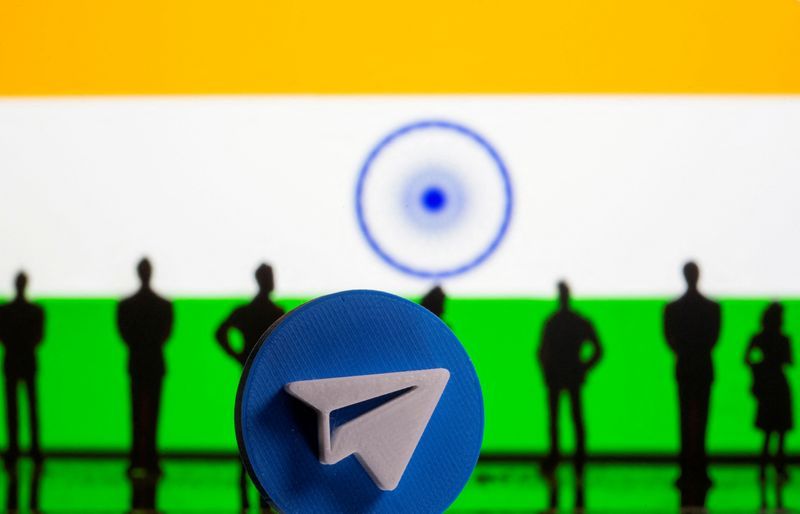
India's judiciary has dealt a significant blow to Telegram's challenge against the temporary blocking that took the platform offline across the country this week. On Friday, the New Delhi High Court dismissed the messaging application's appeal, upholding the government's decision to restrict access to the service until June 22. The ruling marks a watershed moment in the escalating confrontation between global technology companies and Indian authorities over content moderation and public safety concerns.
The crisis stemmed from a wider controversy surrounding India's National Eligibility cum Entrance Test for medical school, a high-stakes examination that determines admission to undergraduate medical programmes across the country. After the government cancelled the initial test results following allegations that examination questions had been circulated in advance through illicit channels, authorities moved to reschedule the assessment for Sunday. The postponement raised urgent questions about how examination integrity could be assured when candidates had potentially accessed unauthorised materials.
India's Ministry of Information Technology responded with an extraordinary measure, announcing the unprecedented suspension of Telegram access within the country. Officials cited evidence that multiple channels operating on the platform were openly advertising supposed leaked examination papers for sale to anxious candidates preparing for the rescheduled medical entrance test. The government contended that even if the materials being offered were counterfeit, the very existence of such channels posed a fraud risk to vulnerable students who might purchase fake content.
The speed of implementation underscored the gravity with which authorities treated the matter. Within hours of the ministry's directive, Indian telecommunications providers, alongside major global platforms including Google and Apple, had effectively removed Telegram from circulation and blacklisted it from their respective app stores. The action proved far more forceful and rapid than typical regulatory responses to digital platforms, reflecting the administration's determination to address the examination security breach before Sunday's critical test.
The legal proceedings that followed represent the most visible confrontation between India's government and a major international technology firm throughout the year so far. In his ruling on Friday, Delhi High Court judge Tejas Karia determined that the government's orders met constitutional standards and had been executed in strict accordance with established legal procedures. The judge's acceptance of the government's reasoning suggested the courts would not easily override executive decisions framed as protective measures during moments of national concern.
Telegram's position in India renders the ban particularly consequential. With more than 150 million users, the country represents the platform's largest market globally, making Indian regulatory action carry outsized commercial and strategic implications. The application's founder, Pavel Durov, has publicly expressed his displeasure with the prohibition, arguing that the blanket ban punishes millions of law-abiding users while those peddling examination materials have simply migrated their operations to alternative channels beyond government reach.
Disputes between the two sides had intensified in the days preceding the formal ban announcement. Private exchanges between Telegram representatives and Indian government officials grew increasingly tense, with authorities expressing frustration that the platform had failed to demonstrate proactive vigilance in identifying and removing accounts offering purported leaked examination papers. The government's frustration reflected broader concerns that Telegram's moderation practices remained inadequate relative to the scale and sophistication of illicit activity on its infrastructure.
Telegram vigorously contested this characterisation in its court filings, describing the government's account of their meetings as fundamentally misrepresentative. The company contended that official statements were "one-sided and inaccurate," deliberately excluding details about the company's existing systems for identifying and removing unlawful content. Telegram pointed to its removal of more than 900 individual links connected to examination-related misconduct, framing this as evidence of substantive enforcement action rather than negligence.
The confrontation highlights the deepening friction between India's regulatory ambitions and the operational philosophies of global technology platforms. Indian authorities have increasingly asserted that companies operating within the country must demonstrate active, proactive moderation rather than reactive removal of reported content. This reflects a broader global trend in which governments expect technology firms to serve as gatekeepers preventing harmful conduct, rather than merely disciplining users after misconduct has occurred.
For Malaysian and Southeast Asian observers, the case carries instructive implications regarding the evolving relationship between national governments and international technology companies across the region. India's willingness to implement rapid, comprehensive blocking of a major platform demonstrates the leverage that governments possess when framing actions as serving public safety or institutional integrity. The judiciary's acceptance of government reasoning suggests that courts may prove sympathetic to emergency measures even when they temporarily inconvenience millions of users.
The precedent could influence how other governments in Southeast Asia calibrate their own responses to similar digital crises. Whether regarding examination security, election integrity, or public health communications, authorities may look to India's precedent as justification for swift, sweeping digital restrictions. However, the ban also raises questions about proportionality, the effectiveness of blocking in an era of alternative platforms, and the long-term sustainability of strategies dependent on comprehensive platform restriction rather than targeted investigation and prosecution.
Looking forward, the examination scheduled for Sunday will test whether the temporary ban genuinely prevents cheating or merely displaces the problem to other channels. The outcome will likely influence both Telegram's standing within India and the broader trajectory of how technology regulation unfolds across South and Southeast Asia. For digital rights advocates, the case underscores the vulnerability of global platforms to state pressure during moments of perceived emergency, even absent legislative frameworks specifically authorising such comprehensive restrictions.