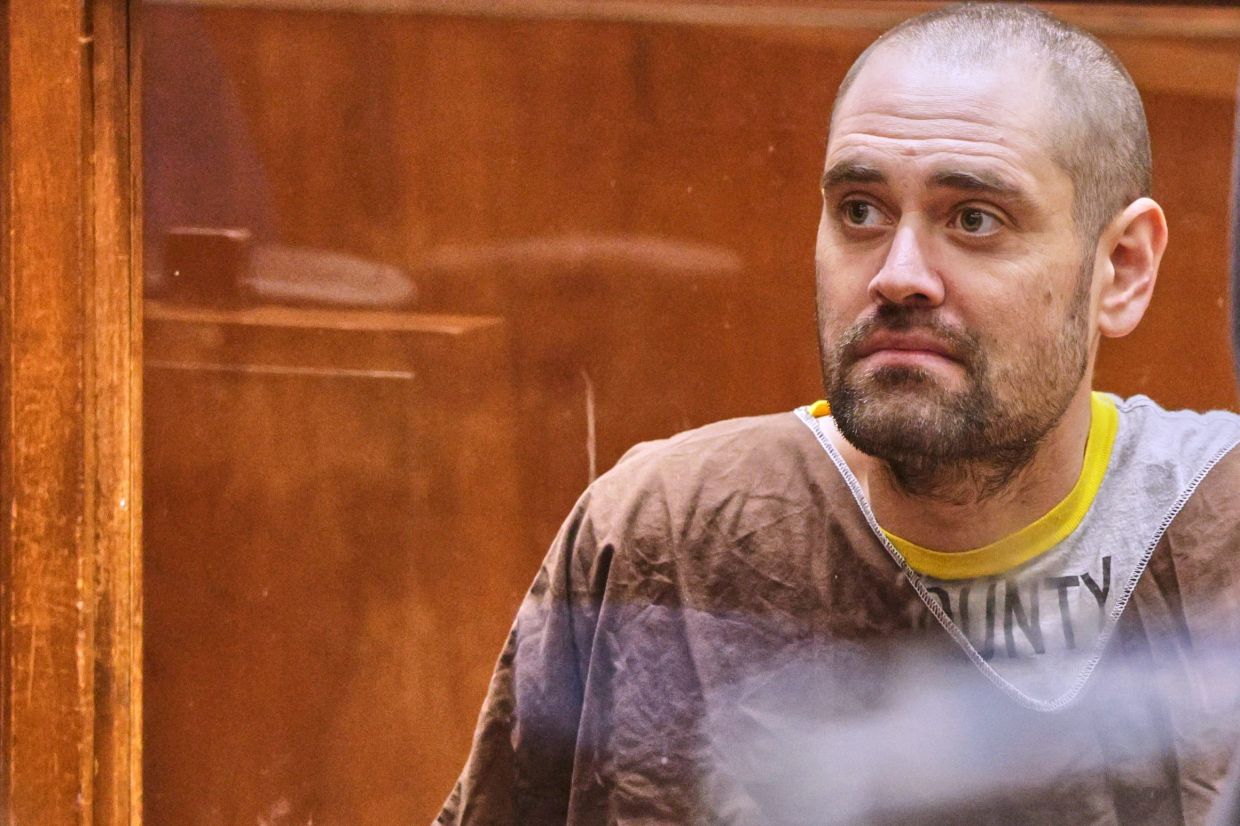
Nick Reiner, the 32-year-old son of acclaimed Hollywood director Rob Reiner, has turned to the courts in an attempt to unlock family trust funds he says are rightfully his but have been wrongfully withheld by the trustees overseeing them. In a petition filed Monday at Los Angeles County court, Reiner's legal team argues that he requires these funds to mount a proper defence against murder charges stemming from the December 14 deaths of his parents, director Rob Reiner and photographer-producer Michele Singer Reiner, who were fatally stabbed in their Brentwood home.
The legal document submitted by Reiner's civil attorneys emphasises the fundamental principle that the accused enjoys a presumption of innocence and therefore deserves access to his own lawfully held assets to support his criminal defence. The filing notes that regardless of the circumstances surrounding his parents' deaths, trust administration matters should be evaluated separately on their merits. Reiner was arrested within hours of the killings and has entered a not guilty plea to two counts of murder, though he currently remains incarcerated as the case progresses through the judicial system.
The trust at the centre of the dispute was established in 1993 by Rob and Michele Reiner for their son, containing what the petition describes as unambiguous instructions that Nick should receive half the trust's assets upon reaching age 30 and the remainder at 35. According to the filing, Reiner never received the funds due to him at the first threshold and has been denied subsequent payouts by Paul R. Kanin, the attorney who took over as trustee in February. The filing contends that Kanin has provided shifting justifications and excuses to withhold the money, including raising concerns about Reiner's mental competence that are legally irrelevant to the mandatory nature of the distributions outlined in the trust document.
The trust contains at least 1.5 million dollars in assets, according to the petition, though Kanin has apparently declined to disclose the precise total value. This situation has created a particularly pressing problem for Reiner's criminal defence, especially given the recent departure of high-profile attorney Alan Jackson, whom Reiner had retained to represent him. Jackson left the case less than a month after being engaged, citing reasons he was unable to publicly discuss. A declaration included in the trust petition reveals that Jackson's firm remains prepared to resume representation if adequate funding becomes available, suggesting that financial constraints may have prompted his initial withdrawal.
The disclosure that Reiner's siblings, Jake and Romy, had initially agreed to fund Jackson's legal fees before reversing that commitment underscores the fractured family dynamics at play. Rob and Michele Reiner had established separate individual trusts for each of their three children, distinct from the larger family trust, suggesting an intention to provide independent financial security to each heir. The failure to honour the distribution schedule outlined in Nick's trust represents, from the defence perspective, an unjustified deprivation of assets that were clearly designated for his benefit.
Reiner's petition also highlights the practical difficulties of mounting a robust criminal defence while incarcerated and financially constrained. Beyond legal representation, funds are necessary for basic necessities during incarceration and other expenses integral to preparing an adequate defence strategy. The argument that he should receive not only the funds due at age 30 but also those scheduled for age 35 on an expedited basis reflects the urgent circumstances created by his detention and the complexity of murder charges.
The criminal proceedings themselves appear to be progressing deliberately. Reiner is scheduled for a pretrial hearing in September, leaving months of preparation time before any trial. District Attorney Nathan Hochman has indicated that his office has not yet determined whether to pursue the death penalty, adding another layer of uncertainty to Reiner's legal situation. Public information about the case remains extremely limited, with autopsy details sealed by court order and virtually no significant leaks emerging from either the prosecution or defence sides, creating an information vacuum around crucial details of the killings.
The absence of disclosed motive or clear narrative surrounding the deaths of both parents by their son on the same occasion represents an unusual prosecutorial puzzle. Jackson's public declaration upon leaving the case—that pursuant to California law, Nick Reiner is not guilty of murder—carried particular weight coming from a seasoned defence attorney in the moments after his departure. This statement suggests that from a legal standpoint, the defence may identify substantive challenges to the charges, though the sealed nature of the evidence precludes public assessment.
The situation reflects broader questions about the intersection of trust law and criminal justice, particularly regarding whether trustees retain discretion to withhold distributions when a beneficiary faces serious criminal allegations. California law generally requires trustees to adhere to explicit trust terms regardless of the beneficiary's personal circumstances, yet some trustees may argue that doing so facilitates illegal activity or enables a defendant to evade accountability. Reiner's petition essentially asks the court to enforce the plain language of the trust document and establish that presently facing criminal charges does not justify departure from predetermined distribution schedules.
Rob Reiner's legendary career as a director spanned decades and produced some of cinema's most celebrated and rewatched films from the 1980s onwards, establishing him as a major creative force in American popular culture. His family's current tragedy plays out against this backdrop of public prominence, with media attention and procedural strictness likely heightened by the prominence of the accused's father. The petition process now underway represents one of several parallel legal battles that will shape not only Nick Reiner's ability to fund his defence but also the eventual public record of these deaths and their circumstances.