Fashion retailers across Asia are reporting a surge in demand for an unlikely summer accessory: socks that expose the toes while covering the arch. The trend has caught fire this season as consumers grapple with the discomfort of choosing between bare feet and traditional full-length socks during intensifying summer heat. Open-toe socks represent a middle ground that fashion-conscious shoppers are increasingly embracing, alongside flip-flop socks and sheer leg warmers, as temperatures climb across the region.
The phenomenon gained particular momentum following an early heat wave in South Korea, which accelerated the transition to lighter footwear. Data from online fashion platforms reveals the scale of consumer interest. Summer footwear categories including mules, slides, and flip-flops experienced an 80 percent sales increase between May 31 and June 7 compared to the previous year, according to W Concept. The appetite for socks specifically designed to pair with flip-flops has been even more dramatic, with transaction values jumping 1,664 percent over a month-long period from May 14 to June 14 on style commerce platform Ably, while search volumes climbed 3,227 percent during the same timeframe.
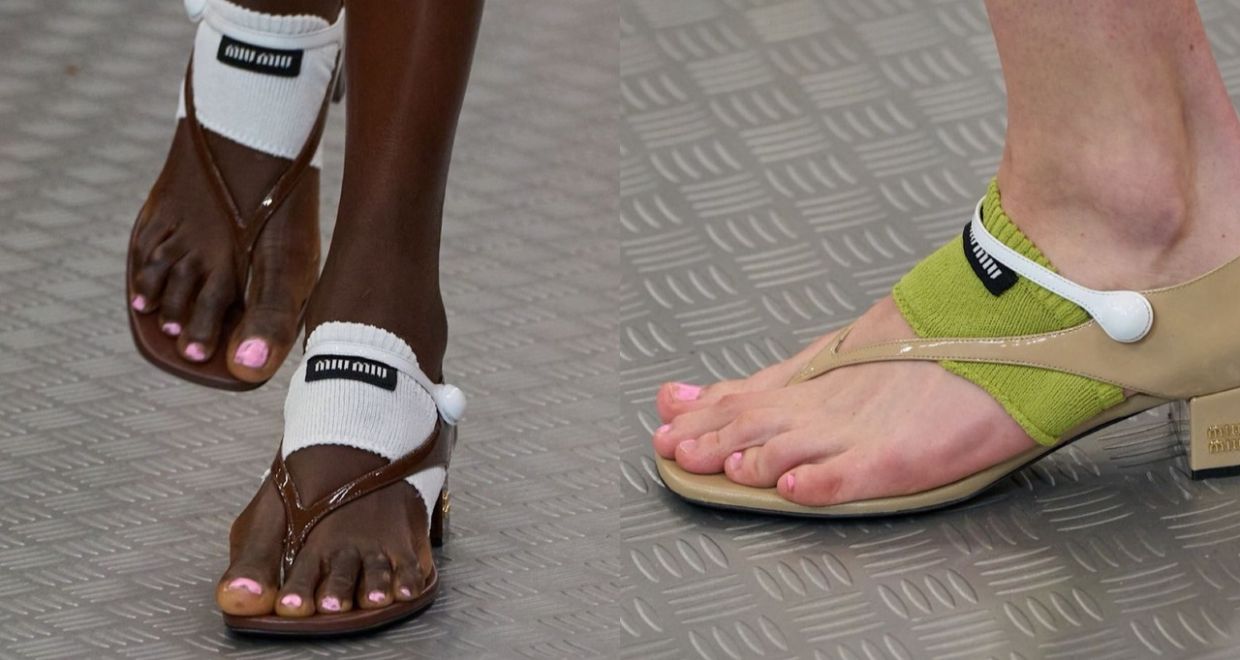
The trend's origins trace to high fashion, where luxury designer Miu Miu introduced an unconventional sock design in its 2025 Spring/Summer collection that departed from traditional full-foot coverage. Rather than wrapping the entire foot, the luxury label showcased socks that encased only the arch and upper portion, leaving toes completely exposed. This avant-garde approach gained additional visibility when South Korean actor Cha Jung-won shared social media posts pairing the look with summer essentials, demonstrating how sky-blue flip-flops could coordinate with beige knit leg warmers to create an intentionally styled appearance.
What makes these socks suitable for summer heat differs fundamentally from their winter counterparts. The contemporary versions utilise breathable materials including sheer fabrics, mesh construction, and loosely-knitted textiles that prioritise ventilation over insulation. Rather than serving a thermal function, they operate as colour-adding accessories and styling elements that transform basic flip-flops, sandals, and ballerina flats into layered, intentional looks. A spokesperson from online retailer 29CM explained the appeal: the socks function as a styling solution when completely bare feet appear too minimal and conventional hosiery feels excessively stifling during hot months. The accessory allows wearers to inject personality and visual interest into otherwise plain summertime footwear.
Beyond aesthetics, practical benefits drive consumer adoption. The sock construction covering the foot's upper surface significantly reduces friction and chafing that commonly occurs where flip-flop straps contact skin. During monsoon seasons prevalent throughout Southeast Asia, open-toe socks can be worn with rain boots to minimise moisture-related skin irritation and discomfort. This functionality appeals particularly to Malaysian and regional shoppers navigating humid, rainy climates where conventional footwear choices often come with dermatological trade-offs.
For consumers new to the trend, fashion experts recommend beginning with neutral foundation colours including grey, black, and white. These subdued tones pair effortlessly with everyday basics: grey socks coordinate well with black flip-flops or ballerina flats worn alongside denim, Bermuda shorts, or satin skirts. Those seeking bolder visual impact can select vibrant options such as yellow, pink, or sky blue. Fashion editors note that deliberately mismatching sock and shoe colours—pairing contrasting hues—actually enhances the overall aesthetic and reads as more intentionally curated.
Styling these socks successfully requires restraint in other areas. Since the socks and footwear already command visual attention, the remainder of the outfit should remain understated and recognisable. Simple combinations like t-shirts with shorts or shirts with skirts allow the foot styling to serve as the focal point. Open-toe socks featuring visible patterning including polka dots or floral designs create particularly striking combinations with complementary pieces.
The shift represents a broader evolution in how fashion treats functional items traditionally meant to remain hidden. Rather than concealing socks within shoes as practical necessities, contemporary styling deliberately showcases them as visible accessories worthy of thoughtful coordination. Fashion editor Je Hye-yoon captured this transformation, noting that socks have transitioned from items designed for concealment to elements commanding their own presence within an outfit. Whether wearers choose to fully expose toes, leave them partially visible, or tuck them between flip-flop straps, socks have fundamentally transformed into legitimate styling components rather than invisible infrastructure.
For Southeast Asian consumers navigating tropical climates and monsoon seasons, this trend offers particular relevance. The practical benefits of friction reduction and moisture management address genuine concerns in high-humidity environments where traditional footwear often creates discomfort. Simultaneously, the trend's accessibility—basic versions in neutral tones require minimal investment while offering immediate style enhancement—makes it adaptable across different fashion sensibilities and budgets. As summer intensifies across the region and consumer desire for comfort-conscious styling increases, open-toe socks represent a trend that genuinely solves a seasonal problem while maintaining fashion-forward appeal.