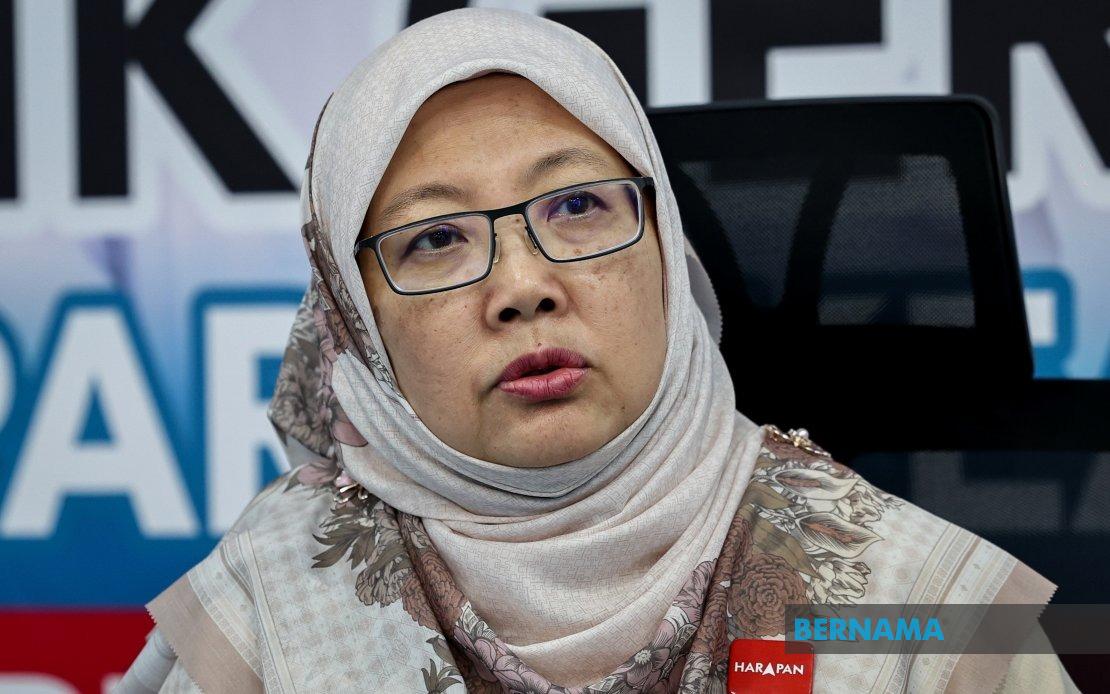
Pakatan Harapan is set to unveil its complete roster of candidates for the forthcoming Johor state election on Monday, according to Johor PKR chairman Datuk Seri Dr Zaliha Mustafa. The announcement will take place during an official ceremony that will bring together the coalition's top echelon, including PH chairman Datuk Seri Anwar Ibrahim, signalling the significance the opposition alliance places on the peninsular state's political contest.
The venue for the candidate announcement carries strategic importance. Dr Zaliha indicated that PH has chosen a location in Johor's northern region, likely in Bukit Gambir, Tangkak, rather than the more politically dominated southern areas around Johor Bahru. This geographical choice reflects a deliberate campaign strategy to harness what party officials perceive as a surge in grassroots support across the northern zone, bolstered by a series of community engagement programmes that have reportedly generated significant popular enthusiasm.
The decision to hold the event in the north underscores PH's acknowledgement that the northern constituencies present particular opportunities for the coalition. Previous outreach activities in areas such as Bukit Naning have apparently resonated well with voters, encouraging the coalition to consolidate its position in these territories. By staging the candidate announcement there, PH aims to capitalise on this momentum and reinforce its connection with northern voters ahead of the election campaign proper.
The candidate selection process itself involved a comprehensive methodology designed to balance multiple considerations. Dr Zaliha emphasised that the vetting process operated at multiple levels, incorporating feedback from branch-level party members to ensure that chosen candidates possessed genuine understanding of local community concerns and demonstrated proven track records of public service. This ground-up approach seeks to legitimise the candidate slate by rooting it in grassroots input rather than appearing to impose candidates from above.
Diversity and representation emerge as central themes in how PH has constructed its candidate roster. The coalition has deliberately incorporated professionals, younger aspirants, women, and candidates from various ethnic backgrounds to create what party leaders describe as a balanced ticket. This compositional strategy reflects broader assumptions within the opposition about what contemporary Malaysian voters expect—a political offering that reflects the pluralistic character of the electorate and extends beyond traditional political demographics.
Beyond demographic considerations, PH has screened candidates for their capacity to advance the coalition's overarching political ambitions. The party recognises that individual candidates must serve not only their immediate constituencies but also contribute to larger strategic objectives. This dual mandate—performing locally while advancing coalition-wide goals—distinguishes PH's approach from campaigns focused purely on maximising the number of seats won without broader structural planning.
PH's strategic outlook for Johor distinguishes this election from routine contests. Rather than entering the campaign with the limited objective of marginal seat gains, the coalition has explicitly positioned itself as a government-in-waiting. This ambitious posture represents a significant shift from previous state-level campaigns and signals that PH believes its organisational and popular positioning in Johor has matured sufficiently to justify claims of governing capacity. Forming a state administration would constitute a major political development, particularly given Johor's historical significance as a Barisan Nasional stronghold.
The seat distribution among PH's component parties reveals internal coalition dynamics. PKR will field candidates in 20 of the 56 seats, DAP in 17, and Amanah in 19. This apportionment reflects both the relative organisational strength of each partner and negotiated arrangements between the coalition's constituent parties. PKR's allocation as the largest contingent aligns with its status as the leading force within Pakatan Harapan, while the substantial allocations to DAP and particularly Amanah indicate that PH has structured the contest to ensure all major partners maintain meaningful presence throughout Johor.
The electoral timeline for Johor provides a compressed campaign schedule that will test PH's organisational capacity. Nominations are set for June 27, with the main polling day scheduled for July 11, and early voting on July 7. This compressed calendar means that once candidates are formally announced on Monday, the campaign period becomes correspondingly brief. PH's early presentation of its candidate slate—nearly a month before nominations close—affords the coalition time to introduce its chosen representatives to voters and build momentum before the official campaign period intensifies.
For Malaysia's broader political context, the Johor election carries implications that extend well beyond the state itself. As the peninsula's second-largest state by population and a traditional bastion of Barisan Nasional support, Johor's results will serve as a crucial indicator of whether PH's recovery from the 2023 federal election setbacks is translating into electoral traction at the state level. A strong PH performance could suggest that the opposition coalition remains competitively positioned for future contests, while conversely, disappointing results might reinforce questions about the durability of PH's electoral support.
The Southeast Asian dimension of Malaysian state elections should not be overlooked. The region's democratic systems increasingly influence one another's political trajectories. A successful opposition campaign in a significant state like Johor would contribute to broader patterns of alternating power observed in Malaysia's recent democracy, potentially reinforcing norms of competitive elections across Southeast Asia where such norms sometimes face pressure from incumbent-friendly structural advantages.
For Malaysian readers particularly in Johor, the candidate announcement represents the formal commencement of a campaign season that will dominate local political discourse for the coming weeks. The composition of PH's ticket and how these candidates perform in public engagement will substantially influence whether the coalition's ambition to form government proves realistic or remains aspirational. The Monday announcement will thus mark the transition from behind-the-scenes organisational work to the public theatre of electoral competition.


