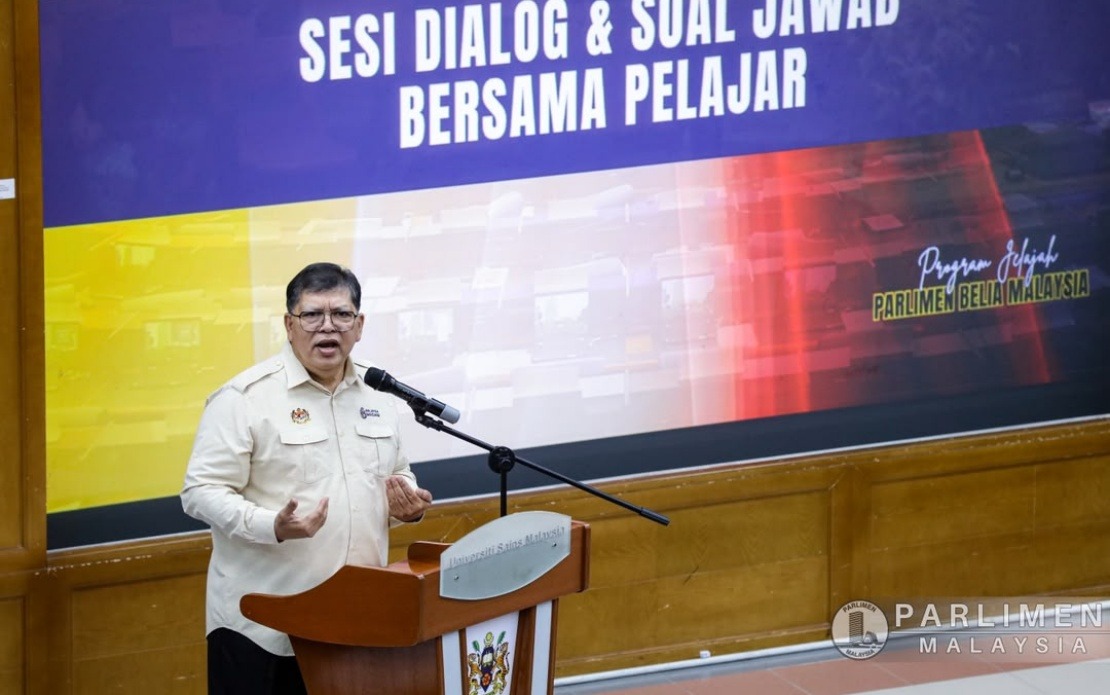
The Dewan Rakyat must function as an institution worthy of public respect and confidence, and crucially, as a foundational classroom for democratic practice among Malaysia's next generation of leaders. This message from Dewan Rakyat Speaker Tan Sri Johari Abdul underscores the profound responsibility that Parliament bears in shaping civic values during a pivotal moment: the Malaysian Youth Parliament (PBMy) is set to commence its new term on September 11, with a fresh cohort of young delegates prepared to learn through direct observation of how parliamentary democracy operates at the highest level.
Johari's call for exemplary conduct transcends typical parliamentary etiquette. He articulated a vision of Parliament as something far more than a venue for legislative debate among elected representatives. Instead, it functions as a reference point for society at large and, most importantly, for younger generations who will inherit the nation's political and civic institutions. The timing is significant: as PBMy participants gear up to engage in their own parliamentary simulations, the conduct they witness in the actual Dewan Rakyat will profoundly influence their understanding of democratic norms and their expectations of how elected officials ought to behave.
The Speaker's remarks reflected a keen awareness of modern communication dynamics. In an era where parliamentary proceedings are transmitted live and dissected across social media platforms, every utterance and gesture by Members of Parliament becomes a public lesson. Young Malaysians scrolling through their feeds encounter clips of parliamentary exchanges simultaneously with the Speaker's public call for decorum, creating an immediate and tangible tension between stated ideals and observable reality. Johari recognised this phenomenon directly, noting that contemporary transparency means Parliament's actions are under constant scrutiny from citizens who form their own judgments about the quality of democratic discourse.
The substance of parliamentary debate matters equally to its tone. Johari specifically advocated for discussions grounded in factual evidence and driven by solutions rather than rhetoric. He urged Members of Parliament to embrace courteous exchanges centred on genuine public interest rather than partisan advantage. This emphasis on integrity-driven proceedings reflects broader concerns about democratic health across the region, where debates can sometimes devolve into personal attacks or ideologically rigid posturing divorced from substantive policy analysis. By positioning factual, solution-oriented discourse as the standard he expects, Johari set a measurable benchmark against which PBMy participants—and the public—can evaluate parliamentary performance.
The Malaysian Youth Parliament itself represents an innovative institutional mechanism for civic engagement. Operating on a structure mirroring the actual Parliament, PBMy comprises 222 seats distributed across parliamentary constituencies nationwide, with participating youth organised into parties that function within the platform but remain explicitly non-partisan and disconnected from Malaysia's actual party politics. This design permits young people to experience democratic processes including nomination, campaigning, voting, and legislative debate without being drawn into factional competition. Already, more than ten such youth-led parties have been established within the framework, demonstrating genuine appetite among young Malaysians for structured political participation.
The scale of recruitment efforts undertaken by Parliament Malaysia reveals institutional commitment to the initiative. Officials are actively conducting outreach nationwide, targeting the registration of 300,000 young Malaysians aged between 18 and 30—a substantial portion of the national youth cohort. The timeline is ambitious: nomination day falls on July 8, with official candidate announcements following on July 11. The campaign period spans 27 days from July 12 through August 7, allowing candidates time to build support before voting commences. The election itself will operate through an online e-PBMy system, with voting windows opening for 24 hours from 10 am on August 8 until 10 am on August 9, ensuring accessibility across the archipelago.
The transition of PBMy's management to Parliament Malaysia represents a significant institutional evolution. Originally launched in 2015 under the Ministry of Youth and Sports, the programme operated for eight years before the government determined in October 2023 that it should be transferred to Parliament's direct administration. This shift places responsibility squarely with the legislative institution itself, creating organisational alignment between the youth parliament and its senior counterpart. It also signals confidence that Parliament possesses the institutional capacity and legitimacy to nurture democratic competency among younger generations.
Once constituted, PBMy members will serve two-year terms with the institution convening three times annually for sittings lasting two days each. This schedule permits substantive engagement while avoiding the full-time demands of actual parliamentary service. The inaugural assembly sitting and appointment of members on September 11 will launch what Johari described as a new parliamentary term, suggesting the September sitting represents not merely an opening event but the genuine commencement of legislative work. Young participants will engage in debates, committee work, and procedural learning that approximates actual parliamentary function, albeit in a controlled educational environment.
The implicit challenge embedded in Johari's remarks extends to the entire Parliament Malaysia community. Members of Parliament are being asked to recognise that their conduct during ordinary sessions carries educational consequences. When an MP delivers a fact-based contribution and another responds substantively rather than dismissively, young observers absorb lessons about intellectual honesty. When parliamentary exchanges become heated yet remain focused on policy substance, younger Malaysians learn that disagreement need not preclude mutual respect. Conversely, when MPs engage in personal attacks or make unsubstantiated claims, youth develop cynicism about democratic institutions. The Speaker's message essentially constitutes a plea for Members to understand themselves as educators whether they intend to be or not.
For Malaysian youth, PBMy represents a rare institutional opportunity to develop democratic literacy and leadership skills within a structured framework. Unlike many regional counterparts, Malaysian young people will have access to a sophisticated simulation of parliamentary process integrated within the actual legislative institution. This proximity to real Parliament—witnessing debates, understanding procedures, observing how laws are scrutinised—cannot be replicated through textbooks or classroom discussion. The authenticity of the experience depends substantially on what they observe in the Dewan Rakyat itself. If Parliament delivers the dignified, fact-based, solution-oriented discourse that Johari called for, PBMy participants will graduate with a robust understanding of how democracy can function optimally. If parliamentary proceedings disappoint these expectations, even the best-designed youth parliament cannot fully compensate for the damage to their confidence in democratic institutions.
Moreover, the influence operates bidirectionally. The engagement of 300,000 youth in electoral and parliamentary processes within PBMy may generate renewed interest in electoral participation among this cohort when they subsequently engage with actual national elections. Young people who experience the satisfaction of meaningful democratic participation are more likely to value and protect democratic processes throughout their lives. This long-term civic engagement effect represents perhaps the deepest potential impact of the youth parliament initiative. Parliament Malaysia is not merely creating an educational programme but potentially cultivating a generation of active, engaged citizens—provided that the institution itself models the democratic values worth emulating.


