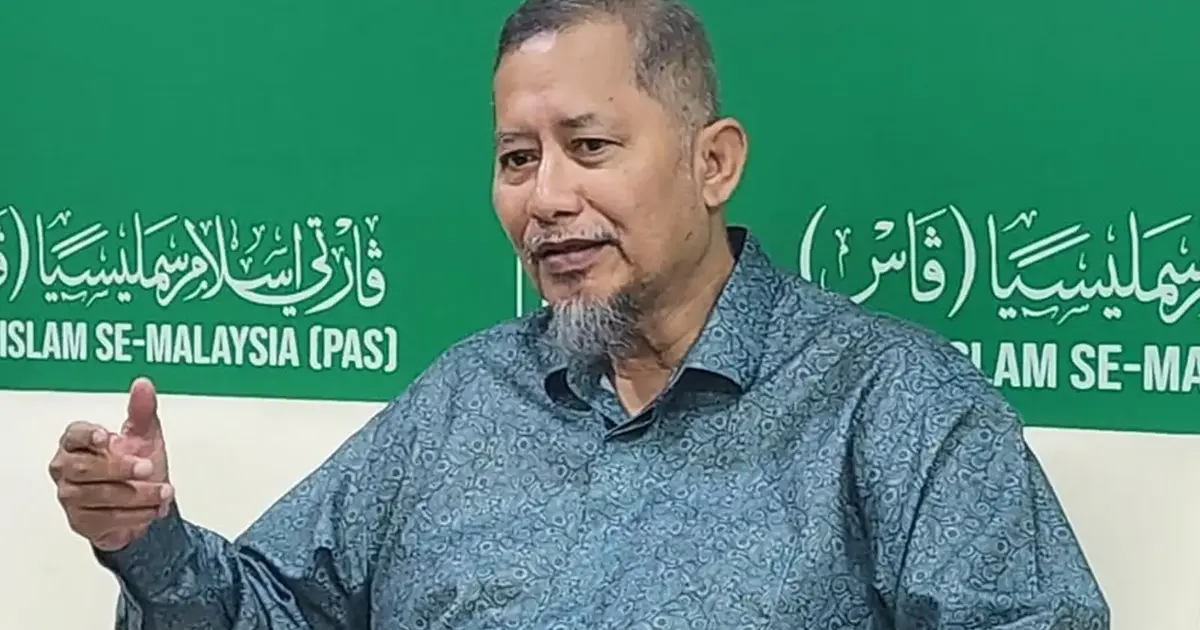
PAS has thrown down a political gauntlet, with the party's treasurer declaring that it would decisively outperform Bersatu should the two Perikatan Nasional (PN) component parties face off at the ballot box. The confidence expressed by Iskandar Abdul Samad reflects deeper dynamics within Malaysia's fragile Islamist-led coalition, where tensions occasionally surface between partners despite their shared political platform and coalition agreements.
The assertion arrives at a time when Malaysian politics continues to display considerable fluidity, with various political groupings jostling for position ahead of elections that could be held at federal, state, or both levels. The underlying logic of Iskandar's statement appears rooted in the presumption that should PN voters be forced to choose between its two principal Malay-Muslim parties, they would gravitate towards PAS rather than Bersatu. This calculation rests on PAS's historical organisational strength, its entrenchment in certain constituencies, and its religious credentials within the Islamist political space.
PAS has maintained a significant parliamentary presence and controls several state governments, including Kelantan and Terengganu, where the party has demonstrated sustained electoral appeal across successive cycles. The party's grassroots network and religious mobilisation machinery have historically translated into reliable voter turnout, particularly in rural and semi-urban areas where PAS enjoys traditional strongholds. Bersatu, by contrast, represents a newer political entity formed from defectors and represents a different demographic coalition, relying more heavily on urban and middle-class support bases.
The comment by Iskandar also underscores an underlying reality of coalition politics in Malaysia: partnerships between political parties, while publicly portrayed as harmonious, often contain competitive elements. Even within electoral pacts and formal arrangements, constituent parties frequently harbour concerns about relative standing, seat allocations, and voter loyalty. The treasurer's remarks, whether calculated positioning or genuine assessment, highlight that PAS remains acutely conscious of its standing within PN and potentially anxious about its future trajectory should coalitional arrangements shift.
From a Malaysian political economy perspective, Bersatu's presence within PN has occasionally created complications for the coalition's narrative. While PAS and the Malaysian Islamic Party enjoy deep historical roots within the Islamic political movement in Malaysia, Bersatu emerged more recently as a vehicle for political figures seeking alternative platforms. This distinction may indeed confer organisational advantages on PAS, particularly when mobilising voters within constituencies where religious and traditional appeals resonate most strongly.
The treasurer's confidence may also reflect calculations about the current political climate, wherein Islamic political positioning carries particular salience across Peninsular Malaysia. PAS has skillfully leveraged religious discourse and governance narratives to consolidate its support base, presenting itself as the authentic voice of Islamic politics. Any electoral contest would likely test whether this positioning translates into genuine voter preference or whether other factors—including incumbency advantages, local issues, and personality-driven politics—would prove determinative.
For Malaysian voters and observers, such statements provide insight into how coalition partners perceive their relative strengths and vulnerabilities. The remark suggests that within PN's internal calculations, PAS leadership views its party as the dominant force capable of delivering electoral victories. Whether this reflects actual capacity or aspirational thinking remains unclear, though history suggests that PAS does possess formidable electoral machinery in specific regions.
The broader implications extend to PN's unity and cohesion. Coalition partners that harbour doubts about their standing within the alliance face incentives to strengthen their positions, potentially through demanding more favourable seat allocations, ministerial positions, or policy concessions. Iskandar's public statement may signal PAS's determination to secure advantageous arrangements in any future electoral negotiations or power-sharing discussions within PN.
Regionally, Malaysia's coalition dynamics merit attention from Southeast Asian observers interested in how Islamist parties navigate electoral competition and power-sharing arrangements. The tension between PAS and Bersatu, while managed within PN's framework, reflects broader questions about how political parties balance coalition loyalty with competitive self-interest. The situation also illuminates how Malaysia's electoral system and federalised political structure allow for complex arrangements where national coalition partners compete at state or local levels.
Looking forward, the treasurer's remarks suggest that PN's internal equilibrium remains subject to periodic testing and assertion of relative strength. Should electoral mathematics ever force a direct contest between PAS and Bersatu, Iskandar's confidence would face empirical validation. Until such a scenario materialises, his statement functions as both a political claim and a message to coalition partners regarding PAS's self-assessment of its electoral prowess and indispensability to Perikatan Nasional's broader political project.