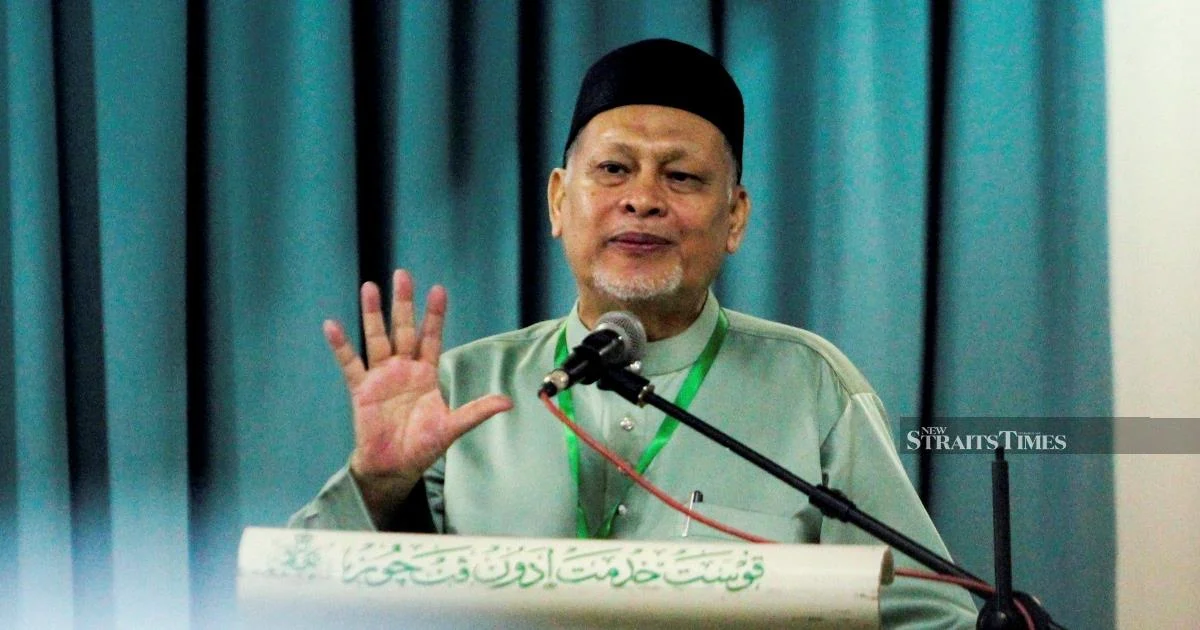
The Islamic party PAS has pushed back against Tan Sri Muhyiddin Yassin's recent announcement regarding Bersatu's electoral strategy in the upcoming state contests in Johor and Negeri Sembilan, suggesting that the party president acted without sufficient deliberation. The criticism emerged from Kota Baru, the administrative capital of Kelantan and a traditional stronghold of the Islamic party, highlighting growing tensions within the Perikatan Nasional coalition as both camps prepare for significant electoral contests.
Muhyiddin's declaration that Bersatu would campaign under the PN banner in these two state elections represents a significant decision within Malaysia's broader political landscape, where coalition partners must agree on symbols, candidate lists, and electoral strategies. For a multiparty coalition, such choices typically require extensive coordination and consultation to prevent fractious disputes that could undermine electoral competitiveness. PAS's characterisation of the announcement as hasty implies that proper consensus-building procedures may not have been observed, raising questions about internal governance within PN.
The tension between PAS and Muhyiddin's faction within PN reflects deepening fissures within the coalition that was established to challenge the dominance of the Barisan Nasional and Anwar Ibrahim's Pakatan Harapan blocs. Since its formation, PN has struggled with internal disagreements over power-sharing, policy direction, and electoral representation, with various components vying for greater prominence and electoral space. These recurring conflicts threaten to erode the coalition's effectiveness precisely as major state elections loom, potentially disadvantaging PN candidates against opponents from rival coalitions.
For Malaysian voters and political observers, the apparent disunity within PN carries practical implications. State elections in Johor and Negeri Sembilan will test whether PN can function as a cohesive political force or whether internal disputes translate into scattered messaging and divided campaign efforts. Johor, in particular, remains strategically important as Malaysia's second-largest state by population and economy, making electoral success or failure there significant for all participating coalitions' national standing.
The use of coalition logos versus party symbols in elections involves both tactical and symbolic considerations. A unified PN logo signals unity and allows voters to identify which political combination they are supporting, while individual party symbols can emphasise specific party identities and appeal to dedicated party supporters. Muhyiddin's apparent preference for the PN brand suggests a strategy emphasising coalition cohesion, yet this decision apparently proceeded without securing buy-in from all relevant partners, inviting the PAS rebuke.
PAS's position reflects its own electoral calculations and institutional interests within PN. As the largest component by membership and a dominant force in several states, PAS has vested interests in determining how campaigns unfold and which symbols gain prominence. The party's reluctance to accept decisions made unilaterally by Muhyiddin suggests it views such unilateral action as threatening to its autonomy and negotiating power within the broader coalition arrangement.
Historically, PAS has navigated complex coalition dynamics, having previously partnered with Umno in Barisan Nasional before shifting alliances multiple times over recent decades. This experience likely informs its current caution about allowing one coalition partner to dominate decision-making frameworks. The party's willingness to publicly criticise Muhyiddin also signals that PAS is not prepared to accept a subordinate position within PN, despite the coalition's need for unified positioning ahead of critical elections.
The timing of this disagreement carries additional significance given that state election schedules remain fluid. Johor and Negeri Sembilan have not announced definitive polling dates, meaning PN still has opportunity to resolve internal disputes before campaigns formally commence. However, the public nature of the PAS criticism suggests discussions may have already become contentious, potentially making internal negotiation more difficult as each party becomes locked into public positions.
For the broader Malaysian electorate, particularly in these two target states, such internal coalition bickering can breed voter scepticism about whether these parties are genuinely ready to govern together effectively. Voters evaluating their options may question whether a coalition plagued by coordination failures at the planning stage can deliver coherent governance once in office. This consideration may prove particularly influential in Johor, where urban and suburban voters tend to be more politically sophisticated and responsive to perceived organisational competence.
The disagreement also illuminates PAS's strategic calculation regarding its own brand strength relative to the PN banner. By resisting the coalition logo approach, PAS asserts confidence in its ability to win support on its own party merits, particularly in constituencies where it holds established voter bases. This confidence may be justified in Kelantan and northern Terengganu, but applying the same logic statewide in Johor or Negeri Sembilan represents a riskier proposition where PAS lacks comparable organisational penetration.
Moving forward, resolving this dispute will require negotiation between PAS leadership and Muhyiddin's faction, likely involving compromises on symbol usage across different constituencies or agreement on sequencing consultation procedures before major announcements. Without such resolution, campaign inefficiencies could translate into lost seats and diminished influence for PN across both states. The coming weeks will reveal whether coalition partners can subordinate individual interests to collective electoral objectives.