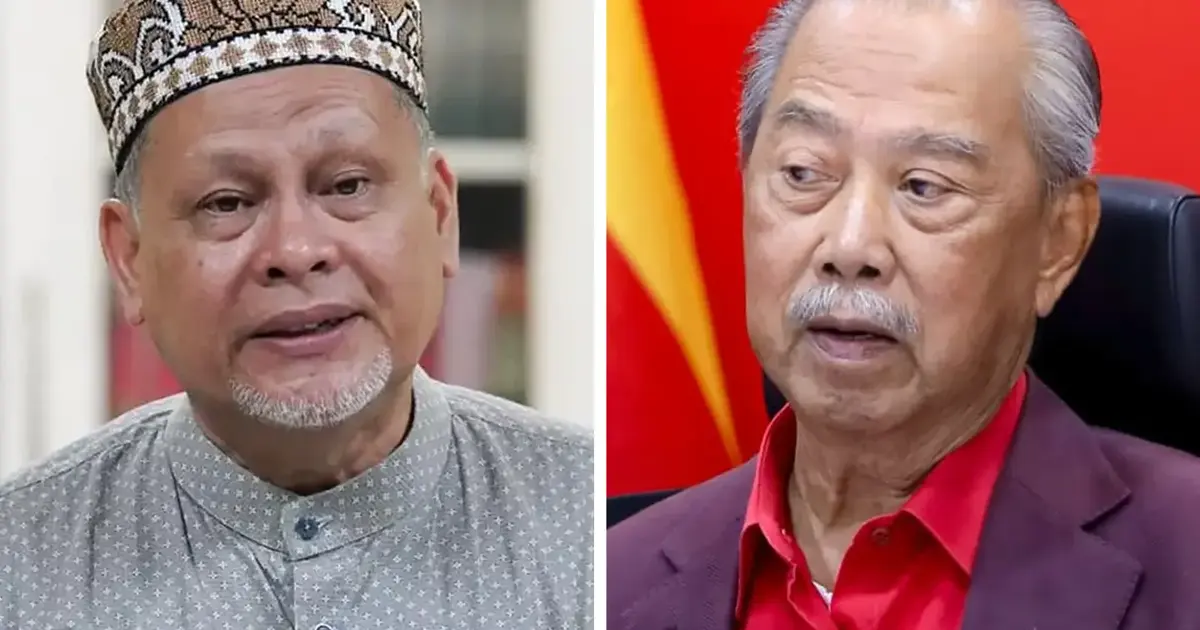
The relationship between two major components of the Perikatan Nasional coalition has become increasingly strained, with PAS now drawing a clear line in the sand regarding Bersatu's political commitments. PAS vice-president Amar Abdullah has questioned the logic behind Bersatu president Muhyiddin Yassin's recent statements about potentially fielding candidates to compete directly against PAS in electoral contests, describing the position as contradictory and untenable within a formal alliance structure.
Amar Abdullah's challenge reflects deepening tensions within the PN coalition, which has governed Malaysia since the 2022 general election. The assertion that Bersatu cannot advocate for competing against its own coalition partners while maintaining membership in that same alliance raises fundamental questions about the coherence and durability of multi-party political arrangements in Malaysia. This ultimatum—either commit fully to the coalition or exit it—represents a significant moment in Malaysian coalition politics, signalling that PAS is no longer willing to tolerate what it perceives as strategic ambiguity from Bersatu regarding electoral positioning.
The context for this dispute reflects broader calculations about Malaysia's political landscape heading toward the next general election. Bersatu, led by former Prime Minister Muhyiddin, has been exploring various political options while formally remaining within PN. Statements by Bersatu leadership about contesting seats suggest the party may be positioning itself to maximize electoral gains independently, rather than strictly adhering to coalition seat-sharing agreements that typically govern how alliance partners divide electoral constituencies among themselves. This approach would normally be unacceptable within formal coalitions, where members agree to support each other and avoid competing in designated constituencies.
PAS, as the largest component of PN and the dominant Islamic party in the coalition, has the leverage to enforce such boundaries. The party's control of several state governments and its significant parliamentary representation give it considerable influence over coalition dynamics. By publicly calling out Bersatu's apparent inconsistency, PAS is signalling that it will not indefinitely tolerate behaviour that undermines coalition discipline. The party appears determined to establish clear rules of engagement before internal contradictions damage the broader alliance structure.
Muhyiddin's position, meanwhile, likely reflects Bersatu's vulnerability within the current political arrangement. As the smaller partner in PN, Bersatu faces pressure to demonstrate independence and relevance to its own members and supporters. Suggesting that the party might contest against PAS candidates could be an attempt to signal that Bersatu will not be subordinated within coalition hierarchies. However, such positioning creates the exact dilemma that Amar Abdullah has highlighted: a party cannot simultaneously claim coalition loyalty while undermining coalition partners through electoral competition.
The dispute also illuminates deeper questions about how Malaysian coalitions function in practice. Unlike some democracies with stable, institutionalized party alliances, Malaysian political coalitions often remain fluid arrangements where partners maintain significant autonomy. However, this fluidity has limits, and those limits appear to have been reached in the case of Bersatu-PAS relations. The fact that PAS is now openly challenging Bersatu's stance suggests the coalition faces a reckoning about fundamental principles of cooperation and electoral ethics among partners.
For Malaysian voters and observers of national politics, this development carries implications beyond PN internal management. Coalition stability affects governance capacity and policy continuity. If PN fractures due to disputes between Bersatu and PAS over electoral positioning, the government's parliamentary majority could come under pressure. Conversely, if PN members impose strict discipline and force members to choose between staying in the coalition or pursuing independent electoral strategies, this could reshape the composition and character of Malaysia's political coalitions more broadly.
The situation also reflects the precarious position of parties seeking to balance coalition membership with internal party interests. Bersatu, founded relatively recently by Muhyiddin and other defectors from UMNO, may feel the pressure to establish independent political credentials to justify its continued existence as a separate entity. Yet this instinct to differentiate runs directly counter to the logic of maintaining a working coalition with PAS. The tension between these imperatives is now playing out publicly, with PAS demanding clarity.
Regional observers should note that this Malaysian political dynamic affects the broader Southeast Asian balance of power. Malaysia's government stability matters for regional security arrangements, economic policy coordination, and ASEAN dynamics. Coalition breakdowns or internal reconfigurements can shift Malaysia's foreign policy orientation and regional engagement. Therefore, the resolution of this Bersatu-PAS dispute could have implications extending beyond domestic Malaysian politics.
Looking forward, the ultimatum issued by Amar Abdullah will likely force Bersatu into an explicit choice. The party must either recommit clearly to the coalition framework and cease public discussions about contesting against PAS, or formalize its exit from PN and reorganize its political strategy accordingly. Muhyiddin faces considerable pressure to clarify Bersatu's intentions, though any decision carries political risks. Remaining in PN but facing stringent coalition discipline may limit the party's room to maneuver, while leaving PN would require Bersatu to forge new alliances or develop a viable independent electoral strategy.
The coming weeks will likely see intensive negotiations within PN leadership circles to resolve this dispute before it causes irreparable damage to the coalition. However, the very fact that PAS felt compelled to issue such a public challenge suggests underlying trust issues within the alliance that may prove difficult to repair fully. The resolution of this conflict will shape not only PN's future but also the broader trajectory of Malaysian coalition politics.