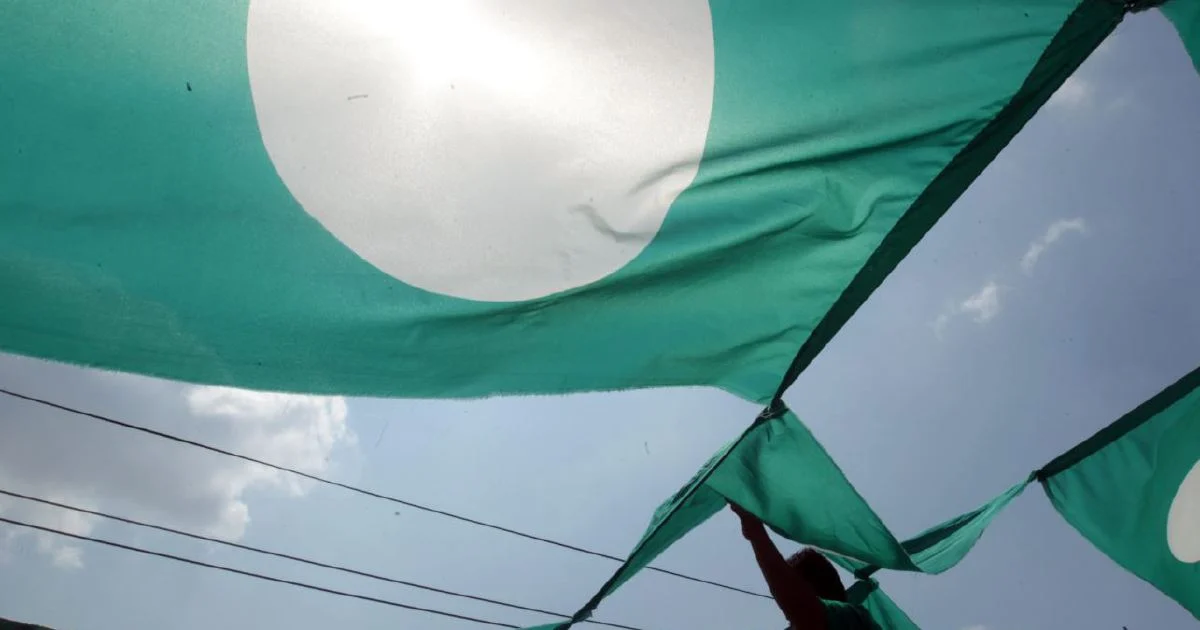
Senior officials from Pas Islam se-Malaysia descended on the party's headquarters along Jalan Raja Laut in Kuala Lumpur today for what appears to be a significant internal gathering, with multiple sources confirming attendance at a pre-council meeting involving opposition members of parliament. The session comes at a particularly fraught moment for Malaysia's opposition landscape, where longstanding partnerships have begun showing visible cracks under mounting political pressure and strategic disagreements.
The timing of the assembly signals growing alarm within Pas's leadership over the deepening schism with Bersatu, the party helmed by former Prime Minister Muhyiddin Yassin. What began as policy disagreements has evolved into a more fundamental challenge to the viability of their electoral and parliamentary alliance, creating uncertainty about the opposition's cohesion heading into critical political decisions expected in coming months. Observers have noted that the frequency of such high-level gatherings has increased noticeably as the rift has widened, suggesting the matter has moved beyond routine party management into crisis response territory.
The relationship between Pas and Bersatu represents one of the more complex dynamics in contemporary Malaysian politics. Both parties occupy overlapping electoral space within Malay-Muslim constituencies, leading to inherent tensions over candidate selection and parliamentary strategy. Their formal alliance, which has been presented publicly as a united opposition front, now appears strained by competing territorial interests and conflicting visions for how to position themselves relative to other political actors across the country. The internal deliberations occurring within Pas today likely touch on whether continued partnership with Bersatu remains strategically advantageous or whether alternative configurations might serve the party's interests more effectively.
For Malaysian observers, the implications extend well beyond inter-party mechanics. The stability of opposition coalitions directly affects parliamentary mathematics and the government's legislative agenda. When major opposition parties experience friction, it can either strengthen the government's position through reduced coordinated resistance or alternatively create opportunities for realignment that might challenge government authority in unexpected ways. The unpredictability itself introduces a variable that government strategists must account for when planning their parliamentary timetable and policy initiatives.
The regional dimension merits attention as well. Southeast Asian politics increasingly features coalition realignments driven by similar pressures—the need to balance ideological positioning with electoral pragmatism, the challenge of managing personalities within alliance structures, and the constant pressure to adapt to evolving voter sentiment. How Pas navigates its relationship with Bersatu may offer instructive lessons for other regional parties managing their own complicated partnerships. The Malaysian situation also demonstrates how dominant parties can sometimes benefit from opposition fragmentation, a dynamic that plays out across the region with remarkable consistency.
Within Pas specifically, the current gathering likely reflects differing viewpoints about optimal strategy going forward. Some quarters within the party probably favour deepening engagement with Bersatu despite present difficulties, viewing the broader opposition coalition as necessary insurance against prolonged government dominance. Others may argue for a more independent stance that would allow Pas greater flexibility in seat negotiations and coalition arrangements. These internal conversations, while routine for political parties, become consequential when they occur against a backdrop of genuine alliance deterioration rather than mere negotiating posture.
The Bersatu dimension adds particular complexity because the party, despite its numerical strength in parliament, remains relatively young and less institutionally embedded than some rivals. This structural reality means that Bersatu's leadership—especially Muhyiddin's personal standing—carries outsized weight in determining the party's strategic direction. Any perception that Pas questions Bersatu's reliability or commitment to collective opposition goals therefore becomes especially threatening to Bersatu's position within the broader opposition architecture.
Historically, Malaysian opposition coalitions have demonstrated fragility when subjected to sustained pressure. The frequent reorganisations of opposition blocs over the past two decades reflect the difficulty of maintaining unity across parties with distinct organisational cultures and electoral interests. The current Pas-Bersatu difficulties fit this established pattern, though the specific issues driving the present rift remain somewhat opaque to outside observers. What appears certain is that both parties face pressure to articulate their distinct identities and leadership visions to their supporters, a dynamic that almost invariably creates tension within any alliance structure.
The opposition landscape matters considerably for Malaysian governance and democratic health. A fractious, internally preoccupied opposition provides less effective oversight of government performance and reduces the quality of parliamentary debate. Conversely, opposition parties that manage to coordinate effectively can substantially constrain executive power and force government to build broader consensus for major initiatives. Where the current Pas-Bersatu friction ultimately settles will therefore influence not just inter-party relationships but the broader functioning of Malaysia's political system.
As the gathering at Jalan Raja Laut proceeds, political observers will watch for signals about Pas's next moves—whether the party emerges with reinforced commitment to current alliance arrangements, with more guarded positions toward Bersatu, or potentially with preliminary steps toward alternative configurations. The statements released after today's meeting, and the body language evident when party leaders next interact with their Bersatu counterparts, will provide important indicators of whether the opposition coalition crisis represents a temporary spasm or the opening phase of a more fundamental political realignment.