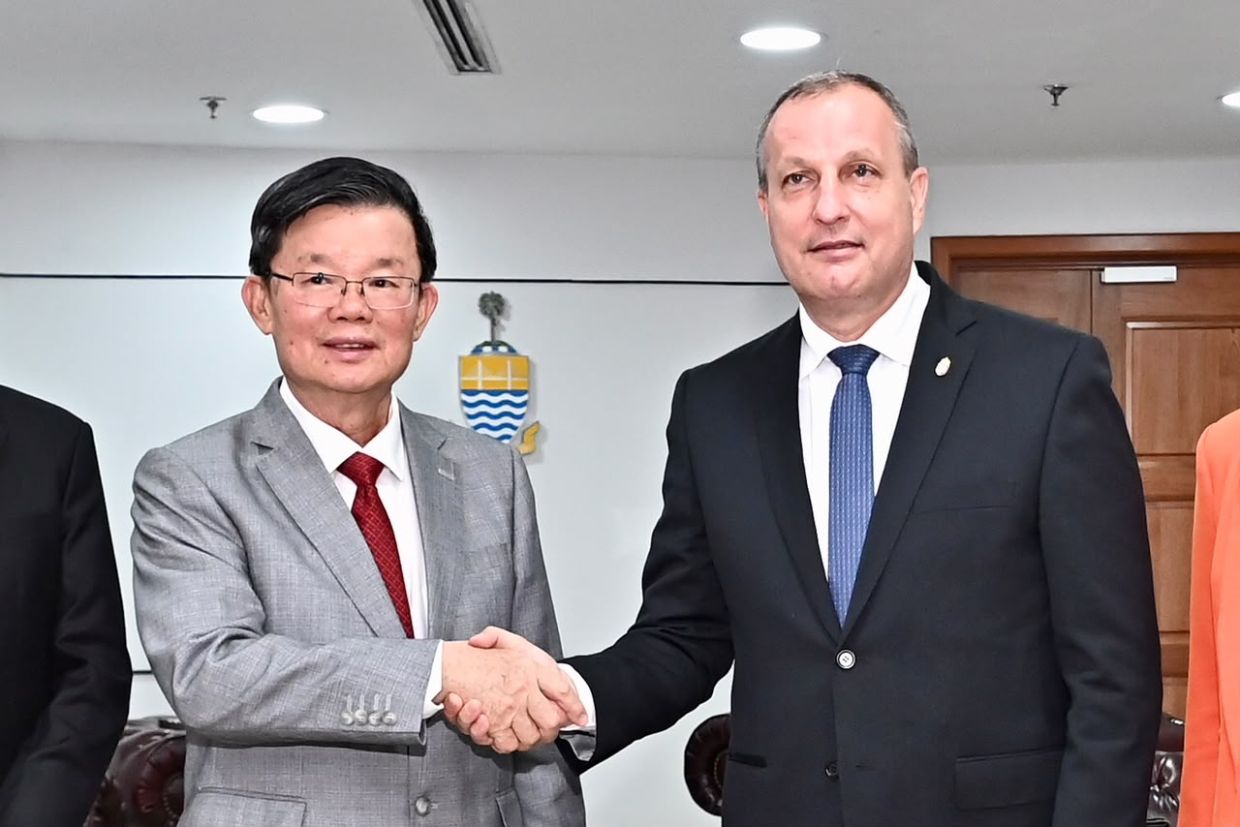
Penang is moving to expand its collaborative relationship with Hungary, targeting multiple sectors from academic advancement to environmental innovation. Chief Minister Chow Kon Yeow held substantive talks with Hungarian Ambassador to Malaysia Dr Sándor Sipos and accompanying officials, with both sides identifying shared priorities in sustainable development and cultural preservation. The engagement signals Penang's broadening international engagement beyond traditional Asian partners, positioning the state to tap European expertise in emerging technology and resource management.
The scope of potential cooperation encompasses areas where Hungary brings considerable institutional strength. Higher education partnerships topped the discussion agenda, reflecting recognition that academic ties can generate long-term dividends through knowledge transfer and human capital development. Water management and green technology emerged as particularly promising domains, given Hungary's track record in these fields and their pressing relevance to Penang's development objectives. Heritage conservation also featured prominently, acknowledging that both jurisdictions value maintaining cultural identity alongside modernisation efforts.
Chow emphasised that Hungary's standing as a significant European power provides access to expertise and technological capabilities that could benefit Penang's innovation ecosystem. The state leader highlighted research and development, water security and renewable energy as priority areas for concrete collaboration. This framing positions Hungary not as a distant bilateral partner but as a practical source of solutions to challenges Penang actively confronts. By anchoring discussions around these tangible issues, Penang moves beyond ceremonial diplomacy toward actionable partnerships.
The scholarship programme represents the most immediately tangible manifestation of the emerging relationship. Hungary annually offers 40 fully funded places for Malaysian tertiary students, a meaningful commitment that has already created a pipeline of Malaysian talent studying at Hungarian institutions. Chow welcomed this educational investment, recognising that exposure to European academic environments broadens perspectives and builds networks that can yield long-term professional benefits. For Penang specifically, increasing uptake among local students represents a strategic priority, as returnees bring international qualifications and cross-cultural competencies increasingly valued by employers.
Education and talent exchange are positioned as foundational to deepening bilateral relations more broadly. Both sides acknowledged that human connections forged through academic collaboration create lasting institutional and personal bonds that facilitate cooperation in other domains. This reflects a sophisticated understanding that sustainable international partnerships rest on mutual familiarity and shared professional relationships. By prioritising educational ties, Penang and Hungary are investing in the relational infrastructure necessary for more ambitious future initiatives.
Trade and investment considerations also featured in the diplomatic discussions, with both delegations exploring commercial opportunities. The involvement of multiple state executive councillors, including Goh Choon Aik and Gooi Zi Sen, demonstrates that the state administration views this relationship as spanning administrative portfolios. Gooi's portfolio extends to sports development, leading to discussions about potential athletic collaboration. His commitment to examining suitable sports disciplines for exchange suggests that Penang sees value in competitive sporting cooperation as both a confidence-building measure and a genuine avenue for developing local athletic talent through exposure to Hungarian expertise.
For Malaysia's broader foreign policy context, Penang's proactive engagement with Hungary carries modest but meaningful significance. The state government is exercising considerable autonomy in cultivating bilateral relationships beyond the federal level, positioning itself as an actor in its own right within the country's international engagement architecture. This practise strengthens Malaysia's connections with European partners through multiple channels rather than concentrating diplomatic effort at the federal level alone. Hungary, for its part, is deepening its engagement with Malaysia through targeted state-level partnerships, allowing for more granular and substantive cooperation than traditional embassy-level diplomacy sometimes enables.
The emphasis on sustainability and green technology reflects broader global trends toward environmental responsibility. Hungary's experience in water management and renewable energy transitions represents valuable practical knowledge that Penang can adapt to its own context. Given Penang's geographic position and economic profile as a significant manufacturing and tourism centre, sustainable development is not merely aspirational but increasingly central to long-term competitiveness. Access to European expertise in these domains could meaningfully influence the state's environmental policies and industrial development trajectories.
Cultural heritage conservation featured as an explicit theme, highlighting mutual recognition that rapid development need not obliterate historical continuity. Both Penang and Hungary contain significant patrimony worthy of preservation, and comparative approaches to this challenge could yield insights for both. Tourism development likewise emerged as a collaboration point, with the implication that enhanced cultural understanding could benefit visitor experiences and the economic sectors dependent on heritage tourism.
Gooi's directive to the Penang State Sports Council to conduct detailed studies and submit recommendations on bilateral sporting cooperation demonstrates the state's intention to move beyond general statements toward specific, implementable programmes. This granular approach to planning increases the likelihood that announced aspirations translate into actual joint initiatives rather than remaining largely symbolic. The emphasis on nurturing young talent suggests investment in long-term human development rather than short-term competitive advantage.
The diplomatic visit and subsequent discussions represent early-stage relationship building with considerable potential for expansion. Neither side has announced specific joint projects or binding agreements at this juncture, instead establishing frameworks and demonstrating political will for deeper engagement. For Malaysian readers and businesses, the significance lies in emerging opportunities for educational advancement, professional networking and potential commercial partnerships. For Penang, the relationship offers a gateway to European technical expertise and institutional partnerships that could enhance the state's competitiveness and quality of life.