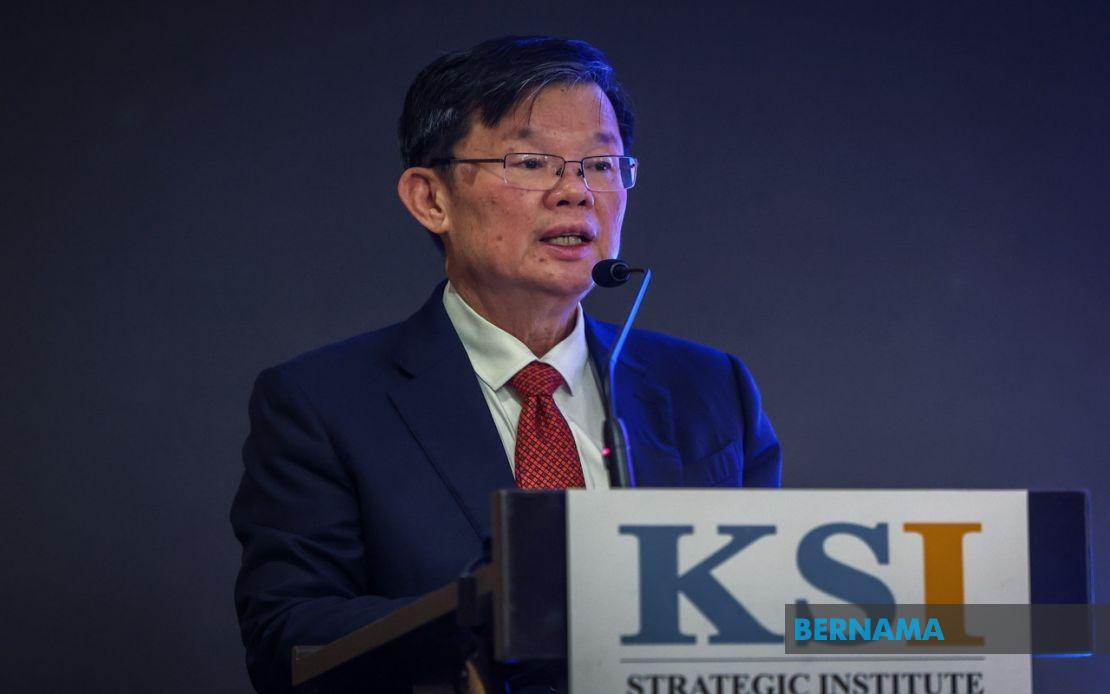
Penang's Pakatan Harapan coalition intends to increase the number of women candidates fielded in its next state election campaign, yet the practical realisation of this goal hinges on a persistent bottleneck: finding adequate numbers of qualified and willing women to contest seats. Chow Kon Yeow, the coalition's chairman and Penang Chief Minister, articulated this tension while addressing the World Women Economic and Business Summit 2026 in George Town on June 15, acknowledging that aspiration and reality diverge significantly when it comes to bolstering female political participation.
The party remains wedded to Malaysia's longstanding 30 per cent women's representation target in politics and decision-making, a benchmark established nationally more than a decade ago. Despite this commitment, Chow pointed out that the actual composition of the candidate slate will ultimately reflect the pool of suitable contenders available. The challenge is not merely institutional but deeply rooted in the willingness of capable women to subject themselves to the demands and pressures inherent in electoral politics, a dynamic that extends across the broader Malaysian political landscape.
Nationally, progress toward the 30 per cent target has stalled far short of the goal. Currently, women comprise only 13.5 per cent of Members of Parliament and 12 per cent of state assemblypersons across the country, figures that underscore the persistent gender imbalance in elected office. These statistics translate to a significant representation gap that has accumulated over more than fifteen years of stated commitment to gender parity in political participation. The disparity grows more pronounced at the state level, where women's presence is marginally lower than in federal parliament, suggesting that local electoral politics presents distinct barriers to female candidacy.
Chow's remarks at the economic summit highlighted a paradox that reflects Malaysia's uneven development trajectory. Women have made substantial inroads into professional fields including education, commerce, engineering, and public administration, where their qualifications and competence are well-established. Yet this professional advancement has not translated proportionally into political representation. The discrepancy points toward factors beyond mere capability or qualification—instead, structural and cultural barriers within political parties themselves appear to inhibit women's progression into candidacy and electoral competition.
The Penang PH coalition has positioned itself as proactive on this front, working to advance the 30 per cent objective through internal efforts. However, the central impediment lies not with party machinery or selection criteria, but rather with a shortage of female aspirants willing to enter the candidate pipeline. Potential candidates confront a range of pressures that deter participation: the intensity of campaign work, public scrutiny, the personal toll of political life, and the substantial financial and time commitments required to mount a credible electoral challenge. For many professionally accomplished women, these factors may outweigh the appeal of political office.
Chow advocated for concrete institutional mechanisms to address this supply-side constraint. Political parties, he suggested, should formalise the 30 per cent target within their candidate selection protocols rather than treating it as a voluntary aspiration. This would embed the commitment into party structures and create enforceable expectations around female representation in candidate lists. Such institutionalisation has proven effective in other democracies, where mandatory quotas or targets have gradually normalised women's participation in electoral politics and created a cultural shift in party cultures.
Beyond quota mechanisms, Chow identified several complementary measures necessary to facilitate greater female political participation. Decision-making committees within political parties require equivalent gender balance to ensure women's voices influence strategic direction and candidate selection itself. Many parties maintain male-dominated leadership structures that make candidate decisions, potentially creating unconscious bias toward nominating men even when qualified women are available. Equalising representation on these committees could address this structural deficit.
Resource allocation represents another critical dimension. Women candidates, particularly those from modest backgrounds, often lack the financial resources and established networks that facilitate successful campaigns. Political parties could strengthen women's competitiveness by providing targeted campaign funding, training in public communication, and institutional support for campaign operations. Additionally, mentorship programmes pairing emerging female politicians with established figures could ease the transition into electoral politics and demonstrate viable pathways to success.
The timing of Chow's remarks carries significance for Malaysian politics more broadly. Penang has traditionally positioned itself as among Malaysia's more progressive states on gender issues, and renewed emphasis on female representation could influence approach across other PH-governed states and opposition-held territories. The 2026 state election represents an opportunity for substantive movement, yet only if recruitment efforts intensify and the party culture itself evolves to actively cultivate female candidacy rather than passively accepting whatever candidates self-select.
For voters and civil society observers, the gap between stated target and actual achievement merits scrutiny. The persistence of single-digit percentage increases in female representation, despite two decades of commitment to the 30 per cent goal, suggests that incremental approaches have proven insufficient. Chow's acknowledgement of the recruitment challenge is refreshingly candid, yet also implicitly concedes that business-as-usual will not bridge the representation gap. Substantial change likely requires parties to invest more deliberately in identifying, cultivating, and supporting women candidates before election campaigns formally commence.
The broader Malaysian context adds urgency to this discussion. As a middle-income developing economy competing for talent and investment, Malaysia's political representation patterns send signals about institutional commitment to meritocracy and equal opportunity. Countries with stronger female political participation often perform better on governance indicators and economic competitiveness measures, suggesting that women's under-representation constitutes not merely a fairness issue but an efficiency question. For Penang, a state increasingly focused on innovation and economic diversification, advancing women's political participation aligns with broader modernisation objectives.


