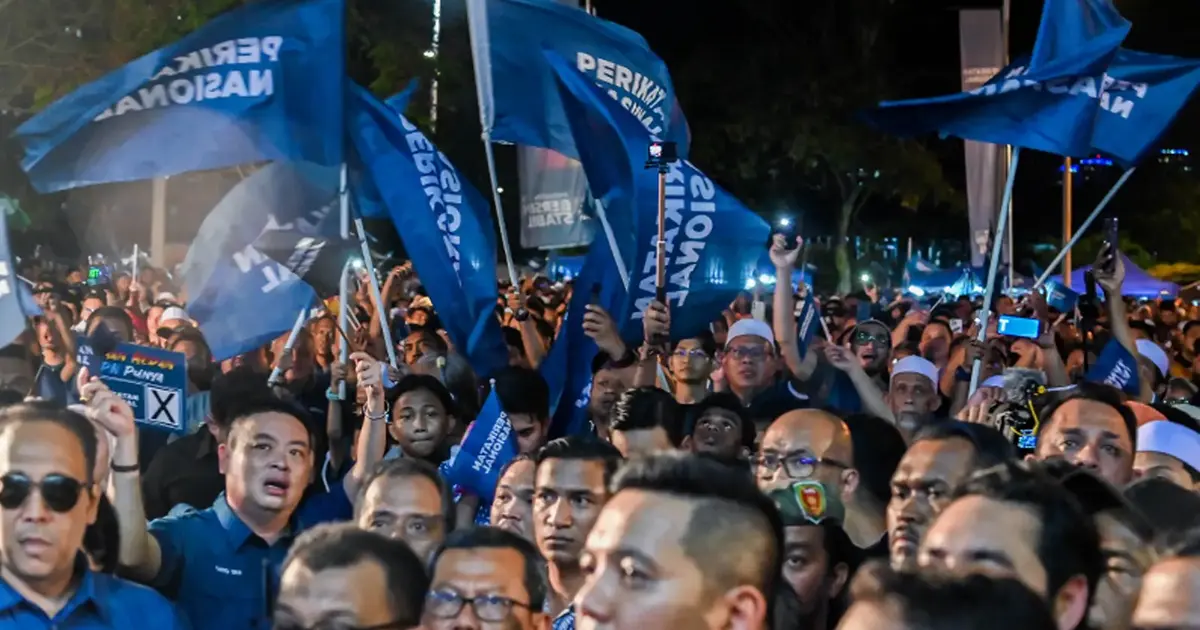
The Perikatan Nasional coalition faces an existential threat as simmering tensions between its two largest components—the Pan-Malaysian Islamic Party (PAS) and the Malaysian United Indigenous Party (Bersatu)—have deteriorated into what observers characterise as active political warfare. Yusri Ibrahim, chief researcher at the Ilham Centre, has warned that the crisis has transitioned beyond public disagreements into a destructive phase that could ultimately tear apart the opposition alliance that has positioned itself as an alternative to the ruling Pakatan Harapan government.
The deterioration of relations within Perikatan Nasional reflects deeper structural vulnerabilities in the coalition that emerged from a 2022 realignment of Malaysian politics. The partnership between PAS, traditionally a Malay-Muslim focused party with substantial grassroots support particularly in states like Kelantan and Terengganu, and Bersatu, a faction that split from the United Malays National Organisation (UMNO) under former Prime Minister Mahathir Mohamad, has always carried inherent contradictions. These tensions have now moved beyond backroom negotiations into public confrontations that undermine the coalition's credibility and organisational coherence.
The characterisation of the conflict as a "guerrilla war" suggests that the feud has become fragmented and unpredictable, occurring across multiple fronts simultaneously rather than through formal institutional channels. This type of internal conflict is particularly damaging for political coalitions because it prevents unified messaging, creates confusion among supporters, and signals weakness to rival political formations. When voters observe senior members of allied parties openly criticising each other, confidence in the coalition's ability to govern effectively—or even to maintain itself as a cohesive entity—inevitably erodes.
For Malaysian political observers and analysts, the implications extend well beyond inter-party dynamics. Perikatan Nasional has positioned itself as the primary challenger to Pakatan Harapan's hold on federal power, particularly given the concerns within significant segments of the Malay-Muslim electorate about the government's direction. However, a coalition wracked by internal divisions cannot effectively exploit the opportunities that exist within the broader political landscape. The repeated breakdown of internal discipline suggests that the parties are prioritising short-term tactical advantages over the strategic goal of presenting a unified alternative government.
The roots of current tensions lie partly in disagreements over policy direction, resource allocation within the coalition, and differing visions for Malaysia's political future. PAS, which has consolidated significant influence particularly in state governments across the northern corridor of Peninsular Malaysia, may view its growing electoral strength as justification for demanding greater control over coalition strategy and seat allocation in parliamentary constituencies. Bersatu, meanwhile, has sought to maintain relevance and organisational independence despite having a smaller membership base and fewer elected representatives than its larger partner. These competing interests have created friction that appears increasingly difficult to manage through conventional coalition management techniques.
Regional implications of a Perikatan Nasional collapse warrant careful consideration. Within the Association of Southeast Asian Nations context, Malaysia's internal political stability directly affects its ability to pursue consistent foreign policy positions and maintain predictable economic governance. A fractured opposition that cannot govern itself presents risks not only to domestic stability but also to the country's standing in regional forums. Southeast Asian governments and international observers view political volatility in major member states as potentially destabilising to broader regional arrangements, particularly as the region navigates complex relationships with major powers and manages transnational challenges ranging from trade to maritime security.
The "guerrilla war" phase identified by Ilham Centre research suggests that traditional conflict resolution mechanisms have broken down. Rather than disputes being settled through formal coalition leadership meetings or arbitration by senior party figures, grievances are increasingly aired through media campaigns, social media attacks, and public statements by mid-level party officials. This dynamic makes the conflict more difficult to contain and creates cascading effects throughout the coalition's organisational structures, from parliamentary committees to state-level government partnerships where PAS and Bersatu maintain joint administrative responsibilities.
From the perspective of ordinary Malaysians and potential voters evaluating their political options, coalition instability raises fundamental questions about competence and suitability for government. Voters naturally wonder whether parties that cannot maintain functional relationships with each other possess the maturity and discipline necessary to manage a complex nation's affairs. This consideration becomes particularly acute in a country where coalition-based governance has become the norm, requiring extensive negotiation and compromise between disparate political forces to maintain parliamentary majorities and enact legislation.
The trajectory of this conflict will significantly shape Malaysia's political landscape in the coming years. If Perikatan Nasional manages to arrest its internal deterioration and restore some degree of functional cooperation, it could emerge as a strengthened alternative to Pakatan Harapan despite recent instability. Conversely, if tensions continue to intensify, the coalition risks fragmenting into competing factions that pursue separate electoral strategies, ultimately diminishing the combined opposition presence in parliament and potentially reshaping the entire configuration of Malaysian politics. The coming months will likely prove decisive in determining which outcome materialises.