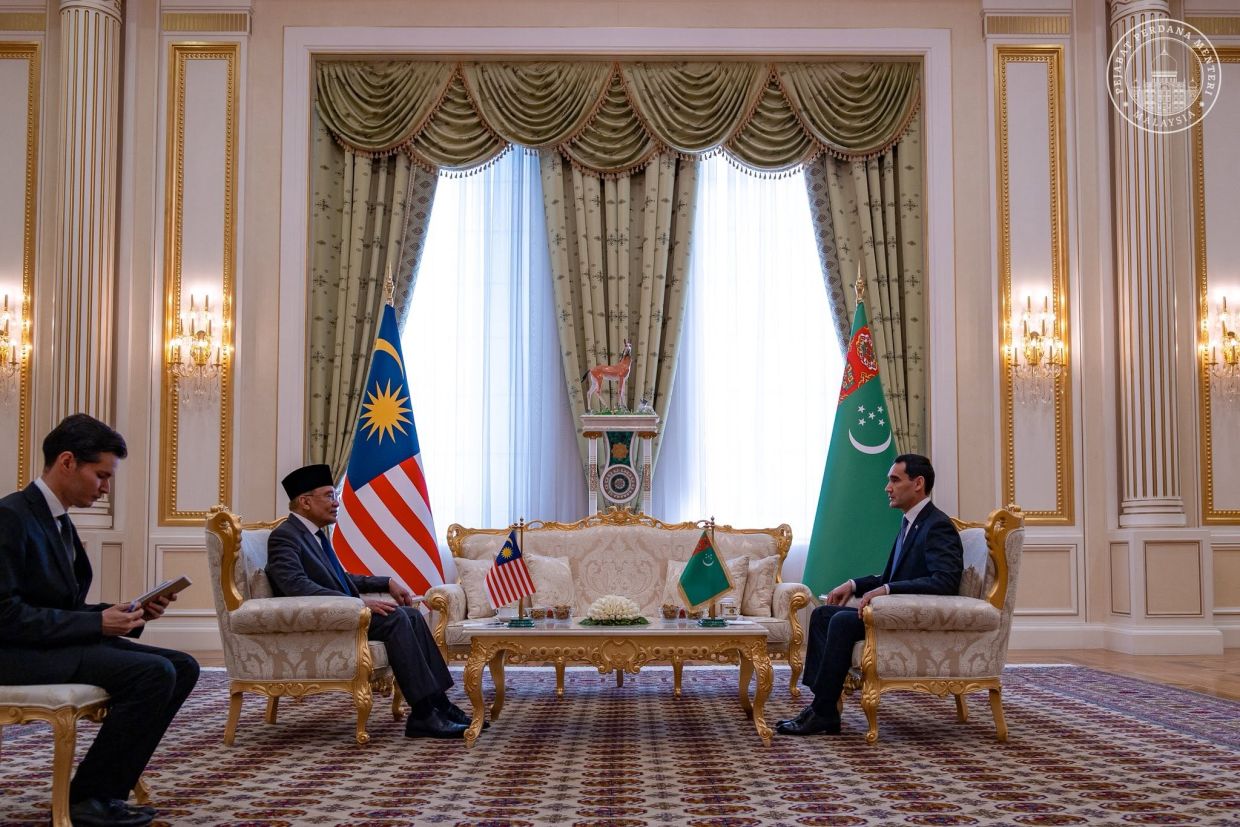
Prime Minister Datuk Seri Anwar Ibrahim has overseen the formalisation of a strategic partnership between Petronas and Turkmenistan authorities during an official visit to the Central Asian nation, with both governments viewing the accord as a watershed moment in their longstanding economic and energy relationship. The signing ceremony, attended by Turkmenistan President Serdar Berdimuhamedov at the Presidential Palace in Ashgabat, underscores Malaysia's growing strategic footprint in a region increasingly central to global energy markets and geopolitical considerations.
The partnership represents a milestone within a three-decade relationship spanning the energy sector, a foundation upon which both nations have built considerable mutual benefit. Malaysia's Prime Minister's Office characterised the agreement as opening a new chapter rather than merely extending existing arrangements, suggesting a qualitative shift in the depth and scope of bilateral engagement. This framing reflects broader efforts by the Malaysian government to position the country as a serious player in Central Asian economic corridors, particularly as energy security concerns reshape global supply chains and investment priorities.
Within the strategic partnership framework lies enhanced opportunity to develop Turkmenistan's natural gas resources, among the world's most substantial reserves. For Petronas, access to these fields represents long-term commercial prospects aligned with global energy transition trajectories, as natural gas increasingly functions as a bridging fuel between fossil fuel dependence and renewable energy adoption. The timing of this deepened commitment signals confidence in Turkmenistan's governance environment and resource management outlook, crucial considerations for any major international energy corporation evaluating Central Asian expansion.
The agreement carries implications extending beyond commercial interests into knowledge transfer and technological collaboration. Malaysia's involvement in developing Turkmenistan's energy infrastructure creates platforms for sharing expertise in upstream operations, downstream refining, petrochemicals processing, and energy security management. Such technological partnerships strengthen Malaysia's positioning as a centre of energy sector excellence within the developing world, capable of exporting not merely capital but operational knowledge and skilled personnel to strategic partners.
From Malaysia's perspective, the partnership validates the MADANI government's economic diversification strategy, which emphasises leveraging the country's established capabilities in energy and strategic industries to forge mutually beneficial international relationships. By securing enhanced access to Turkmenistan's resources and markets, Malaysia reduces its economic dependency on traditional Southeast Asian trade patterns whilst expanding its commercial footprint across Islamic-majority nations that form part of Malaysia's broader diplomatic and economic community.
The bilateral trade relationship, whilst currently modest at RM75.80 million in 2025, reflects untapped potential. Malaysia's exports to Turkmenistan reached RM75.50 million, representing a nine percent year-on-year increase, suggesting nascent but accelerating commercial engagement. These figures, combined with Petronas's cumulative investment of RM52.73 billion since 1996, demonstrate that the partnership is built upon existing foundations rather than speculative ventures. Petronas's sustained commitment over nearly three decades positions the company as an established stakeholder in Turkmenistan's energy economy, providing credibility and institutional knowledge essential for managing complex, long-cycle petroleum projects.
Turkmenistan's ranking as Malaysia's fourth-largest trading partner among Central Asian nations indicates the country's relative importance within the broader regional economic framework. This standing reflects the concentration of economic activity in a handful of key partnerships, suggesting significant room for expanded bilateral engagement across additional sectors including construction, manufacturing, and services. As Malaysia seeks to diversify away from traditional Southeast Asian markets and traditional trading relationships, Turkmenistan represents a meaningful entry point into Central Asia's broader economic sphere.
The strategic partnership also carries geopolitical dimensions worth examining. By deepening ties with Turkmenistan, Malaysia signals its intent to maintain economic relationships independent of great power competition increasingly defining Central Asian regional dynamics. The country's historical neutrality and bridge-building credentials position it favourably in environments where nations seek partners perceived as balanced actors rather than aligned with competing strategic blocs. This neutrality, combined with Islamic credentials and operational sophistication, differentiates Malaysia from Western energy competitors and positions it as a preferred partner for resource-rich Muslim-majority nations navigating complex international relationships.
The energy sector's primacy in Malaysia-Turkmenistan relations reflects global realities shaping the bilateral agenda. Both nations possess significant hydrocarbon resources and require expertise in managing resource wealth sustainably. Malaysia's experience managing the sovereign wealth implications of petroleum revenues and navigating the energy transition offers practical lessons relevant to Turkmenistan's long-term economic planning. Conversely, Turkmenistan's vast reserves provide Petronas with portfolio diversification and extended operational horizons essential for a company navigating uncertain energy markets and accelerating decarbonisation pressures.
The partnership announcement comes as energy companies worldwide reassess Central Asian strategies amid changing geopolitical circumstances and energy market dynamics. Petronas's commitment to deepened engagement, sealed through formal partnership structures, suggests confidence in regional stability and commercial viability. This vote of confidence may influence other Malaysian companies' willingness to explore Central Asian opportunities, potentially creating multiplier effects across the Malaysian business ecosystem and expanding the country's footprint within these strategically important economies.