The Philippine Department of Justice has launched a formal investigation into potential criminal charges against government officials in connection with a shooting incident at the Senate on May 13 and the subsequent escape of Senator Ronald dela Rosa from protective custody early on May 14. Justice Secretary Fredderick Vida confirmed that prosecutors are actively examining the circumstances surrounding both events to establish whether they are connected and to identify any official misconduct.
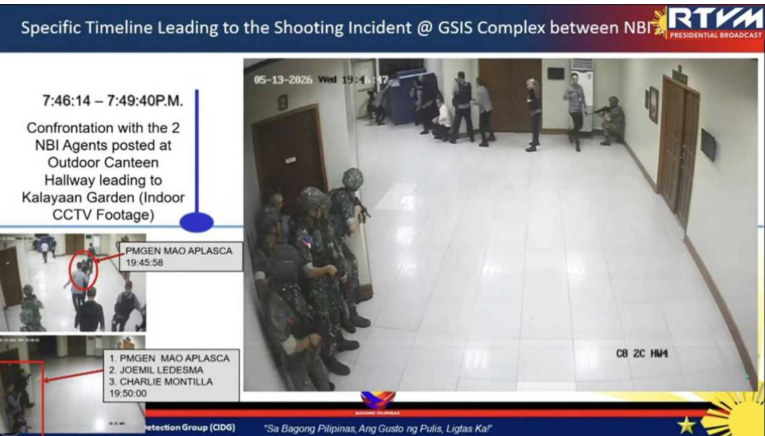
According to Vida's account, the investigative panel has assembled evidence from multiple sources to piece together what occurred during the Senate incident. The National Bureau of Investigation provided testimonies from its personnel, while media practitioners who were present on the scene contributed their observations. Surveillance footage from closed-circuit cameras proved particularly significant, showing gunfire originating from the fifth floor of the Senate building directed toward a clearly marked NBI vehicle stationed at the Government Service Insurance System premises.
The forensic and ballistic evidence pointing to sniper fire from within the Senate complex itself raises serious questions about security protocols and potential involvement of individuals stationed inside the building. The identification of the NBI vehicle as the target, combined with the timing of dela Rosa's disappearance from custody mere hours later, suggests a coordinated chain of events that investigators believe warrant scrutiny. This development has significant implications for institutional accountability and the integrity of the security apparatus protecting both legislators and law enforcement personnel.
Vida stated clearly that the investigation remains in an active phase with ongoing fact-gathering and analysis. When pressed about whether specific individuals had already become persons of interest, the Justice Secretary declined to name anyone at this stage of the proceedings. However, he indicated that preliminary findings have implicated multiple personalities holding public office, suggesting that officials from various government agencies may have questions to answer.
The Justice Secretary's cautious approach reflects both the sensitivity of investigating sitting officials and the legal principle that accusations must be grounded in complete evidence. Vida emphasised that his department would handle the matter with professional diligence, objectivity, and impartiality, pledging that no individual would receive preferential treatment based on their position. This statement aims to address public concern about whether powerful officials might escape accountability through their connections.
Simultaneously, Vida struck a balance by reminding observers that no one should face judgment or conviction based on incomplete or preliminary evidence. This dual emphasis on thoroughness and fairness reflects international standards of criminal investigation and the presumption of innocence that underpins the Philippine justice system. The complexity of the case, involving both a violent incident and a custody breach, requires meticulous examination of multiple investigative threads.
The incident raises troubling questions about institutional vulnerabilities within the Senate building and the procedures governing protective custody of high-profile detainees. How a senator under protective custody could depart without triggering immediate alerts and how armed gunfire could be discharged from within a legislative chamber without instantaneous response suggest systemic gaps that extend beyond the May 13-14 incidents themselves. These procedural failures demand investigation alongside the substantive question of who was responsible.
For Malaysian readers, the case illustrates challenges facing neighbouring democracies when investigating crimes allegedly committed by government insiders. The situation echoes concerns about institutional accountability that resonate across Southeast Asia, where questions about whether justice systems can truly function independently when investigating powerful officials remain pertinent. The Department of Justice's stated commitment to pursue the investigation without fear or favour will be tested as the case progresses through formal charging decisions.
The involvement of the National Bureau of Investigation as both a victim in the shooting and a participant in the subsequent investigation adds layers of complexity to the matter. Whether the NBI can maintain investigative impartiality while being directly targeted requires careful management. The public release of preliminary findings through the Justice Secretary also serves to maintain transparency while the investigation continues gathering evidence.
Vida's assurance that the department will pursue the case professionally and objectively, coupled with his reminder that no person should be judged prematurely, establishes the framework within which the investigation will proceed. The coming weeks and months will demonstrate whether Philippine institutions can hold their own officials accountable when evidence of wrongdoing emerges. The detailed nature of the emerging evidence—including CCTV footage clearly showing sniper fire—suggests the investigation possesses substantial documentation on which to base eventual charges.
The broader implications for Filipino governance extend beyond this single incident. Public confidence in institutional integrity depends partly on the visible pursuit of accountability without favour to rank or position. This investigation will be watched closely by civil society, media, and international observers as a test of whether the Philippine justice system can maintain its credibility when investigating its own leadership.