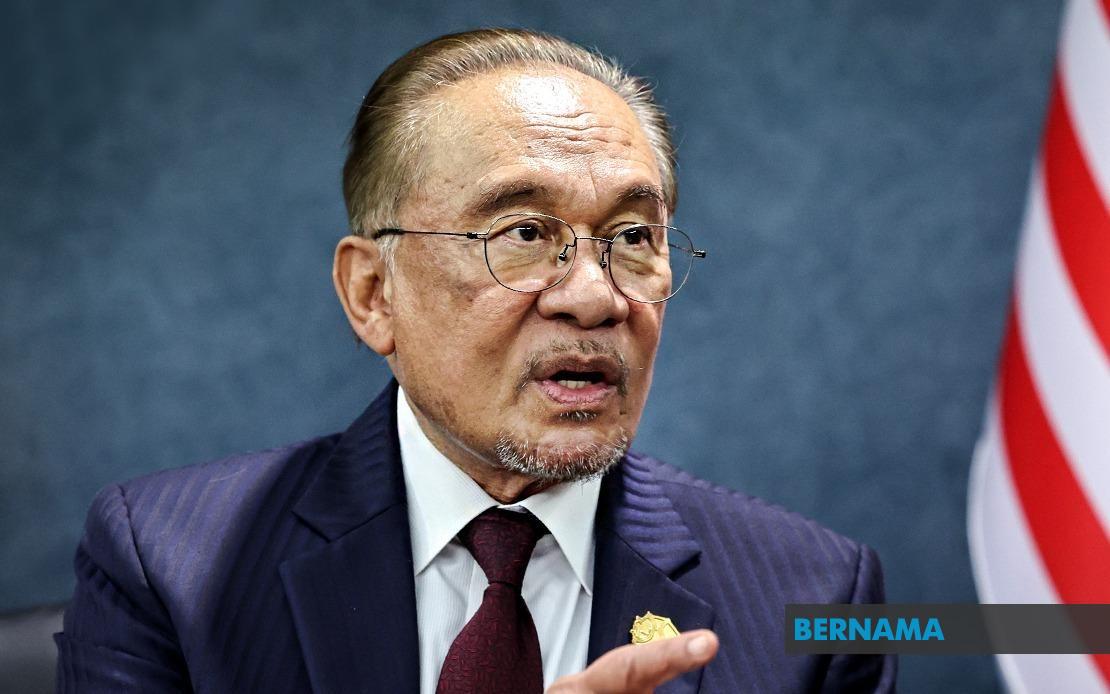
Prime Minister Datuk Seri Anwar Ibrahim participated in the ASEAN-Russia Business Forum held at Kazan IT Park, underlining Malaysia's role in deepening engagement between the ten-nation Southeast Asian bloc and Russia. The event brought together business representatives and senior officials from across ASEAN member states and Russia, creating a platform for discussions on expanding economic ties and exploring new investment opportunities. Anwar, who concurrently holds the Finance Minister portfolio, was received by Ilya Nachvin, the Minister of Digitalisation of Public Administration, Information Technologies and Communications of the Republic of Tatarstan, signalling the significance accorded to Malaysia's participation.
The forum formed part of a broader schedule of high-level engagements during the ASEAN-Russia Commemorative Summit, which held particular resonance this year as it marked the 35th anniversary of diplomatic dialogue between the two regional powers. Beyond his business forum address, Anwar attended a formal gala dinner at the Tatar State Academic Theater, where he also held a courtesy meeting with Russian President Vladimir Putin. These engagements underscored Malaysia's commitment to strengthening bilateral relations with Russia whilst advancing ASEAN's collective strategic interests in the region.
The relationship between ASEAN and Russia has undergone substantial evolution since formal dialogue relations were established in 1991. Russia's elevation to full ASEAN Dialogue Partner status in 1996 represented a milestone in institutionalising ties, but the partnership reached a new phase when both sides elevated their relationship to a Strategic Partnership in 2018. This formal upgrade reflected mutual recognition of expanding cooperation across three critical pillars: political and security affairs, economic collaboration, and socio-cultural exchange. The framework provided a structured foundation for addressing shared regional concerns and capitalising on complementary interests.
Kazan's selection as host city carried symbolic weight beyond mere logistical convenience. Situated at the juncture of the Volga and Kazanka rivers approximately 800 kilometres east of Moscow, the capital of Russia's Republic of Tatarstan functions as a distinctive cultural and economic hub within the Russian federation. With a population approaching 1.3 million residents, the city commands substantial influence and is often characterised as Russia's third capital after Moscow and Saint Petersburg. The venue's historical significance—spanning more than a millennium—and its reputation as a pivotal centre of Islamic culture made it particularly apt for hosting discussions involving ASEAN's predominantly Muslim nations and their Russian counterparts. Kazan's role as a bridge between the Russian and Islamic worlds created an appropriate setting for fostering deeper understanding and cooperation.
The economic dimension of ASEAN-Russia relations reveals both established trade flows and untapped potential for growth. During 2024, bilateral merchandise trade between the two blocs reached USD18.1 billion, indicating a substantial economic relationship, though the figure remains modest relative to ASEAN's total external trade. Russian foreign direct investment into ASEAN economies totalled USD92.97 million during the same period—approximately RM367.90 million—suggesting that despite strong political dialogue, investment flows have not yet reached levels commensurate with the stated strategic partnership. This gap indicates significant room for expansion, particularly as both sides seek to diversify their economic portfolios and reduce dependence on traditional partners.
Malaysia's bilateral relationship with Russia reflects the broader ASEAN-Russia dynamic whilst exhibiting distinctive characteristics rooted in Malaysia's economic structure. Russia ranked as Malaysia's ninth-largest trading partner among European nations in 2025, with aggregate bilateral trade valued at RM8.72 billion, equivalent to USD2.04 billion. This ranking positions Russia as a significant though not dominant player in Malaysia's European trade relationships, behind established partners such as Germany, the United Kingdom, and the Netherlands. The trade composition reveals complementary economic structures: Malaysia's exports to Russia centre on electrical and electronic products, sophisticated machinery and equipment with associated components, and processed food items—categories reflecting Malaysia's manufacturing strengths and value-added production capabilities.
Conversely, Malaysia's import portfolio from Russia emphasises energy security and raw materials essential for Malaysian industrial processes. Petroleum products form a substantial component of Russian exports to Malaysia, reflecting Russia's position as a major global hydrocarbon producer and Malaysia's continued reliance on energy imports despite possessing domestic petroleum reserves. Minerals, chemicals, and chemical-based products round out the principal import categories, enabling Malaysian manufacturers to source critical industrial inputs whilst maintaining cost competitiveness in global supply chains. This bilateral trade pattern demonstrates interdependence rather than competition, suggesting resilience in the relationship across economic cycles.
The timing of this commemorative summit assumes greater significance within the context of evolving geopolitical alignments in the Indo-Pacific region. ASEAN's consistent emphasis on strategic autonomy and equidistance among great powers finds expression in its parallel engagement with Russia, the United States, China, and India. By hosting such high-level forums and maintaining substantive dialogue with Russia, ASEAN demonstrates its commitment to inclusive regional architecture and its resistance to alignments that would partition the region into competing blocs. For Malaysia specifically, participation in ASEAN-Russia mechanisms allows influence over regional dynamics whilst maintaining flexibility in bilateral relationships with major powers, a position increasingly valuable as regional tensions fluctuate.
Business forum discussions at Kazan likely centred on practical mechanisms for enhancing commercial engagement, addressing barriers to trade and investment, and identifying sectors offering promising collaboration opportunities. Technology cooperation, particularly in digitalisation and information technology where Tatarstan holds regional prominence, emerged as a logical discussion point given the forum's location at Kazan IT Park. Energy sector partnerships, infrastructure development projects, and supply chain resilience following global disruptions probably featured prominently in negotiations. For Malaysian businesses, the forum provided direct access to Russian counterparts and government officials, potentially opening pathways for joint ventures, technology partnerships, and market entry strategies in the Russian federation.
Looking forward, the outcomes of the Kazan summit will likely shape ASEAN-Russia engagement trajectories for the coming period. Elevated diplomatic attention, as demonstrated by Prime Minister Anwar's participation and meetings with President Putin, signals both sides' commitment to translating strategic partnership rhetoric into concrete initiatives yielding tangible benefits. Whether trade volumes increase substantially, investment flows expand meaningfully, and sectoral cooperation deepens will depend on implementation of agreements reached during such summits. For Malaysia and other ASEAN members, deepening Russia ties provides strategic diversification, reduces over-reliance on Western and Chinese partnerships, and contributes to maintaining ASEAN's central role in regional architecture as a genuine bridge among major powers rather than an adjunct to any particular geopolitical camp.


