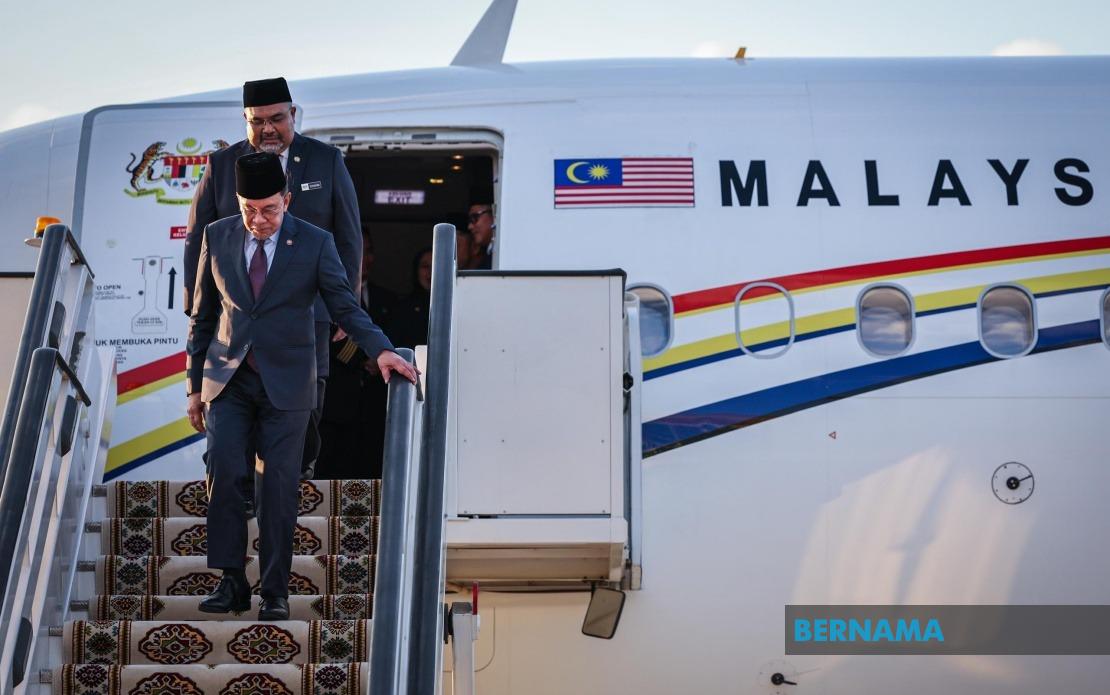
Prime Minister Datuk Seri Anwar Ibrahim touched down in Ashgabat on Wednesday evening, concluding the Russian segment of his Central Asian tour and beginning a two-day diplomatic mission to Turkmenistan. The aircraft carrying the Malaysian delegation landed at Ashgabat International Airport at 8 pm local time, marking the commencement of an engagement that reflects the deepening strategic relationship between Kuala Lumpur and the oil-rich Central Asian nation.
The prime minister travelled with a substantial contingent of government officials tasked with advancing Malaysia's economic and trade interests. His entourage included Minister of Investment, Trade and Industry Datuk Seri Johari Abdul Ghani and Minister of Economy Akmal Nasrullah Mohd Nasir, alongside senior representatives from the Prime Minister's Office and the Foreign Ministry. This composition underscores the commercial significance attached to the visit, with both trade and investment considerations featuring prominently on the diplomatic agenda.
Anwar's arrival was formally acknowledged by Malaysia's Ambassador to Turkmenistan Mohd Suhaimi Ahmad Tajuddin, while the Turkmenistan side dispatched Deputy Chairman of the Cabinet of Ministers for Oil and Gas Guvanch Agajanov to extend the official welcome. The presence of Agajanov highlighted the energy sector's centrality to bilateral relations, particularly given the substantial role that Petronas plays in Turkmenistan's economic landscape. The visit represents a reciprocal engagement, following President Serdar Berdimuhamedov's official visit to Malaysia in December 2024, which had initiated this phase of high-level diplomatic contact.
This journey carries historical significance as Anwar's inaugural official visit to Turkmenistan in his current capacity and marks only the fifth such visit by a Malaysian prime minister to the Central Asian republic. The rarity of such high-level engagements underscores the importance both nations place on this particular moment in their bilateral relationship. The scheduling of a dinner reception with Malaysia's diaspora and friends of Malaysia on the evening of arrival also emphasises the people-to-people dimension of the engagement, extending beyond purely governmental channels.
The formal programme beginning on June 19 reflects a comprehensive diplomatic architecture designed to solidify multiple dimensions of the relationship. A welcoming ceremony at the Presidential Palace will precede direct bilateral discussions between Anwar and Berdimuhamedov, with both leaders expected to engage in substantive conversations regarding shared interests and future cooperation frameworks. The day's schedule encompasses the signing of a joint statement and the execution of agreements and memoranda of understanding, mechanisms through which both governments will formalise their commitments across various sectors.
Beyond the formal state functions, the itinerary incorporates elements designed to demonstrate Malaysia's commitment to its Muslim-majority character and cultural values. Anwar's participation in Friday prayers at the Turkmenbashi Ruhy Mosque, colloquially known as the Gypjak Mosque, provides both spiritual and symbolic meaning to the visit. This gesture resonates particularly within Central Asia, where Islam remains a significant cultural and social force, reinforcing Malaysia's position as a bridge between Asian and Islamic worlds.
The Malaysia-Turkmenistan Forum, jointly inaugurated by both leaders at the Chamber of Commerce and Industry of Turkmenistan, constitutes the centrepiece of the economic engagement agenda. This forum provides a structured platform for business communities from both nations to identify synergies, explore investment opportunities, and discuss sectoral collaboration. For Malaysian enterprises seeking to expand into Central Asian markets, such forums offer invaluable networking opportunities and direct access to decision-makers from both governmental and commercial sectors.
Turkmenistan's significance within Malaysia's broader Central Asian strategy reflects both its economic potential and strategic positioning. As Malaysia's fourth-largest trading partner among Central Asian nations, Turkmenistan demonstrates the economic depth of the relationship beyond diplomatic courtesy. In 2025, bilateral trade reached RM75.80 million, with Malaysian exports comprising RM75.50 million of this total and registering a notable 9 per cent increase compared to the previous year. This growth trajectory suggests expanding commercial opportunities and increasing competitiveness of Malaysian products and services in the Turkmen marketplace.
The Petronas dimension cannot be overstated in any assessment of Malaysia-Turkmenistan relations. The national oil company has maintained a substantial presence in Turkmenistan since 1996, with cumulative investments reaching RM52.73 billion. This extraordinary financial commitment positions Petronas as one of the largest foreign investors in Turkmenistan's energy sector, generating substantial economic returns while establishing Malaysia as a serious and reliable partner in the region's petroleum industry. The concentration of Malaysian investment in the energy sector reflects both Turkmenistan's resource endowment and the strategic importance of energy security to Malaysia's long-term development planning.
For Southeast Asia more broadly, Anwar's visit demonstrates Malaysia's determination to establish itself as a key player in Central Asian geopolitics and commerce. The region presents significant untapped potential for Malaysian businesses, particularly in energy, finance, and technology sectors. As Central Asian nations increasingly diversify their international partnerships beyond traditional Russian and Chinese relationships, Malaysian engagement offers an alternative perspective rooted in similar developmental experiences and Islamic heritage.
The timing of this visit, following the president's December 2024 sojourn in Malaysia, suggests a momentum-building diplomatic pattern. Such reciprocal high-level visits typically precede expanded collaboration frameworks and deeper institutional engagement. The concentration of economic and trade officials in Anwar's delegation further indicates that this visit is intended to translate diplomatic goodwill into concrete commercial arrangements and enhanced market access.
Looking forward, the agreements and memoranda expected to emerge from this engagement may establish pathways for expanded Malaysian investment in Turkmenistan's non-energy sectors, facilitate greater trade in manufactured goods and services, and potentially create opportunities for Malaysian expertise in areas such as Islamic finance and Sharia-compliant banking solutions. The post-visit press conference will likely clarify the scope and ambition of these collaborative frameworks, providing Malaysian businesses and regional observers with clearer guidance regarding the bilateral relationship's future trajectory.