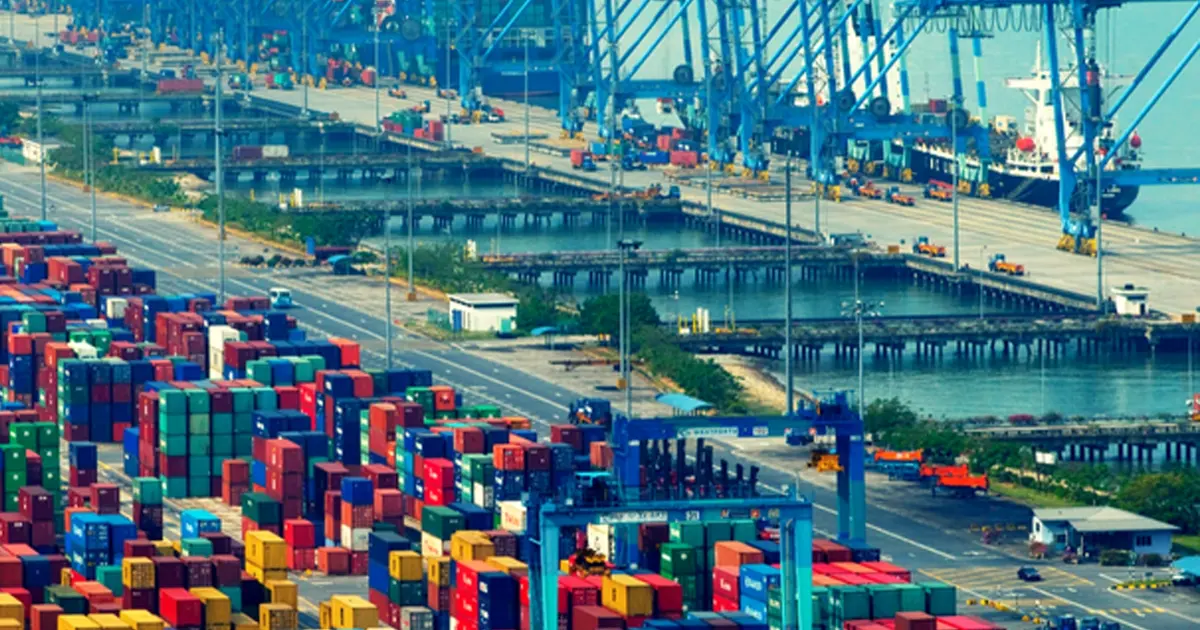
The Port Klang Free Zone (PKFZ) has posted RM108 million in revenue as its reactivation initiative accelerates, with Transport Minister Loke Siew Fook characterising the port's performance as demonstrating steady and encouraging growth momentum over the past 18 months. The achievement underscores the progress of Malaysia's premier free trade zone in recovering from years of underutilisation and financial strain that had plagued the facility since its opening in 2008.
The reactivation programme's 86 per cent completion rate represents a significant milestone in restoring the PKFZ to operational viability. This metric reflects the successful revival of warehouse operations, customs facilities, and cargo handling infrastructure that had remained dormant or underutilised throughout the preceding decade. The comprehensive overhaul of the zone's operational framework has been instrumental in attracting logistics operators and international traders seeking reliable entry points into Malaysian and regional markets.
The financial turnaround carries considerable significance for Malaysia's broader trade and logistics sector. As a strategic asset positioned within the Port Klang complex—Southeast Asia's busiest transshipment hub—the PKFZ's recovery directly influences the competitiveness of Malaysia's supply chain infrastructure. Enhanced capacity utilisation at the zone translates to improved efficiency in goods clearance, reduced dwell times, and cost savings for importers and exporters navigating regional trade corridors.
Understanding the PKFZ's troubled history provides crucial context for assessing its current trajectory. The facility, once envisioned as a transformative addition to Malaysia's port infrastructure, accumulated substantial debts and operated far below capacity for years. Multiple management transitions and operational challenges created a reputation for inefficiency that deterred potential users. The current reactivation drive represents a deliberate reset intended to fundamentally reshape stakeholder perceptions and operational capabilities.
The revenue figures must be contextualised within the broader economic environment facing Malaysia. The recovery period coincides with increased global supply chain restructuring, as multinational corporations seek to diversify their sourcing and distribution networks beyond traditional Asian hubs. Malaysia's geographic location, existing infrastructure, and trading relationships position it advantageously to capture portions of this realignment, provided that facilities like PKFZ can demonstrate reliable, cost-effective operations.
The 86 per cent reactivation rate indicates that operational challenges persist in certain areas of the facility. This incomplete restoration suggests that some warehouse sections, customs infrastructure, or support facilities remain under development or operational review. Industry observers note that full capacity utilisation typically requires not merely physical reactivation but sustained engagement with the logistics and trading community to rebuild confidence in the zone's service delivery standards.
The port's recovery has implications extending beyond Port Klang itself. The PKFZ serves as a testing ground for how Malaysia can rehabilitate underperforming infrastructure assets and restore investor confidence in major public sector projects. Successful turnaround narratives create positive momentum for discussions around other infrastructure initiatives requiring operational restructuring or efficiency improvements across the nation's transport and trade networks.
Overseas investors and shipping lines have gradually returned to the PKFZ as operational improvements materialised. The zone's competitive positioning depends on sustained performance delivery, particularly regarding customs clearance timelines, cargo security, and integrated logistics services. Malaysian businesses engaged in import-export activities increasingly perceive the facility as a viable alternative to regional competitors, though Singapore and Hong Kong continue to dominate high-value transshipment markets.
The revenue achievement requires careful qualification regarding profitability and long-term sustainability. Reactivation-phase operations often operate on tighter margins as facilities rebuild customer bases and optimise service delivery. The critical question facing PKFZ management involves whether current revenue trajectories can be maintained and expanded whilst simultaneously managing operational costs and servicing the facility's substantial accumulated debt obligations.
Transport Minister Loke's public endorsement of the PKFZ's progress signals government commitment to the facility's continued revival. Political backing provides essential stability for management initiatives and helps coordinate support from customs authorities, port operators, and regulatory bodies whose cooperation proves essential for seamless zone operations. This institutional alignment contrasts sharply with earlier periods when bureaucratic obstacles and unclear strategic direction hampered the facility's development.
The reactivation programme's success carries implications for Malaysia's positioning within regional logistics networks. As Southeast Asian economies increasingly integrate, efficient cross-border cargo movement becomes a critical competitive advantage. The PKFZ's recovery demonstrates Malaysia's capacity to optimise existing infrastructure assets rather than perpetually pursuing new megaprojects, an approach that may prove more sustainable for long-term economic competitiveness.
Looking forward, the PKFZ must maintain momentum by expanding customer acquisition, enhancing value-added services, and continuously improving operational efficiency metrics. The facility's ultimate success depends not merely on achieving physical reactivation but on establishing itself as an indispensable node within regional and global supply chains. Sustained revenue growth and improving utilisation rates will validate the government's investment in the reactivation initiative whilst demonstrating that historically troubled infrastructure projects can be successfully rehabilitated through sustained management focus and stakeholder engagement.