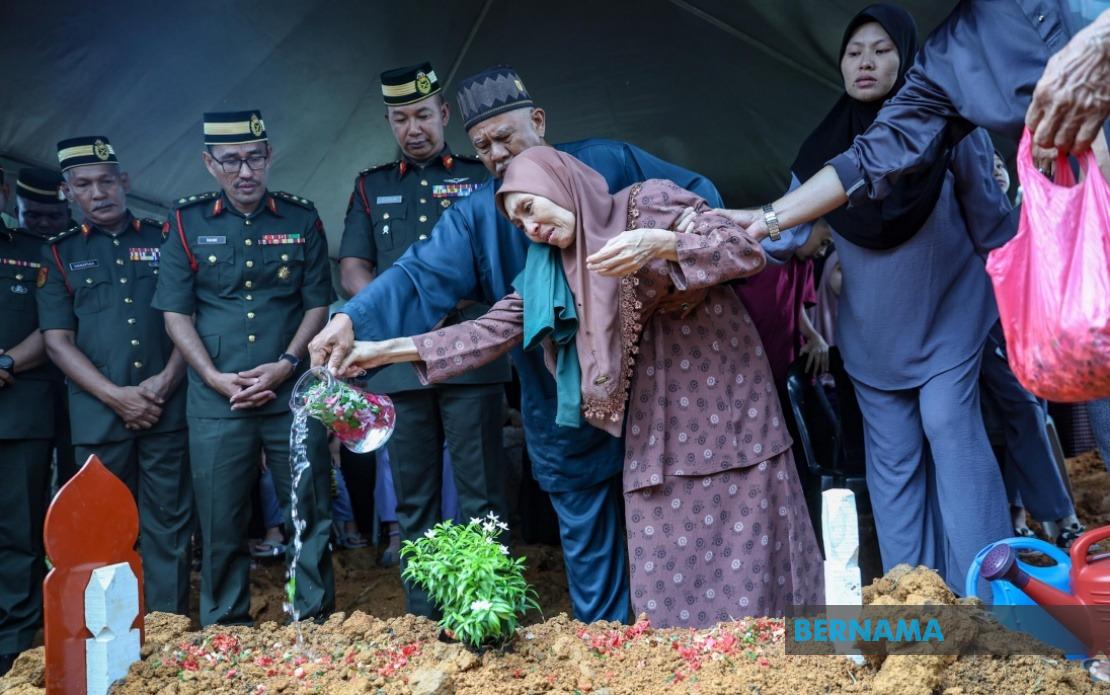
Private Siti Khadijah Sungip, a 24-year-old soldier with the Malaysian Army's First Squadron of the Royal Engineer Regiment, was buried at Taman Sri Lambak Muslim Cemetery in Kluang on June 17 at 1.15 pm. Her death came just hours after a catastrophic accident during grenade throwing training exercises at Hobart Camp in Gurun, Kedah, an incident that claimed the lives of two military personnel and has raised fresh questions about safety protocols during weapons instruction across the Malaysian armed forces.
The funeral ceremony unfolded amid visible grief from family members, friends, and fellow military personnel who gathered to honour Siti Khadijah's service and sacrifice. The atmosphere reflected the weight of losing a young soldier in what should have been a routine training exercise. Brigadier General Datuk Zulhelmy Masdar, Commander of the 7th Brigade stationed at Mahkota Camp, officiated the symbolic presentation of the Jalur Gemilang to the deceased's father, Sungip Jais, aged 65. This ceremonial handover of the national flag represents one of the armed forces' most solemn tributes to fallen personnel, acknowledging both individual sacrifice and institutional loss.
The incident at Hobart Camp occurred at 10.57 am on June 16, when an explosion during training caused fatal injuries to both Siti Khadijah and Corporal Norazmi Abu Bakar of the Sixth Battalion of the Royal Malay Regiment. Both personnel were rushed to Sultan Abdul Halim Hospital in Sungai Petani but were pronounced dead en route due to the severity of their injuries. The circumstances surrounding the explosion—whether it resulted from a detonation malfunction, improper handling of ordnance, or an unforeseen accident during the training sequence—remain under investigation by military authorities.
Siti Khadijah's body was transported from Sultanah Bahiyah Hospital in Alor Setar, where post-mortem procedures were completed at approximately 2.30 am, back to her family home in Taman Sri Lambak. She was accompanied by First Field Troop Leader Lieutenant Muhammad Lutfil Hadi Osman and four members of the Royal Engineer Regiment from Sangro Camp in Taiping, Perak. The formal arrival at her residence at 12.10 pm marked the beginning of funeral rites, with her body subsequently taken to Darul Iman Mosque for prayers before the burial ceremony.
Major Mohd Azlan Shah Abdul Razak from the Malaysian Army's Field Engineering Institute led the funeral prayer, ensuring the proceedings honoured both Islamic tradition and military protocol. The involvement of senior military figures and institutional representation underscored the armed forces' recognition of the tragedy and their commitment to supporting bereaved families. For Siti Khadijah's family, particularly her father, the presence of high-ranking officials provided formal acknowledgement of their daughter's service, though no ceremony can truly compensate for the loss of a young life.
This incident highlights ongoing concerns about training safety within the Malaysian armed forces. Grenade throwing exercises, while essential for combat readiness, carry inherent risks that require stringent oversight, properly maintained equipment, and rigorous adherence to standard operating procedures. The fact that two personnel died in a single accident at a training facility suggests either a systemic failure or an unprecedented convergence of dangerous circumstances. Military training establishments across Southeast Asia regularly conduct similar exercises, and this incident raises questions about whether comparable safety measures are consistently implemented across different units and camps.
The Royal Engineer Regiment and Royal Malay Regiment, both experiencing the loss of personnel, will face the challenge of maintaining operational readiness while investigating the root causes of the accident. Such investigations typically examine equipment condition, training protocols, instructor qualifications, and environmental factors. For families of military personnel across Malaysia and the region, incidents like this underscore the real physical dangers that service members face beyond combat operations—dangers that exist even within the controlled environment of a training range.
The broader implications for the Malaysian Army extend beyond this single tragedy. Public confidence in military institutions depends partly on the armed forces' ability to protect their own personnel during routine training. Soldiers like Siti Khadijah volunteer to serve their nation with the expectation that they will be trained safely and professionally. When accidents occur, transparent communication about causes and preventive measures becomes essential for maintaining public trust and ensuring that family members feel their loved ones' deaths were not in vain.
For Malaysian military personnel deployed worldwide, incidents at home serve as poignant reminders of the unpredictable nature of service. Whether in peacekeeping operations abroad or training exercises domestically, soldiers accept risks as part of their profession. However, such risks should be minimized through investment in equipment, training, and expert instruction. The burial of Private Siti Khadijah represents not only a family's grief but also a moment for the Malaysian armed forces to reflect on their safety culture and their obligations to the families who entrust their loved ones to military service.


