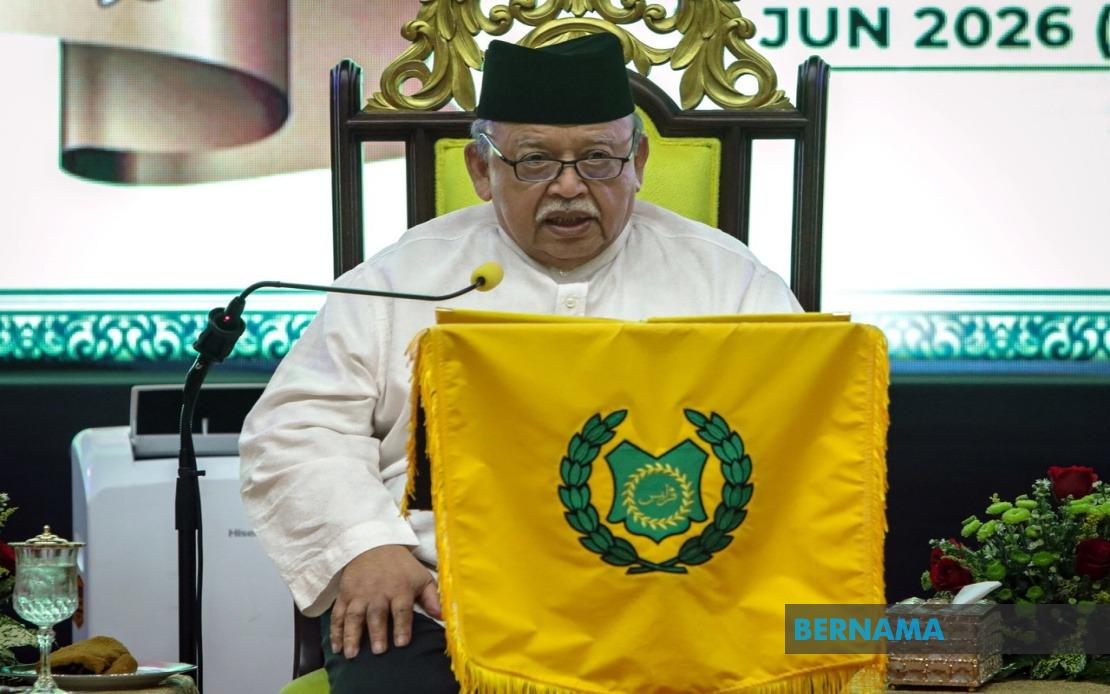
The Raja of Perlis, Tuanku Syed Sirajuddin Jamalullail, has delivered a pointed message about the foundations of national progress, emphasizing that sustainable development cannot rest solely on brick and mortar. Addressing attendees at the state-level Maal Hijrah celebration in Kangar, the Ruler stressed that genuine advancement requires citizens who approach their work with sincerity, view employment as a form of spiritual devotion, and actively reject corruption in all its manifestations. His intervention arrives at a moment when Malaysia continues grappling with perceptions of institutional integrity and public sector accountability.
Tuanku Syed Sirajuddin articulated a vision of progress that extends far beyond the conventional metrics of economic growth and infrastructure expansion. In his view, a truly thriving state emerges when its population combines intellectual capability with strong moral character, upholds standards of civility, and maintains social cohesion. This framing challenges policymakers and citizens alike to reconsider how success should be measured, particularly in a region where rapid development has sometimes outpaced institutional strengthening.
The Ruler introduced the concept of MADANI progress, positioning it as fundamentally different from approaches that prioritize physical construction and industrial output. According to his articulation, authentic advancement encompasses the deepening of knowledge systems, the elevation of personal character standards, the preservation and strengthening of cultural foundations, the maturation of intellectual discourse, and the integrity of values that bind communities together. For Malaysian audiences, this distinction carries particular relevance, as the nation's MADANI framework aspires to be a guiding principle for governance and development.
Tuanku Syed Sirajuddin's exhortation to embrace civilised values in daily interactions and to strengthen national unity reflects concerns about social fragmentation and the erosion of shared standards of conduct. By explicitly linking the pursuit of knowledge with the preservation of good manners and the execution of duties with accountability, the Ruler presented an integrated vision where intellectual advancement and moral development reinforce rather than undermine each other. This holistic perspective stands in contrast to siloed approaches where technical expertise exists separately from ethical grounding.
The emphasis on rejecting corruption carries particular weight coming from a constitutional monarch. In Malaysia's context, where anti-corruption efforts have involved high-profile investigations and institutional reforms, the Raja's words lend moral authority to ongoing accountability measures. His framing positions integrity not as a bureaucratic requirement but as a personal and collective responsibility essential to building the society that citizens actually wish to inhabit.
Tuanku Syed Sirajuddin extended his counsel to address the challenge of grounding Islamic understanding in authentic sources and principles, linking this to the development of mature and civilised political culture. For a nation where religion intersects significantly with governance, this message suggests that religious education and political development must proceed in tandem, each supporting the maturation of the other. The focus on contemporary applications of Islamic teachings aligns with efforts across Southeast Asia to demonstrate that religious commitment can coexist with modern governance standards.
The Ruler's call for citizens to move beyond passive observation and assume active roles as initiators, leaders, and contributors speaks to the challenge of civic engagement in developing democracies. Rather than positioning change as something that happens to people, Tuanku Syed Sirajuddin invited Malaysians to become architects of their own futures. This framing carries implications for workforce development, educational priorities, and the cultivation of entrepreneurial and civic mindsets throughout the population.
Acknowledging that contemporary challenges including artificial intelligence, technological disruption, social transformation, and shifting economic structures pose unprecedented demands on societies, the Ruler positioned preparation and proactive adaptation as essential. His recognition that these forces demand more than passive acceptance reflects understanding that nations unable to shape their engagement with transformative technologies risk becoming disadvantaged in global competition. For Malaysia, a country seeking to maintain competitiveness in the regional economy, this message resonates with policy discussions about digital readiness and workforce adaptation.
The presentation of the Perlis Tokoh Maal Hijrah award to Datuk Izham Mahmud, a board member of Yayasan Tuanku Syed Putra, provided concrete recognition of individuals embodying the values the Ruler articulated. By highlighting specific examples of contribution and service, the ceremony moved beyond abstract exhortation to recognize tangible commitment to societal advancement. This practice of acknowledging and celebrating exemplary conduct serves to reinforce cultural standards and provide models for emulation.
Tuanku Syed Sirajuddin's remarks, delivered in the context of the Islamic new year celebration, positioned spiritual renewal as inseparable from social and institutional renewal. The Maal Hijrah occasion, marking the beginning of a new lunar year in the Islamic calendar, traditionally invites reflection on personal and collective progress. The Ruler leveraged this reflective moment to connect religious observance with the practical challenges of governance and nation-building, suggesting that spiritual commitment naturally expresses itself through integrity, accountability, and dedication to common welfare.
The address gains additional significance when considered within Malaysia's broader political landscape. As the nation navigates complex questions about institutional reform, corruption control, and the renewal of public confidence in governance, voices from the constitutional monarchy carrying moral and cultural authority contribute to shaping the national conversation. The Raja's emphasis on sincerity, rejection of corruption, and the primacy of character suggests that institutional fixes, while necessary, prove insufficient without corresponding shifts in personal conduct and collective values.
For Southeast Asian readers more broadly, the message carries resonance beyond Malaysia's borders. Across the region, newly industrializing nations confront similar questions about whether rapid development can be sustained without corresponding advances in institutional integrity and civic values. The Raja's articulation of an alternative vision of progress—one measured by character advancement rather than merely economic output—offers a framework that other societies grappling with similar challenges may find thought-provoking and relevant to their own developmental trajectories.