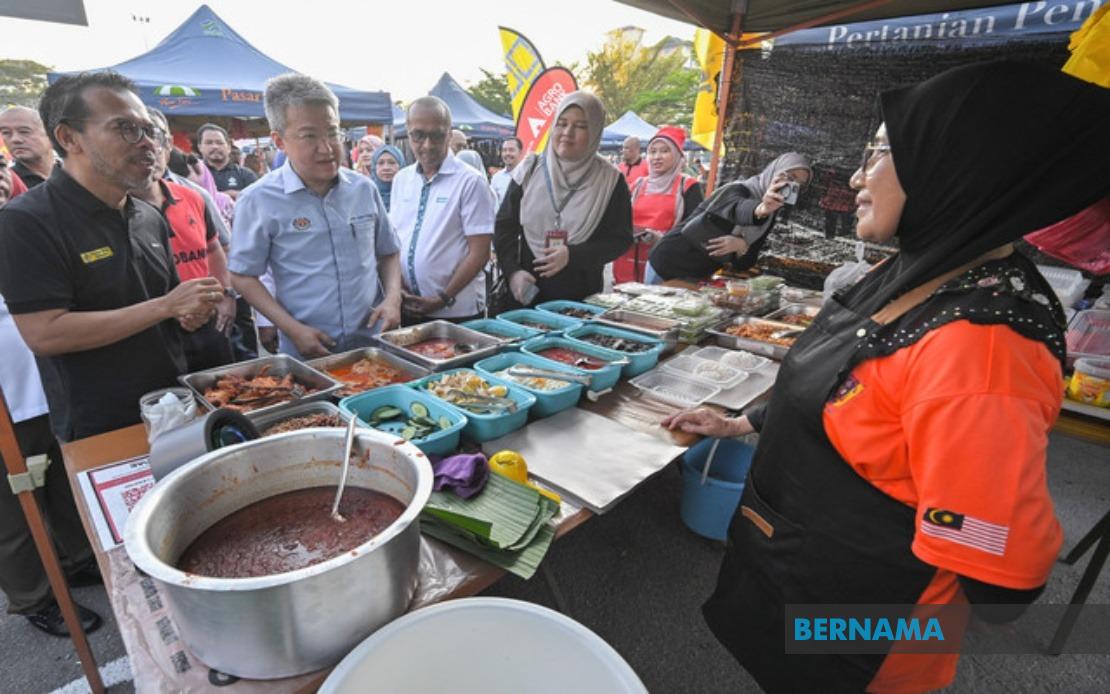
The Malaysian government is rolling out an ambitious microfinancing initiative worth RM9.8 billion, channelled through six key financial institutions to make credit more accessible to hawkers and small business operators struggling to secure capital. Deputy Finance Minister Liew Chin Tong unveiled the expansion during a ground engagement at the Dataran Puchong Permai Farmers' Market, signalling a renewed commitment to ensuring that informal traders and micro-entrepreneurs are not sidelined from economic development opportunities.
The allocation represents a strategic recognition that Malaysia's grassroots business ecosystem—dominated by street food vendors, market traders, and small retailers—faces persistent barriers to conventional financing. Traditional banks often dismiss small traders as high-risk borrowers due to limited collateral and irregular income documentation, leaving this segment vulnerable to informal lending arrangements and loan sharks. By institutionalising microcredit through established channels, the government aims to formalise and stabilise the financing landscape for this economically vital but historically underserved population.
Liew emphasised that the initiative addresses a fundamental equity concern: ensuring small traders have sustainable access to growth capital on reasonable terms. The focus on simplifying access and reducing bureaucratic friction suggests recognition that even when microfinance products exist, cumbersome application processes often deter the very business owners they are meant to help. By bringing financing agencies directly to farmers' markets and commercial hubs rather than requiring traders to navigate bank branches and formal procedures, the "Mikro Kredit Turun Padang" programme adopts a pragmatic community-centric approach.
The six institutions spearheading this effort—Bank Simpanan Nasional, Agrobank, Bank Rakyat, the Companies Commission of Malaysia, TEKUN Nasional, and Majlis Amanah Rakyat—represent a mix of state-backed banks, rural development agencies, and business registration bodies. This multifaceted coalition is intended to provide not just capital but also advisory services, regulatory guidance, and business formalisation support. Amanah Ikhtiar Malaysia, a prominent Islamic microfinance institution, is also participating, broadening the availability of Shariah-compliant financing options for Muslim entrepreneurs.
Early traction at the Puchong farmers' market offers modest evidence of impact. Twelve traders have already secured financing approvals, with seven through Amanah Ikhtiar Malaysia, three via Bank Simpanan Nasional, and two from Agrobank. While these numbers are small, they demonstrate that direct outreach can convert interest into actual credit deployment. The fact that multiple institutions are simultaneously approving applications suggests competition may be emerging, potentially benefiting borrowers through improved terms and faster processing.
The programme's rollout across multiple farmers' markets in the Klang Valley—including Taman Melawati, Kelana Jaya, Bandar Tasik Permaisuri, and now Puchong—reflects a deliberate geographic strategy targeting concentrated trader populations in urban and semi-urban areas. Farmers' markets serve as natural gathering points for this demographic, reducing client acquisition costs and creating environments where peer learning about financing can occur informally. The mobile deployment model also signals that the government intends to scale this approach beyond Selangor eventually.
What makes this initiative particularly relevant for Southeast Asia is its implicit acknowledgement that informal economy formalisation requires meeting entrepreneurs halfway. Rather than imposing stringent documentation requirements or expecting traders to adopt digital banking overnight, the programme brings financial services to existing commercial ecosystems and tailors processes to trader realities. This approach could serve as a model for other regional economies struggling with similar informal sector financing challenges.
The involvement of the Ministry of Finance in direct feedback collection and escalation to the Prime Minister suggests that microfinance expansion may become a budget priority in forthcoming fiscal announcements. Liew's commitment to gathering grassroots intelligence and channelling it upward indicates that trader feedback will shape future policy refinement. This two-way dialogue mechanism could prevent the initiative from becoming a top-down programme that fails to address real implementation obstacles.
For Malaysia's broader economic objectives, expanded microfinance serves multiple purposes simultaneously. It supports informal sector formalisation by pushing traders toward registered credit relationships and documented business activities. It strengthens social safety nets by reducing reliance on predatory lending. It stimulates bottom-up economic activity in communities where hawkers and street traders are primary employers and service providers. And it addresses an acknowledged gap in the financial system that has allowed informal credit markets to flourish despite their higher costs and vulnerability to exploitation.
However, the programme's success ultimately depends on whether RM9.8 billion proves sufficient to genuinely reshape microfinance availability, given the scale of Malaysia's informal trading sector. Questions also remain about loan terms, repayment flexibility, and whether success rates at farmers' markets will replicate across more dispersed trader populations in smaller towns and rural areas. Additionally, the programme must demonstrate that increased access to credit translates into genuine business growth rather than simply shifting existing informal borrowing into formal channels.
The timing of this initiative, coinciding with broader concerns about small business viability in a digital economy, suggests policymakers recognise that street traders and informal entrepreneurs remain economically significant despite technological disruption. By mobilising substantial capital through established institutions and combining financing with advisory services, the government is essentially betting that improved credit access will enable this segment to adapt, formalise, and contribute more sustainably to economic growth. Whether this RM9.8 billion investment achieves those transformative ambitions will become clear only as the programme expands and matures across Malaysia's diverse trading communities.