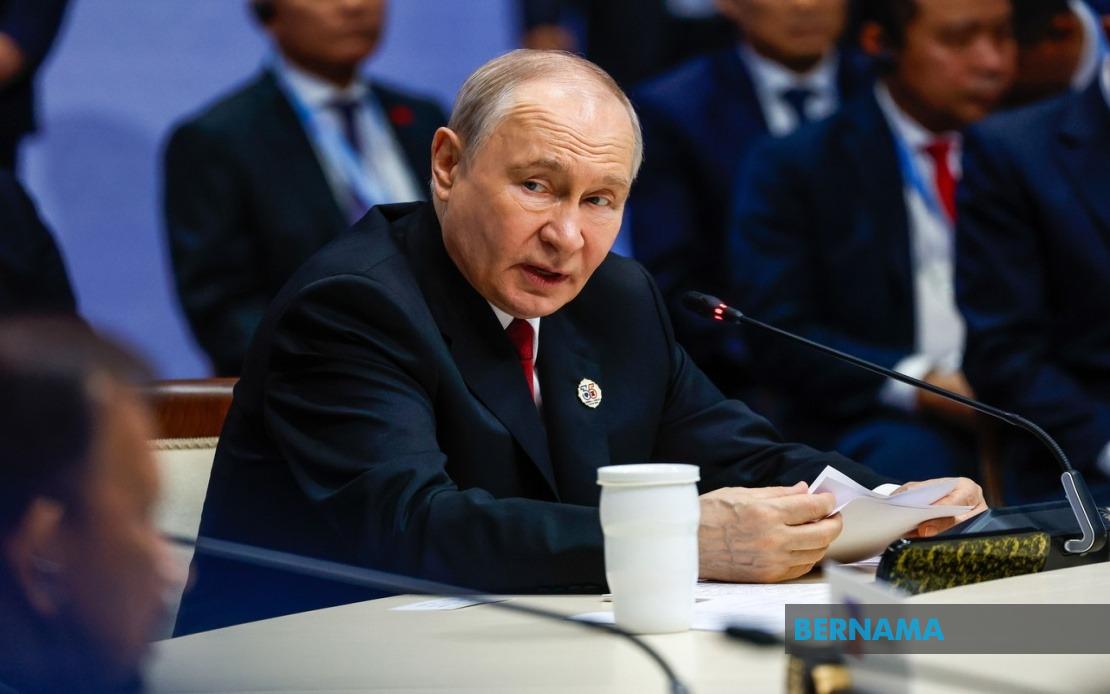
Russian President Vladimir Putin convened ASEAN leaders in Kazan this week to commemorate the 35th anniversary of diplomatic relations, framing the partnership as a stabilising force in an increasingly turbulent Asia-Pacific region. The two-day summit brought together Prime Minister Datuk Seri Anwar Ibrahim and other ASEAN heads of state, including Philippine President Ferdinand Marcos Jr in his capacity as the bloc's current chair, to review the trajectory of cooperation and chart a course for deeper engagement across multiple domains.
The relationship between Russia and ASEAN began formally in 1991 with the opening of Moscow's mission in Kuala Lumpur, marking the beginning of what would become one of the region's enduring diplomatic channels. The trajectory accelerated significantly in subsequent decades, culminating in Russia's elevation to full ASEAN Dialogue Partner status in 1996 and the subsequent designation as a Strategic Partnership in 2018. This progressive deepening of ties reflects Moscow's long-standing commitment to integrating itself into Southeast Asian affairs and ASEAN's recognition of Russia as a consequential regional player with distinct capabilities and interests.
Putin highlighted the comprehensive institutional architecture that now undergirds bilateral engagement, noting that Moscow and ASEAN have constructed a robust framework of legal agreements and operational mechanisms spanning an unusually broad spectrum of sectors. Beyond traditional security cooperation, the partnership encompasses trade and investment flows, energy collaboration, agricultural development, digital infrastructure projects, scientific and technological research initiatives, tourism promotion and cultural exchanges. This multifaceted approach reflects both parties' recognition that contemporary strategic partnerships require interconnected engagement across economic, technological and people-to-people dimensions rather than remaining confined to diplomatic and defence channels.
The timing of this commemorative gathering carries particular significance given the contemporary geopolitical environment. As regional powers navigate shifting power balances, trade tensions and competing visions for Asian security architecture, ASEAN members have increasingly valued relationships with multiple major powers rather than committing exclusively to any single bloc. Russia occupies a distinctive position within this framework—not an immediate neighbour like China or geographically proximate like Japan, yet sufficiently engaged with ASEAN affairs to warrant sustained attention. Putin's emphasis on the partnership serving as a stabilising mechanism reflects Moscow's interest in positioning itself as a constructive rather than destabilising presence in regional affairs.
From Malaysia's perspective and broader ASEAN interests, Russia's strengths in specific sectors hold particular value. The relationship provides access to Russian technological expertise, energy resources and agricultural products at a time when Southeast Asian nations prioritise supply chain diversification. For energy-dependent economies across the region, Russia remains a significant source of oil, gas and other commodities, making energy security cooperation a practical cornerstone of engagement. Additionally, Russian capabilities in higher education and scientific research attract ASEAN students and scholars, facilitating knowledge transfer and people-to-people connections that reinforce diplomatic relationships through non-governmental channels.
The summit's agenda encompassed discussion of trade and investment expansion, with both sides identifying opportunities for increased commercial engagement. Food and energy security emerged as priority areas, reflecting shared concerns about supply chain vulnerabilities exposed by recent global disruptions. Digital transformation initiatives represent another avenue for cooperation, with Russia offering technological partnerships that could support ASEAN's broader digital economy aspirations. Educational and scientific collaboration building upon historical academic exchanges promises to yield spillover effects in innovation and capacity development across member states.
ASEAN's diplomatic strategy has long emphasised maintaining balanced relations with major powers while preserving bloc autonomy and decision-making independence. Russia fits within this framework as a dialogue partner whose interests, while significant, do not dominate the region's geopolitical calculations in the manner that China's or the United States' do. This positioning allows ASEAN nations to cooperate with Russia across concrete areas without becoming drawn into wider great power competitions or compromising their strategic flexibility. For Malaysian policymakers, sustaining engagement with Russia while managing relationships with Western powers and Asian neighbours remains a balancing act central to non-aligned foreign policy traditions.
The summit addressed both retrospective analysis of three decades of partnership achievements and forward-looking discussion of emerging opportunities and challenges. Participants examined how cooperation mechanisms established in prior years could be refreshed and optimised for contemporary circumstances, ensuring that institutional frameworks remain relevant and operationally effective. The discussion of future directions signals intent to evolve the relationship beyond historical patterns, potentially expanding into newer areas such as digital economy cooperation, climate transition and space technology collaboration.
Regional geopolitical turbulence provided essential context for the gathering. With tensions simmering in various quarters—from the South China Sea to Korean peninsula dynamics to broader US-China strategic competition—ASEAN's value as a venue for dialogue and cooperation with non-aligned powers has increased substantially. Russia's participation in regional mechanisms and its engagement with ASEAN forums offers alternative channels for addressing transnational challenges including terrorism, maritime security, disaster management and scientific cooperation. The partnership provides both sides with mechanism for dialogue on matters of mutual concern without requiring alignment on contested international issues.
Looking forward, the relationship faces both opportunities and constraints. Opportunities exist for expanded cooperation in energy transition, with Russia's hydrocarbon expertise complementing ASEAN's renewable energy ambitions through technology partnerships and investment. Agricultural cooperation could deepen, with Russian and Southeast Asian producers potentially collaborating on food security initiatives. Digital transformation and cybersecurity represent emerging areas where mutual engagement could yield concrete benefits. Conversely, the partnership must navigate international sanctions regimes, geopolitical complications stemming from broader great power tensions, and domestic political considerations within individual ASEAN members that influence diplomatic bandwidth.
For Malaysia specifically, the ASEAN-Russia relationship offers pathways for advancing national interests in energy security, technological development and regional stability without requiring zero-sum choices between competing powers. The summit underscored that Southeast Asian nations can maintain strategic partnerships with Russia while simultaneously engaging with other major powers, reflecting the region's commitment to a rules-based international order that accommodates multiple centres of influence. As ASEAN collectively asserts its centrality to regional architecture and individual members pursue differentiated foreign policies, Russia's role as a consistent engagement partner contributes to the pluralistic framework that ASEAN members have historically preferred.