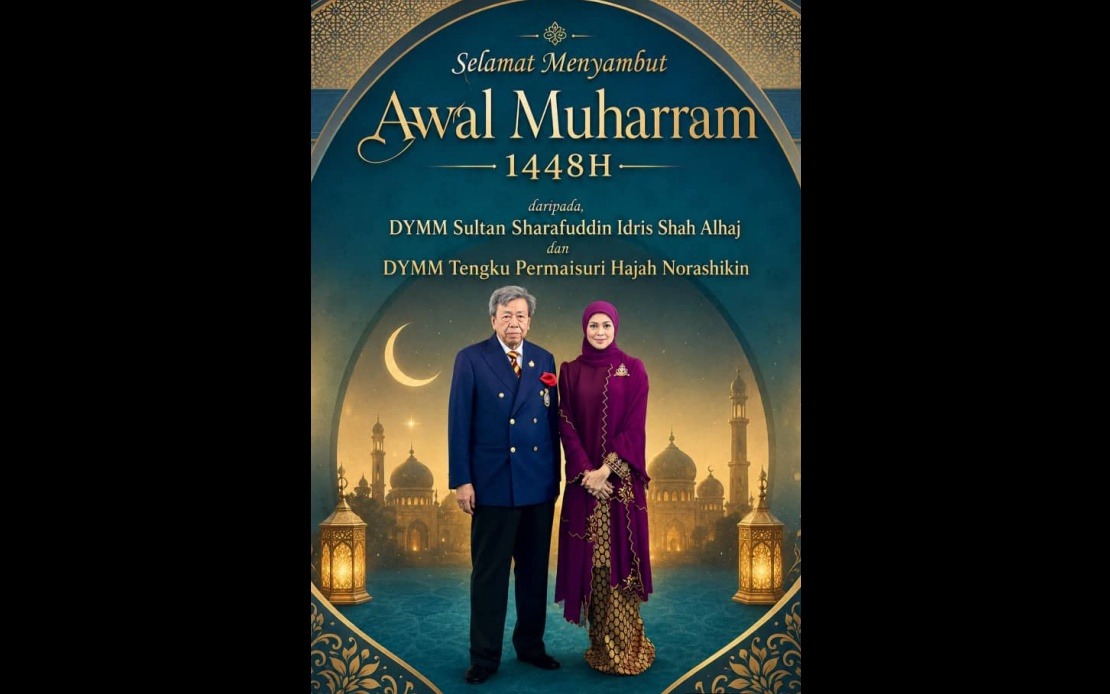
Sultan Sharafuddin Idris Shah has renewed his appeal for Muslims to unite in the face of contemporary challenges, using the occasion of Maal Hijrah 1448H to emphasise the deeper spiritual and social meaning of the Islamic new year. Speaking in Shah Alam on June 16, the Selangor ruler framed the Hijrah not merely as a historical migration but as a powerful symbol representing transformation and the collective strengthening of the Muslim community across religious, social and national boundaries.
The concept of Hijrah, which commemorates Prophet Muhammad's journey from Mecca to Medina, carries profound resonance in Islamic tradition beyond its literal interpretation. Sultan Sharafuddin drew on this layered significance to argue that modern Muslims must undertake their own spiritual and moral migration towards greater cohesion. In doing so, he positioned the observance as an appropriate moment for the Muslim ummah to reflect on its present state and recommit to foundational principles of solidarity and mutual respect.
Drawing from the wisdom of his late father, Sultan Salahuddin Abdul Aziz Shah, Sultan Sharafuddin articulated a philosophy of conflict resolution that privileges restraint and private negotiation over public confrontation. This approach, rooted in Islamic principles of adab (propriety) and hikma (wisdom), offers a framework for addressing disagreements without compromising community cohesion. The Sultan emphasised that whenever differences arise or corrections are needed, these matters should be communicated through measured discourse conducted with dignity and courtesy.
The ruler's emphasis on private resolution carries particular relevance in an era of social media and instant public communication, where grievances and disputes routinely escalate into broader public conflicts. Sultan Sharafuddin cautioned that matters capable of amicable settlement through respectful dialogue should not be allowed to spill into the public sphere, where they generate open disputes and erode the standing of the Muslim community and the nation itself. This distinction between productive private negotiation and destructive public confrontation addresses a contemporary challenge facing many societies.
A central concern articulated by Sultan Sharafuddin centres on the strategic vulnerabilities created by internal discord. When Muslims engage in visible disputes, he warned, external observers become aware of internal weaknesses and divisions that could be exploited to undermine collective interests. This perspective reflects a sophisticated understanding of how factional conflict diminishes a community's resilience and influence. The Sultan made clear that perpetuating such divisions ultimately benefits no one, as the fracturing of unity weakens all parties involved rather than securing victory for any particular faction.
Beyond cautioning against destructive conflict, Sultan Sharafuddin articulated a positive vision of what Hijrah should represent in contemporary Muslim practice. He called on the faithful to embrace the spirit of the Islamic calendar's beginning by actively strengthening bonds of unity, cultivating tolerance across different perspectives, and subordinating personal or sectional interests to broader religious, communal and national objectives. This framing positions religious observance not as a purely ceremonial exercise but as a catalyst for substantive behavioural and attitudinal change.
The Sultan's message gains significance within the Malaysian context, where religious and communal diversity requires ongoing negotiation and mutual respect. Selangor, as Malaysia's most populous state and economic heartland, serves as a critical testing ground for harmonious Muslim-majority governance that balances religious principles with pluralistic social realities. Sultan Sharafuddin's emphasis on wisdom, tolerance and the prioritisation of collective welfare over narrow interests implicitly addresses contemporary tensions within Malaysian Islamic discourse and practice.
Looking forward, the ruler expressed optimistic hopes that the new Islamic year would usher in blessings, tranquillity and material advancement for all. However, this optimism was contingent upon genuine commitment to the renewal of unity and harmony both within Muslim communities and across broader society. The Sultan's message thus combines spiritual aspiration with practical exhortation, suggesting that prosperity and peace depend not merely on divine grace but on deliberate human effort to maintain social cohesion.
For Southeast Asian Muslim-majority nations and communities across the region, Sultan Sharafuddin's message offers instructive guidance on navigating the perpetual tension between principled conviction and pragmatic coexistence. The Maal Hijrah observance provides an annual opportunity to revisit these foundational questions about how religious identity and community obligations can be harmonised with respect for diverse viewpoints and commitment to collective wellbeing. In articulating this vision, the Selangor Sultan positions himself within a tradition of Muslim leadership that sees spiritual observance as intrinsically linked to social responsibility and ethical governance.