The Selangor state government has issued a public warning against fraudulent short message service communications falsely claiming to represent the KitaSelangor Voucher assistance programme, as scammers increasingly attempt to exploit awareness of the upcoming initiative. The State Secretary's Office emphasised that citizens should disregard unsolicited SMS or messaging from unverified sources and refrain from interacting with dubious hyperlinks that may compromise personal data or lead to financial losses. This cautionary step reflects growing concerns about mobile-based phishing schemes targeting Malaysians during periods when major government assistance programmes are being launched.
The timing of this advisory is significant, as the KitaSelangor Voucher Programme remains in its pre-launch phase with applications not yet opened to the general public. Fraudsters are capitalising on public anticipation and limited official information to disseminate counterfeit messages designed to appear legitimate. By establishing false urgency or requesting immediate action, scammers hope to bypass the critical thinking that citizens might otherwise apply before revealing sensitive information. The Selangor authorities recognise this vulnerability and are attempting to build public resilience before the scheme formally begins accepting applications.
According to the official statement, legitimate notifications will commence on June 23 when the Selangor government begins contacting eligible recipients in batches through verified SMS channels. These authentic messages will enable beneficiaries to confirm their personal details and proceed with formal application submissions via the dedicated KitaSelangor Voucher Portal. The authorities have explicitly instructed residents to await the state government's official announcement scheduled for June 22 before engaging with any programme-related communications or taking action. This measured approach aims to create a clear demarcation between fraudulent messages and genuine government outreach.
The assistance programme targets specifically identified vulnerable populations rather than operating on a first-come, first-served basis, which means scammers cannot fabricate eligibility criteria convincingly. Beneficiaries will be selected from established government databases including households registered in the eKasih poverty database, retrenched workers, individuals in the Social Welfare Department's vulnerable persons registry, and single mothers meeting prescribed criteria. This data-driven identification process actually strengthens the state's ability to authenticate legitimate communications, since eligible recipients can cross-reference their status against official records before responding to any government message.
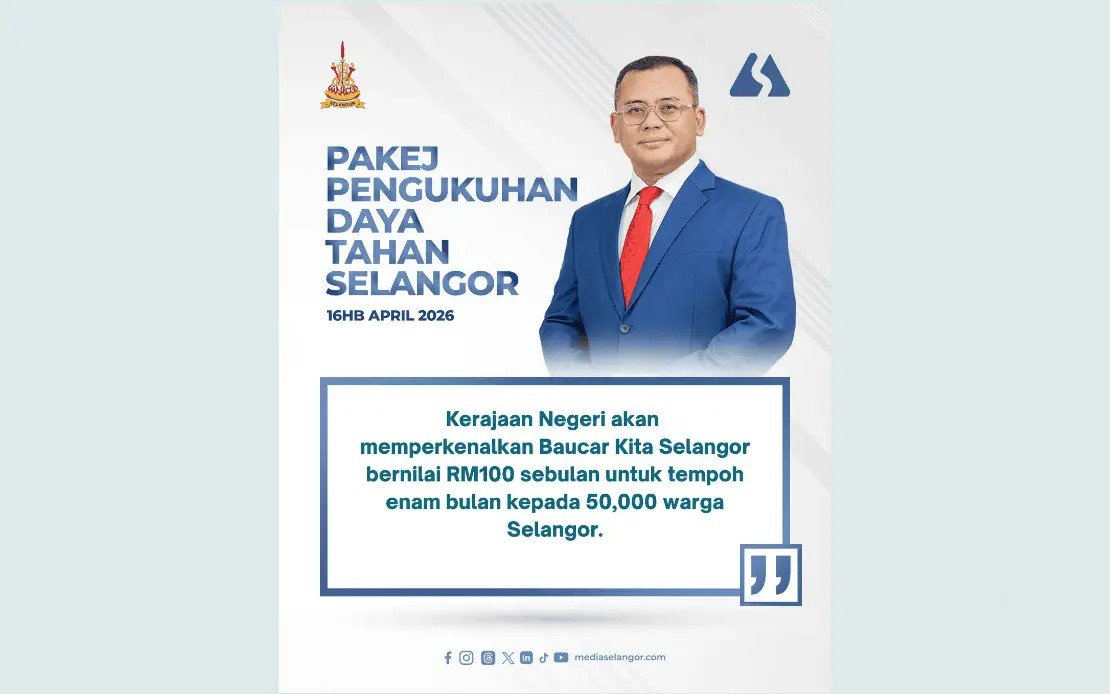
Under the KitaSelangor Voucher initiative, which commences on June 30, approximately 50,000 low-income families across the state will receive monthly cash assistance of RM100 over a six-month period, representing a total expenditure of RM600 per household. This programme forms part of the broader RM140 million Selangor Resilience Strengthening Package Phase 1, which was announced in April and designed to mitigate the cumulative effects of global economic instability, escalating cost-of-living pressures, and international supply chain disruptions. The substantial scale of this initiative underscores why scammers view it as an attractive target for fraudulent schemes.
The advisory reflects a persistent challenge in Southeast Asia where citizens increasingly interact with government services through digital channels yet simultaneously face growing sophistication in fraud attempts. Criminals duplicate official letterheads, programme logos, and government contact conventions to enhance the credibility of deceptive messages. In the Malaysian context, where SMS remains a primary government communication method for lower-income populations with limited internet access, such schemes particularly threaten elderly citizens and first-time voucher or subsidy applicants who may lack experience recognising authentic from counterfeit official messages.
Residents in Selangor should verify any KitaSelangor Voucher communications exclusively through the official Selangor State Government channels, including the state government website, verified social media accounts, and dedicated hotlines. Independent verification through these authorised sources represents the most reliable safeguard against phishing attempts. Citizens receiving suspicious messages should not reply, should not click embedded links, and should report the communication to relevant authorities including the police cyber-crime division or consumer protection agencies. These reports contribute to law enforcement intelligence gathering and help authorities identify organised fraud networks operating at scale.
The implications of this warning extend beyond the immediate KitaSelangor programme. As Malaysian state and federal governments increasingly digitise benefit distribution, social assistance applications, and citizen communications, the attack surface for cybercriminals expands correspondingly. Vulnerable populations—precisely those targeted by genuine assistance programmes—often lack digital literacy to distinguish legitimate from fraudulent official messages. The Selangor government's proactive alert demonstrates recognition that public sector communication security requires constant vigilance and public education, not merely backend technical safeguards.
For Malaysian readers more broadly, this episode underscores the importance of establishing personal verification routines whenever receiving unsolicited official-looking messages. Before disclosing identifying information, accepting links, or downloading attachments allegedly from government agencies, directly contacting the relevant organisation through independently verified contact details proves essential. This principle applies regardless of the specific scheme or programme. Citizens should never assume that a message claiming to represent a government initiative is authentic based solely on professional formatting or technical sophistication. Government authorities themselves often cannot guarantee message authenticity over SMS channels, which remain vulnerable to spoofing and interception despite their widespread use for official communications.