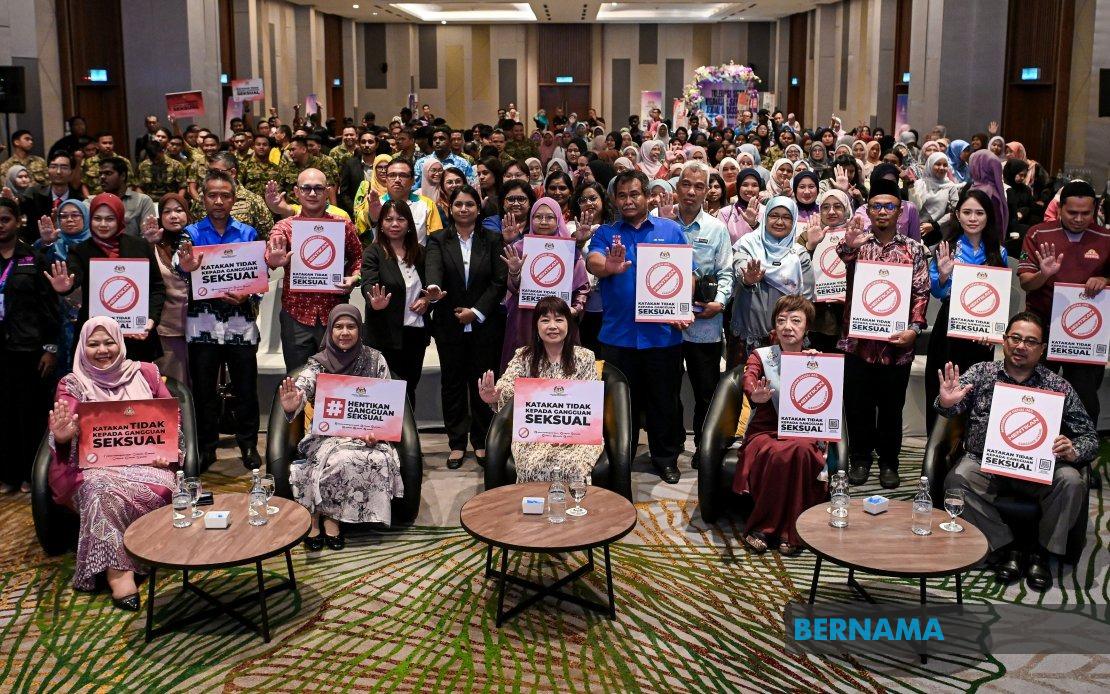
Workplace sexual harassment remains a persistent concern in Malaysia, with 388 cases documented during the opening months of 2024 alone. The disclosure came from Deputy Minister of Women, Family and Community Development Lim Hui Ying, who presented the figures at an official engagement in Port Dickson on June 18. Behind these statistics lies a troubling trajectory: the Royal Malaysia Police reported 477 sexual harassment cases nationwide in 2022, a figure that more than doubled to 1,038 cases the following year, signalling either an alarming surge in misconduct or a fundamental shift in public reporting behaviour—likely both simultaneously.
The dramatic year-on-year increase warrants careful interpretation. While the raw numbers appear alarming, Lim cautioned against viewing the spike solely as evidence of worsening conditions. Rather, she characterised the rising trend as partly reflecting a positive cultural shift in Malaysian society. Victims and their communities are increasingly willing to break the silence that has historically shielded perpetrators, suggesting that improved legal frameworks and public discourse around workplace conduct may be empowering individuals to seek recourse. This interpretation aligns with international experiences in countries that have strengthened anti-harassment legislation; reporting rates typically climb as institutional confidence grows and stigma diminishes. Nevertheless, the sheer volume suggests that sexual harassment remains endemic across Malaysian workplaces and social spaces.
The geographical and relational dimensions of harassment reveal structural vulnerabilities within Malaysian institutions. According to the deputy minister, the majority of documented cases occur within workplace environments, and a significant proportion involve individuals with familial or personal ties to victims. This clustering suggests that power asymmetries inherent in employment hierarchies and intimate relationships create conditions conducive to harassment. The workplace concentration underscores how professional advancement and economic security can be weaponised by supervisors or colleagues, leaving workers caught between the need to maintain employment and the imperative to protect their dignity and safety. The prevalence of cases involving family connections points to a darker reality: harassment often flourishes within relationships characterised by trust, dependency, or existing authority imbalances.
Persistent cultural and psychological barriers continue to silence many victims, preventing them from seeking justice or support. Lim identified shame, career anxiety, and concerns about family stability as primary obstacles deterring victims from lodging formal complaints with authorities. In Malaysia's socially conservative environment, these inhibitions carry particular weight. Victims may fear ostracisation within their families or communities; professional reputation damage could jeopardise career prospects, especially for women in competitive sectors; and the intrusive nature of formal investigations may deter those seeking privacy. These barriers are not merely individual psychological phenomena but are deeply embedded in social norms and institutional practices that frequently blame victims or prioritise organisational reputation over individual welfare. Normalising workplace harassment—dismissing it as inevitable or unavoidable—has enabled a culture of impunity that disproportionately affects vulnerable workers.
The Tribunal for Anti-Sexual Harassment (TAGS), established to provide specialised adjudication, offers a glimmer of institutional reform. As of mid-June 2024, the tribunal had processed 100 complaints, with 82 cases resolved within 60 days of the initial hearing. This efficiency metric suggests that dedicated judicial mechanisms can accelerate access to justice and reduce the protracted legal battles that typically discourage harassment victims from pursuing formal remedies. However, 100 complaints received by June represents only a fraction of the 1,038 cases reported the previous year, indicating that many victims continue to navigate complaints through conventional police and employment channels rather than this specialised tribunal. The tribunal's existence is encouraging, but its reach remains limited, and public awareness of its availability likely requires strengthening to facilitate broader access.
Men represent an underrepresented but growing demographic among harassment victims, though their numbers remain substantially lower than those of women. Lim's acknowledgment that sexual harassment affects men, while stressing the disproportionate impact on women, reflects a nuanced understanding of gendered vulnerability. Male victims may experience particular reluctance to report harassment due to masculine norms that discourage disclosure of victimisation or demand self-reliance in confronting abusers. This gendered reporting gap potentially obscures the true prevalence of harassment affecting men and may deprive male victims of necessary support services tailored to their experiences. A comprehensive anti-harassment framework must address these variations in victim demographics and psychological barriers to reporting.
The ministry's Women, Peace and Security advocacy initiatives, aligned with Malaysia's National Action Plan 2025–2030, attempt to situate anti-harassment efforts within broader national security and development frameworks. By linking workplace conduct and gender-based violence prevention to national stability and security, policymakers signal that sexual harassment is not merely a private grievance but a public concern affecting social cohesion and human capital development. Women's full participation in the workforce and civic life—prerequisites for economic growth and effective governance—is undermined when harassment creates hostile or unsafe environments. This strategic framing may help mobilise government resources and institutional commitment to addressing harassment comprehensively.
The responsibility for prevention and victim support extends across multiple social actors, from educational institutions to corporate leadership. Lim emphasised a collective duty encompassing parents, educators, employers, colleagues and students to cultivate zero tolerance toward harassment. This distributed responsibility model acknowledges that prevention requires cultural transformation at multiple levels simultaneously. Educational institutions must incorporate consent, respect and workplace dynamics into curricula; employers must establish transparent reporting mechanisms and enforce meaningful consequences for perpetrators; families must model respectful relationships and encourage children to recognise and reject inappropriate conduct; and peer networks must develop collective standards that reject harassment rather than normalising or excusing it. Single-point interventions—whether legislative reform or awareness campaigns alone—cannot counteract deeply ingrained cultural norms without complementary efforts across these domains.
Early intervention and victim support systems represent critical components of a comprehensive anti-harassment strategy. The government operates integrated support services accessible through multiple channels, including Talian Kasih 15999, a 24-hour helpline providing counselling and psychosocial assistance to those experiencing harassment or violence. Alongside these emergency resources, local social support centres offer sustained assistance for victims navigating recovery and reintegration. However, the effectiveness of these services depends partly on public awareness and accessibility. Marginalised communities, rural populations, and individuals with limited digital literacy may struggle to locate or utilise these resources, resulting in geographical disparities in support availability. Expanding service capacity and enhancing community outreach remain essential to ensuring equitable access.
The escalation pathway from unaddressed harassment to more severe violence demands urgent attention in policy design and implementation. Lim cautioned that harassment incidents not effectively managed at early stages risk evolving into persistent intimidation, physical assault, or other forms of violence with compounding individual and social costs. This cascading risk model suggests that investment in prevention and early intervention yields returns extending far beyond the immediate harassment case, potentially averting subsequent victimisation and the psychological, physical and economic burdens accompanying violence. Communities that tolerate harassment send implicit signals that disrespect and boundary violation are acceptable, potentially emboldening perpetrators and eroding collective standards of conduct. Conversely, swift institutional responses to harassment—coupled with victim support and perpetrator accountability—strengthen cultural norms protecting individual dignity and safety.
Moving forward, Malaysia must balance enforcement mechanisms with cultural transformation to address sexual harassment comprehensively. Legislative frameworks and judicial efficiency, though necessary, cannot succeed without parallel shifts in workplace policies, educational curricula, family communication patterns and peer group norms. The rising reporting trend presents an opportunity to gather data, refine institutional responses and develop evidence-based interventions tailored to Malaysian contexts. Public discourse must continue shifting away from victim-blaming narratives toward perpetrator accountability and institutional responsibility. Employers, particularly in sectors with documented harassment problems, must invest in prevention training and transparent complaint mechanisms rather than treating harassment as an inevitable cost of business. Only through sustained, multi-level commitment can Malaysia transform current numbers—whether they represent rising incidents or rising awareness—into a genuinely safer social environment.