A 29-year-old Singaporean man has been charged with multiple serious traffic offences after an early-morning incident that left two schoolchildren requiring medical treatment. Aaron Tan Yao Cong's case illustrates the persistent dangers posed by repeat drink-driving offenders and raises questions about the effectiveness of enforcement and rehabilitation measures in curbing dangerous road behaviour in urban Southeast Asia.
The incident unfolded on March 6, 2024, beginning in the pre-dawn hours along Cavenagh Road. According to court documents, Tan failed to observe a straight-only traffic sign and instead turned left into oncoming traffic around 5.50am. Witnesses and traffic cameras recorded the vehicle entering the opposing lanes before coming to a temporary halt on the left side of the two-lane roadway. Tan and three passengers managed to exit the vehicle at this point, but rather than remaining at the scene, the situation escalated dramatically when police arrived approximately ten minutes later.
What followed was a high-speed chase through central Singapore. When officers approached the stationary vehicle at 6am, Tan accelerated away and was subsequently detected travelling along Bukit Timah Road towards Upper Bukit Timah Road. Between 6.16am and the eventual collision, his vehicle reached speeds averaging 114 kilometres per hour, significantly exceeding safe limits as he repeatedly changed lanes around slower-moving traffic. This reckless acceleration through residential and commercial areas compounded the danger to other road users exponentially.
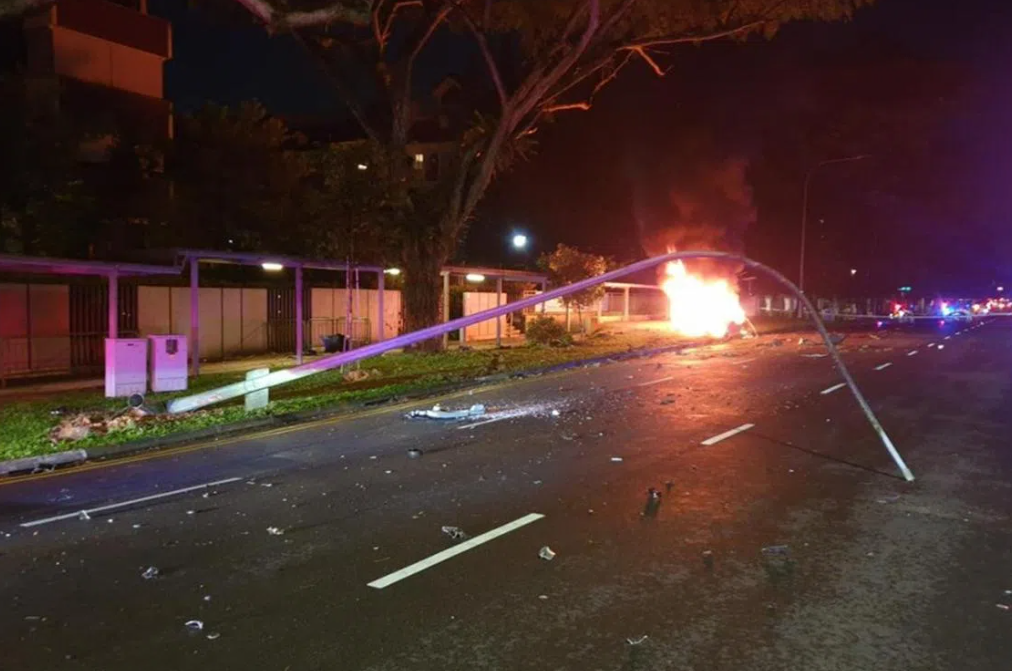
The incident culminated at the junction of Sixth Avenue, where Tan's vehicle allegedly ran a red traffic light signal and struck a private bus that was executing a lawful U-turn. The collision's force drove his vehicle into a lamp post, causing the car to ignite and burn. All occupants—Tan, his three passengers, the bus driver, and two children aged nine and ten aboard the bus—were hospitalised. The two young passengers emerged as the most concerning casualties, suffering injuries severe enough to warrant medical treatment.
Toxicology results proved particularly damning. While Tan initially refused to submit to a breathalyser examination at the arrest scene, subsequent blood analysis revealed he carried approximately 148 milligrams of alcohol per 100 millilitres of blood. This nearly doubles Singapore's legal driving limit of 80 milligrams per 100 millilitres, indicating significant alcohol impairment at the time of the collision. His refusal to cooperate with testing protocols became a separate criminal charge.
Critically, this was not Tan's first encounter with drink-driving law enforcement. Court records show a 2019 conviction for drink driving and driving without due care and attention—a pattern suggesting either inadequate rehabilitation or insufficient deterrence from previous legal consequences. The five charges laid on June 18 encompass drink driving, dangerous driving causing hurt, abandoning a vehicle in a hazardous manner, failing to cooperate with breathalyser testing, and driving against traffic flow.
The sentencing guidelines available to Singapore courts for these offences carry substantial penalties. For repeat drink-driving offences, Tan faces up to two years imprisonment and fines reaching $20,000 Singapore dollars. The dangerous driving charge carries up to two years imprisonment or $10,000 in fines, with repeat offenders liable for enhanced penalties of $20,000 and two years' jail. Additional convictions for vehicle abandonment, breath-test refusal, and traffic flow violations could accumulate further sentences and financial penalties, potentially extending his total exposure significantly.
This case resonates across Southeast Asia, where traffic fatalities involving alcohol remain persistently elevated despite strengthened legislation. Malaysia, Thailand, and other regional nations have implemented similar legal frameworks addressing drink-driving and reckless operation, yet enforcement consistency and repeat offender management remain challenges. The data suggests that legal consequences alone may inadequately address the underlying behavioural factors driving repeated violations, raising questions about whether current rehabilitation and licensing suspension protocols are sufficiently stringent.
The involvement of children elevates this incident's significance beyond typical traffic violations. The vulnerability of young passengers—wholly dependent on other drivers' sobriety and judgment—makes incidents involving schoolchildren particularly resonant with parents and safety advocates. In Malaysia and across the region, such cases have prompted campaigns for stricter school transport regulations and harsher sentencing guidelines for offences endangering minors.
Tan's case also highlights the cascading consequences of a single poor decision. His actions affected not only the two injured children and their families but also the bus driver, his own passengers, emergency responders, and broader community traffic patterns. The psychological impact on the young victims and their families extends far beyond immediate physical injuries, potentially influencing their future confidence in road safety.
The court proceedings continue, with Tan scheduled to return to the Singapore District Court on July 16. He has not indicated whether he will contest the charges or seek negotiated outcomes. The case proceeds amid Singapore's ongoing efforts to reduce traffic fatalities and injuries through enforcement, technological improvements such as red-light cameras, and public education campaigns. Whether Tan's prior conviction and subsequent charges result in sufficiently strengthened sentences to deter similar behaviour—both in his case and as a general deterrent—will likely inform discussions about sentencing guidelines across the region.