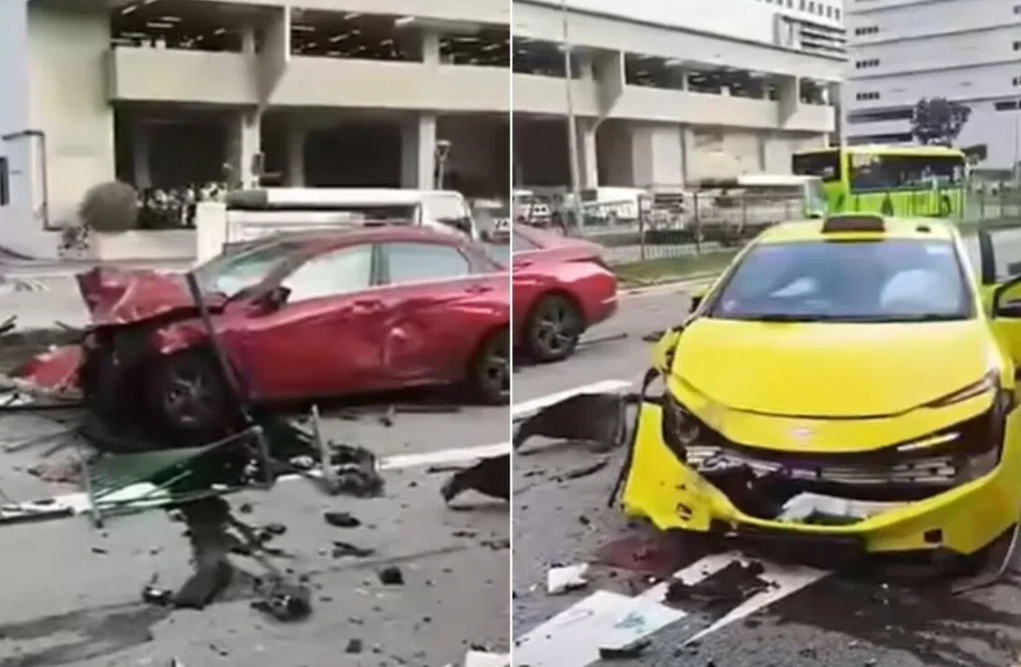
A 36-year-old man has been brought before Singapore courts facing a substantial charge sheet stemming from a traffic incident in Kallang that resulted in injuries to two people travelling in a taxi. Mohamed Firdouz Mohamed Akram stands accused of operating a motor vehicle while impaired by methamphetamine, commonly known as Ice, along with a series of related traffic and weapons offences that underscore how a single moment of reckless behaviour can escalate into serious criminal liability.
The incident unfolded on the morning of June 17 when Firdouz allegedly drove his car along Kallang Bahru at approximately 8am. According to court documents, he had consumed Ice prior to taking the wheel. His control of the vehicle deteriorated, and he subsequently collided with a taxi carrying two occupants. The impact left both victims requiring medical attention—the 60-year-old taxi driver complained of chest pains while his 43-year-old passenger suffered pain to her tailbone. The nature and extent of their injuries highlight the unpredictable danger that drug-impaired drivers pose to innocent members of the public who have no awareness of the threat approaching them on the road.
What distinguishes this case further is Firdouz's alleged conduct immediately after the collision. Rather than remaining at the scene to cooperate with authorities and provide assistance to the injured parties, he reportedly abandoned his vehicle and fled the location before police could arrive. This flight from the scene, a hallmark of drivers seeking to evade responsibility, triggered a swift law enforcement response. Police officers who attended the scene discovered a concerning array of items inside the abandoned vehicle: suspected drugs, drug-related paraphernalia, electronic vaporisers, and a knuckleduster—all of which were seized as evidence.
The speed with which authorities identified and apprehended Firdouz demonstrates the effectiveness of modern policing techniques and inter-agency coordination. Officers managed to establish his identity shortly after the collision and arrested him within five hours of the initial report. However, the investigation revealed additional complications with his case. Court documents indicate that approximately five hours after the collision, at around 1pm on June 17, Firdouz was found in a room at the Village Hotel Katong on Marine Parade Road in possession of two knives. This discovery added weapons-related charges to an already serious charge sheet, suggesting a pattern of concerning behaviour rather than an isolated incident of poor judgment.
When Firdouz appeared in court on June 19, he faced multiple charges that collectively paint a picture of dangerous and criminal conduct. Beyond the methamphetamine-impaired driving accusation, he was charged with driving without holding the requisite Class 3 driving licence. He was further charged with causing injuries to two people while driving in a dangerous manner—a specific traffic offence designed to address situations where a driver's behaviour puts others at serious risk of harm. In addition to these driving-related charges, he faced two separate charges relating to the possession of weapons found both in his vehicle and at the hotel room.
The legal consequences Firdouz faces are substantial. Singapore's traffic and drug laws prescribe strict penalties intended to deter such conduct. For driving while under the influence of a controlled drug, an offender faces up to one year of imprisonment, a fine of up to S$10,000, or both. Those convicted of causing injuries to others through dangerous driving face imprisonment of up to one year and fines ranging from S$2,000 to S$10,000. The cumulative nature of these charges means Firdouz could face significantly longer incarceration and heavier financial penalties should he be convicted on multiple counts.
This case resonates particularly across Southeast Asia because of the region's ongoing struggle with methamphetamine abuse. Ice has become an increasingly prevalent drug threat in Singapore and neighbouring countries including Malaysia, reflecting broader trafficking patterns that move substances through regional routes. Drug-impaired driving represents one of the most visible and dangerous consequences of addiction within communities, as the consequences extend beyond the user to innocent parties like the taxi driver and passenger injured in this incident. For Malaysian readers and authorities, this case illustrates the interconnected nature of drug trafficking and related harms across the region.
The incident also raises important questions about vehicle safety, occupant vulnerability, and the protections available to taxi drivers and passengers. The taxi industry, which serves as the backbone of urban mobility across Malaysia and Singapore, exposes workers to unpredictable risks from other road users. Every collision involving a taxi represents not only potential injury to passengers but also a disruption to the livelihoods of driver-owners who depend on maintaining their vehicles and continuing their work.
Firdouz's case will be mentioned again in court on July 17, at which point the legal proceedings will advance toward either resolution or trial. The case serves as a stark reminder of how substance abuse can rapidly transform an individual into a serious public safety risk, and the consequences that flow from such choices affect not only the perpetrator but innocent third parties who happen to be in the wrong place at the wrong time. For anyone considering driving, the message is unambiguous: operating a vehicle while impaired by drugs is not merely a personal failing but a criminal act with severe legal repercussions and the potential to cause lasting harm to others.