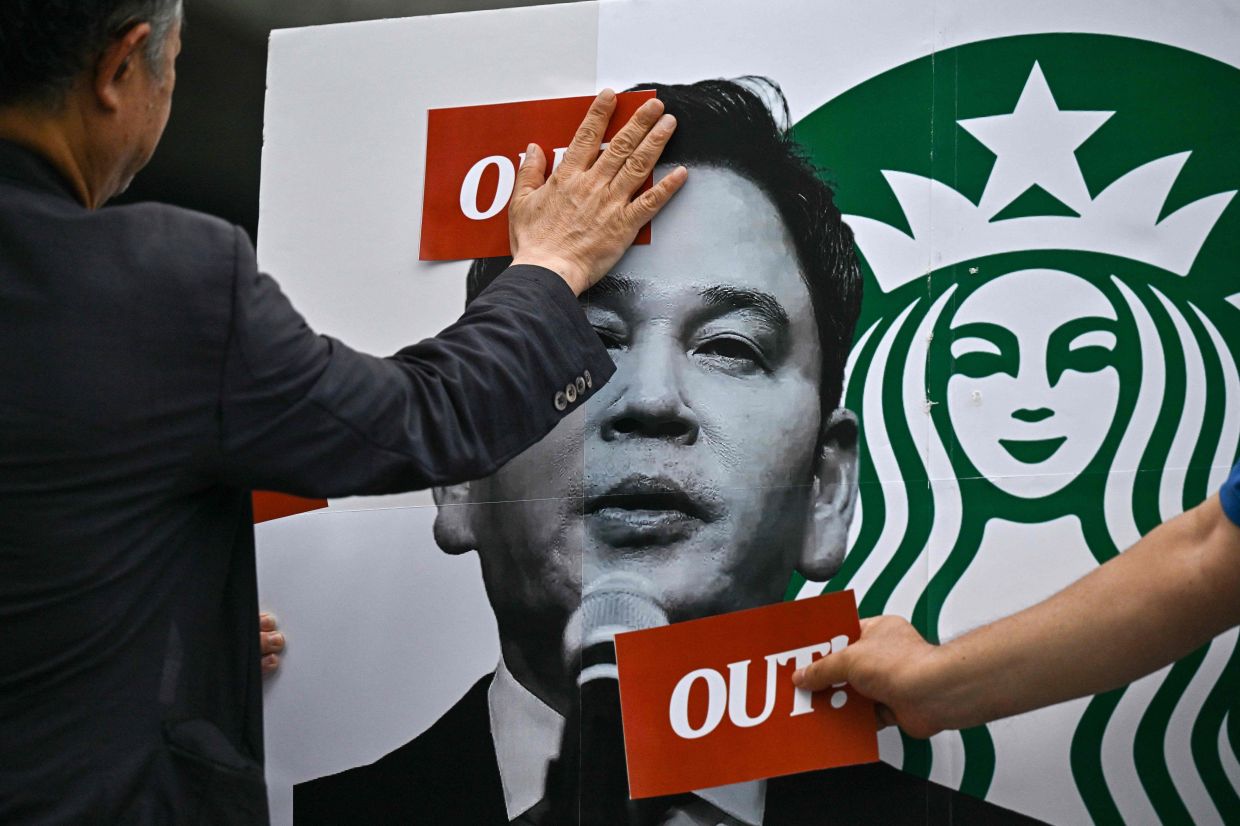
South Korean law enforcement has intensified its probe into Starbucks Korea's parent company Shinsegae Group following public fury over a promotional campaign that coincidentally fell on one of the nation's most sensitive historical dates. Police questioned Yang Jong-hwan, the head of Shinsegae's audit team, as a witness to the controversy surrounding what became known as the "Tank Day" fiasco. The development marks an escalation in the legal consequences facing the retail conglomerate, which has already dismissed its Korea chief executive and seen its chairman issue a formal apology to the nation.
The scandal originated from a reusable cup promotion scheduled for May 18, a date heavy with historical significance for South Korea. The chosen date aligned precisely with the 46th anniversary of the Gwangju uprising, a pivotal moment in the country's democracy movement when military forces carried out a brutal crackdown on civilian protesters. Official records document 165 deaths during the incident, though historians and survivors' groups maintain that the actual toll was considerably higher. The timing proved catastrophically tone-deaf for a consumer-facing campaign, immediately triggering accusations that Sharbucks Korea had either deliberately or negligently disrespected one of the nation's defining traumas.
The backlash proved swift and severe, with South Korean society reacting with anger that transcended typical corporate scandal responses. Civic organisations filed formal complaints against Shinsegae chairman Chung Yong-jin and other company officials, invoking a 2016 law designed to protect the historical integrity of the Gwangju uprising narrative. The legislation specifically prohibits the dissemination of false or misleading information regarding the 1980 pro-democracy crackdown. Beyond these statutory violations, the complaints also alleged defamation and insult, suggesting that the company's actions carried implications extending beyond commercial negligence into the realm of historical revisionism and national dignity.
Chung Yong-jin's public apology and the swift termination of the Korea chief executive represented immediate damage control measures, yet these gestures failed to quell the crisis. The company subsequently identified a cascade of internal failures that had allowed such a culturally inappropriate campaign to proceed through approval processes. Multiple officials signed off on the promotional materials without conducting basic due diligence on the calendar significance of May 18. This systemic breakdown in corporate governance suggested that the incident reflected broader institutional indifference rather than isolated human error.
The tangible impact on Starbucks Korea's operations manifested immediately in sharply declining sales during the early stages of the scandal. The company confirmed that the controversy triggered an immediate and measurable erosion of consumer confidence, though it did not disclose specific sales figures or the duration of the downturn. Given that Starbucks operates more than 2,000 locations across South Korea under its licensing agreement with Shinsegae Group, the financial ramifications extended far beyond corporate headquarters into the livelihoods of thousands of workers and franchise operators nationwide.
The response from corporate leadership escalated beyond symbolic gestures into structural commitments to historical education. Starbucks announced that all stores across the nation would close for half a day to allow staff members to attend mandatory educational sessions about the Gwangju uprising and its historical context. This initiative extended to senior management, with Chung Yong-jin and other executives scheduled to participate in similar history lessons days later. The move appeared designed both to remediate the apparent knowledge gap that enabled the scandal and to demonstrate to South Korean society that the company took the matter with utmost seriousness.
The investigation itself represents a critical juncture for how South Korean society addresses corporate conduct related to national historical memory. The Seoul Metropolitan Police Agency's questioning of company officials signals that authorities view potential legal violations as serious enough to warrant formal investigation, potentially opening pathways for criminal charges or civil liability. The company's statement pledging full cooperation with investigators and hoping that facts would be "clarified swiftly and transparently" suggests that Shinsegae recognises the gravity of the situation and the importance of demonstrating accountability to both legal authorities and the broader South Korean public.
Regionally, the incident carries significance beyond South Korea's borders as it highlights the intersection of corporate globalisation and deeply rooted historical consciousness within Asian markets. Multinational companies operating through franchising arrangements sometimes encounter challenges in navigating the intricate historical sensitivities of individual markets, particularly in nations where specific dates carry monumental cultural weight. The Starbucks case demonstrates that superficial awareness of local calendars proves insufficient; comprehensive understanding of historical context becomes essential for corporations seeking to operate responsibly within communities where certain commemorations transcend ordinary commercial considerations.
President Lee Jae-myung's public condemnation of the promotional campaign as "inhumane and disgraceful conduct" underscores the political dimensions of the controversy. The statement from South Korea's highest office reflects how historical memory remains intertwined with contemporary governance and national identity. For Shinsegae and Starbucks Korea, this presidential rebuke compounds the legal and commercial pressures already mounting from civic organisations, consumer backlash, and police investigations. The convergence of these forces suggests that the company faces a protracted period of reputational recovery that will likely require sustained commitment to historical reconciliation and corporate accountability.
The broader implications for multinational retail operations in Asia suggest that companies must invest substantially in cultural and historical literacy among local management teams. The failures that precipitated the Tank Day scandal appear traceable not to malicious intent but to institutional structures that permitted critical gaps in awareness to persist through multiple approval layers. This pattern suggests that compliance frameworks addressing historical sensitivities may require the same rigour currently applied to environmental, social, and governance standards in international corporate operations.